The Lab Staffing Shortage Isn’t Going Away. Here’s What the Smartest Labs Are Doing Instead. 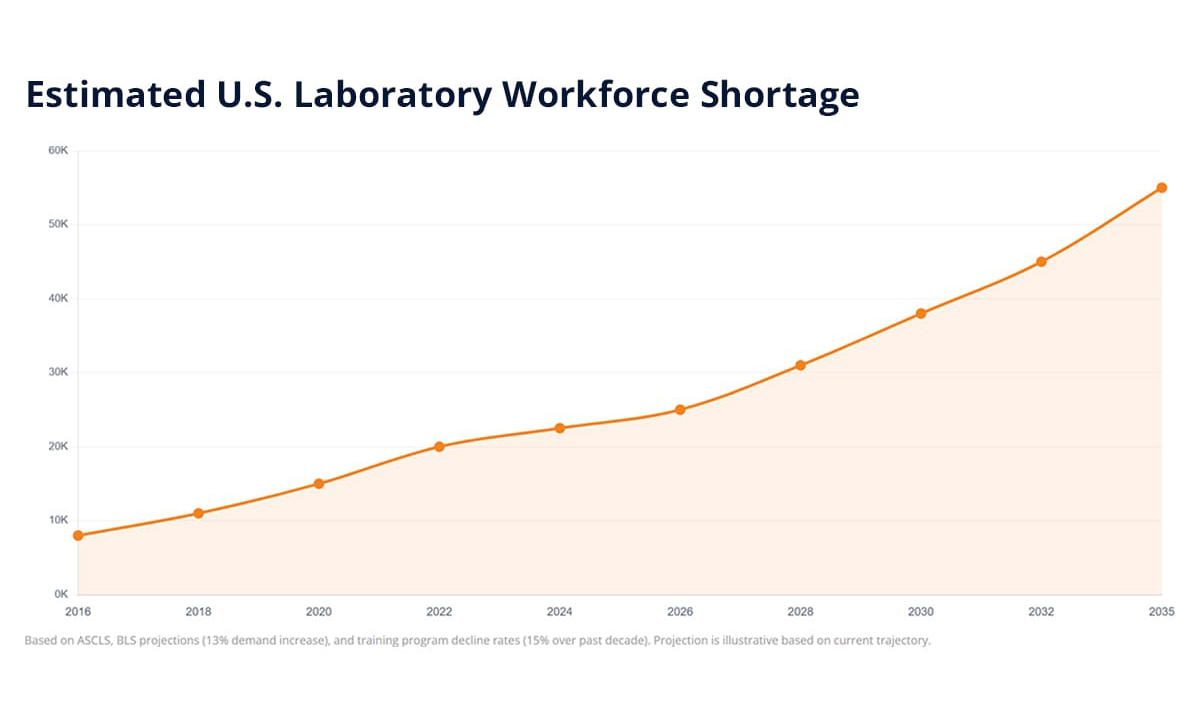 With an estimated 20,000 to 25,000 unfilled laboratory positions across the U.S. and Canada, the staffing crisis is structural, not temporary. The smartest labs in 2026 are shifting their strategy from hiring alone to automating manual workflows, digitizing institutional knowledge, and using LIMS and ELN tools to recover 20-30% of operational capacity.[Read More] With an estimated 20,000 to 25,000 unfilled laboratory positions across the U.S. and Canada, the staffing crisis is structural, not temporary. The smartest labs in 2026 are shifting their strategy from hiring alone to automating manual workflows, digitizing institutional knowledge, and using LIMS and ELN tools to recover 20-30% of operational capacity.[Read More]
Semaphore Solutions Is Now Labbit  Semaphore Solutions has officially rebranded as Labbit. After a decade of helping laboratories tackle complex informatics challenges, spanning hundreds of implementations and over 300,000 hours of work across clinical diagnostics, genomics, and GMP manufacturing, the company has shifted its full focus to the Labbit modern LIMS platform.[Read More] Semaphore Solutions has officially rebranded as Labbit. After a decade of helping laboratories tackle complex informatics challenges, spanning hundreds of implementations and over 300,000 hours of work across clinical diagnostics, genomics, and GMP manufacturing, the company has shifted its full focus to the Labbit modern LIMS platform.[Read More]
The crisis of reuse: Why 65% of experiments are being repeated  New research from Sapio Sciences reveals that 65% of lab professionals report repeating experiments because prior results are too hard to find or reuse. While 81% say their ELN records data effectively, it falls short on interpretation. The findings highlight a growing need for next-generation notebooks that support reuse, context, and decision-making.[Read More] New research from Sapio Sciences reveals that 65% of lab professionals report repeating experiments because prior results are too hard to find or reuse. While 81% say their ELN records data effectively, it falls short on interpretation. The findings highlight a growing need for next-generation notebooks that support reuse, context, and decision-making.[Read More]
User Acceptance Testing Best Practices for Scientific Informatics Solution  With 14% of IT projects deemed total failures and 31% missing their original goals, user acceptance testing (UAT) is a critical safeguard for scientific informatics implementations. This white paper from Kalleid outlines best practices for building effective UAT teams, scripts, and acceptance criteria to ensure systems meet real user needs.[Read More] With 14% of IT projects deemed total failures and 31% missing their original goals, user acceptance testing (UAT) is a critical safeguard for scientific informatics implementations. This white paper from Kalleid outlines best practices for building effective UAT teams, scripts, and acceptance criteria to ensure systems meet real user needs.[Read More]
How to Harness AI to Accelerate Laboratory Insights  This white paper from CSols explores how laboratories can move beyond reactive reporting into predictive modeling and automated discovery. Key topics include breaking down fragmented vendor silos, ensuring data is FAIR-compliant, anchoring AI-generated insights, and maintaining GxP and GAMP 5 compliance throughout the digital transformation process.[Read More] This white paper from CSols explores how laboratories can move beyond reactive reporting into predictive modeling and automated discovery. Key topics include breaking down fragmented vendor silos, ensuring data is FAIR-compliant, anchoring AI-generated insights, and maintaining GxP and GAMP 5 compliance throughout the digital transformation process.[Read More]
How to Choose a Laboratory Information System: A Strategic Framework for Life Sciences  With 66% of complex enterprise software implementations failing to meet objectives, choosing the right laboratory information system demands more than a feature checklist. Astrix outlines a regulatory-first selection framework covering stakeholder alignment, 21 CFR Part 11 compliance, build vs. buy analysis, and phased implementation strategy.[Read More] With 66% of complex enterprise software implementations failing to meet objectives, choosing the right laboratory information system demands more than a feature checklist. Astrix outlines a regulatory-first selection framework covering stakeholder alignment, 21 CFR Part 11 compliance, build vs. buy analysis, and phased implementation strategy.[Read More]
How Long Should You Keep Lab Notebooks? Retention Requirements by Field  How long should you keep lab notebooks? The answer depends on your field, funding source, and regulatory requirements. From NIH's 3-year minimum to indefinite retention for patent-related work, this guide breaks down retention timelines across academia, FDA-regulated research, clinical trials, GLP studies, and more.[Read More] How long should you keep lab notebooks? The answer depends on your field, funding source, and regulatory requirements. From NIH's 3-year minimum to indefinite retention for patent-related work, this guide breaks down retention timelines across academia, FDA-regulated research, clinical trials, GLP studies, and more.[Read More]
|