Posted on September 16, 2026
By CSols Inc.
Blog, Featured Content
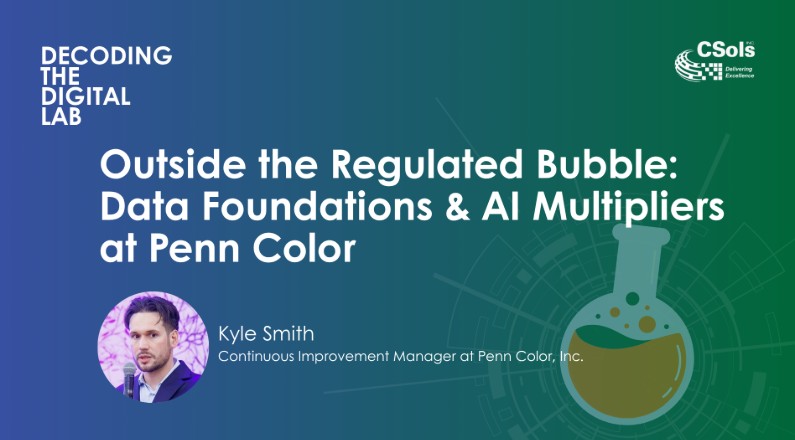
Structuring R&D data turns AI into an organizational "high-speed librarian," multiplying scientists' expertise, drastically slashing formulation trial-and-error, and driving real ROI. Lisa Richard and Kyle Smith explore how coatings and performance materials companies can digitize faster and smarter while unlocking greater value from their R&D data.
[Read More]
Posted on September 16, 2026
By Kalleid
Blog, Featured Content

Protocol amendments add costly delays to drug development, yet roughly 23% are considered preventable. AI helps sponsors catch design flaws, assess feasibility, and simulate operational performance before enrollment begins, reducing costly mid-trial changes while improving protocol quality and shortening development cycles.
[Read More]
Posted on September 16, 2026
By SciY
Blog, Featured Content

Missed the live webinar? Watch the recording to understand how connected digital lab workflows help streamline sample tracking, automate data capture, and enhance traceability across the laboratory. Featuring a real-world use case, this session demonstrates how paperless processes can improve efficiency while supporting regulatory compliance.
[Read More]
Posted on September 16, 2026
By Astrix Technology Group
Blog, Featured Content

With 71% of ELN initiatives failing to realize users’ objectives, selecting the right system requires more than tactical software acquisition. A vendor-agnostic framework helps organizations evaluate interoperability, scalability, and regulatory rigor while aligning scientific informatics with business objectives and building a unified digital strategy for long-term ROI.
[Read More]
Posted on September 16, 2026
By CSols Inc.
Blog, Featured Content

The post identifies 10 warning signs that a laboratory is not ready for AI, including biased data, paper-based workflows, siloed systems, inconsistent naming, and weak leadership support. It also outlines four steps labs can take to build a FAIR-compliant, AI-ready informatics foundation.
[Read More]
Posted on September 9, 2026
By Kalleid
Blog, Featured Content

AI is transforming Computer System Validation in biopharmaceutical R&D by accelerating documentation and reducing repetitive work. But automation alone cannot ensure compliance. This guide explores how organizations can use AI to streamline validation while preserving human oversight, data integrity, reproducibility, and scalability.
[Read More]
Posted on September 9, 2026
By LabLynx
Blog, Featured Content

Laboratory informatics is not a single product or platform. It encompasses five types of laboratory data, each requiring appropriate ownership and management. This guide helps laboratories identify data gaps, understand system boundaries, evaluate audit trail obligations, and determine which capabilities are needed to build a practical LIMS shortlist.
[Read More]
Posted on September 9, 2026
By SciY
Blog, Featured Content

Legacy LIMS can slow processes, delay projects, and limit agility. WebLab takes a different approach. Combining a modern user experience with a cloud-ready, API-based architecture, it connects laboratory instruments, devices, and business systems seamlessly. Built-in support for ALCOA+, traceability, and 21 CFR Part 11 helps laboratories stay compliant while improving efficiency and visibility.
[Read More]
Posted on September 9, 2026
By CSols Inc.
Blog, Featured Content

Choosing the right LIMS requires balancing laboratory workflows, IT requirements, compliance, AI readiness, budget, and long-term ROI. This ebook provides a practical roadmap with vendor evaluations, user reviews, and comparison matrices to help selection teams identify the solution that best fits their requirements.
[Read More]
Posted on September 9, 2026
By Astrix Technology Group
Blog, Featured Content

FDA scrutiny of laboratory data integrity is intensifying as documentation failures, legacy systems, and hybrid workflows create growing compliance risks. This strategic analysis examines FDA and MHRA expectations and provides a roadmap to a compliant-by-design informatics architecture that strengthens reliability and reduces regulatory risk.
[Read More]
Posted on September 8, 2026
By LabLynx
Blog, Featured Content

A LIMS is built around the sample, an ELN around the experiment, and every shared feature sits on one of those two spines. A 2017 survey synthesis found 98 percent awareness of electronic notebooks against 11 percent use, with recurring cost the barrier. Many labs need both; the expensive mistake is expecting one to do the other's job.
[Read More]
Posted on September 8, 2026
By LabLynx
Blog, Featured Content

LIS and LIMS are not two names for one system. An LIS is built around a patient, a requisition and an accession number under CLIA. A LIMS is built around a sample, a client and a holding time under ISO/IEC 17025 or 21 CFR Part 11. The feature lists have converged; the regulation and the data model have not, and that surfaces at go-live.
[Read More]
Posted on September 2, 2026
By Astrix Technology Group
Blog, Featured Content

Disconnected laboratory systems leave life science organizations struggling with data integrity, compliance, and efficiency. A structured informatics strategy connects critical data, strengthens interoperability, and transforms laboratory information into actionable intelligence that supports innovation and faster time-to-market.
[Read More]
Posted on September 2, 2026
By CSols Inc.
Blog, Featured Content
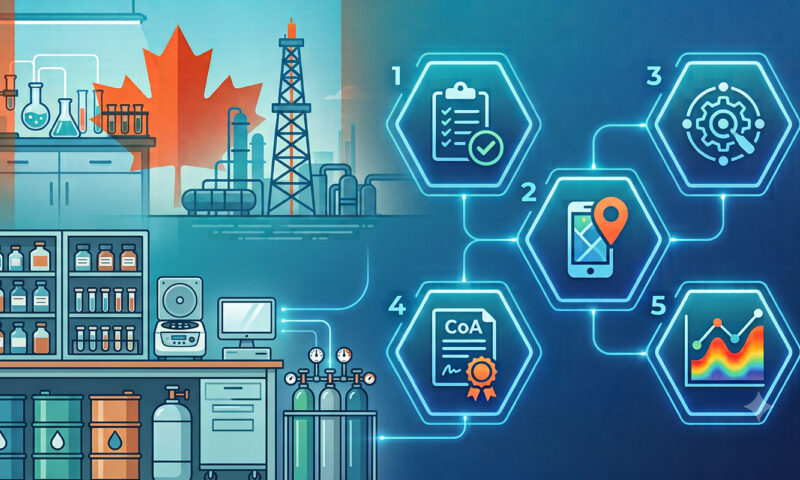
Canadian energy and chemical laboratories can achieve faster turnaround, lower costs, and stronger compliance without replacing their entire LIMS. Five targeted optimizations deliver practical gains by automating workflows, connecting instruments, improving field sampling, streamlining CoAs, and providing real-time process insights.
[Read More]
Posted on September 2, 2026
By CSols Inc.
Blog, Featured Content
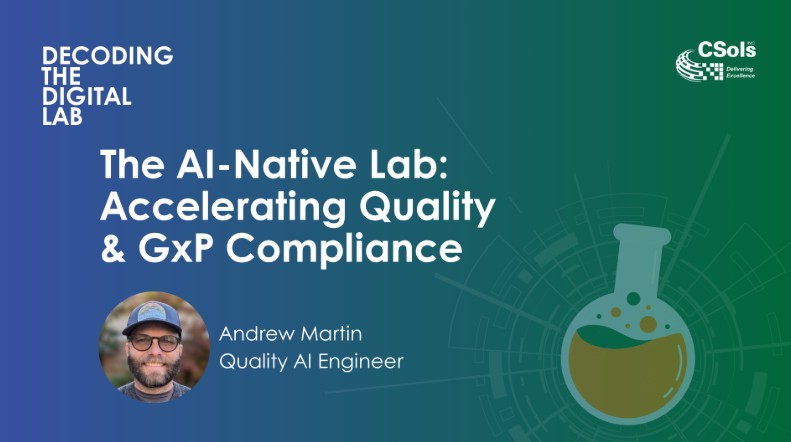
Want to cut a week-long compliance audit down to just two hours without compromising safety? Listen to this episode if you want to stop dreading compliance paperwork and start leveraging AI as your ultimate research assistant.
[Read More]
Posted on September 2, 2026
By Kalleid
Blog, Featured Content

Biopharma pipelines can shift rapidly, creating sudden demand for specialized expertise and capacity. When programs slow, organizations must redirect resources while permanent staff may not have the skills needed elsewhere. Flexible access to specialized talent helps bridge these gaps and keep programs moving.
[Read More]
Posted on September 2, 2026
By SciY
Blog, Featured Content

Contract laboratories are under pressure to process more samples, deliver results faster, and maintain compliance. Yet many still rely on paper-based, spreadsheet, or legacy systems that limit efficiency and visibility. Discover 10 practical ways WebLab helps improve traceability, accelerate reporting, enhance client service, and scale operations with confidence.
[Read More]
Posted on August 27, 2026
By SciY
Blog, Featured Content

Spreadsheets, emails, repeated data entry, and manual approvals may work for a while, but they often become barriers as laboratory operations grow. If your team spends too much time tracking status, searching for information, or managing disconnected processes, it may be time for a different approach.
[Read More]
Posted on August 27, 2026
By CSols Inc.
Blog, Featured Content
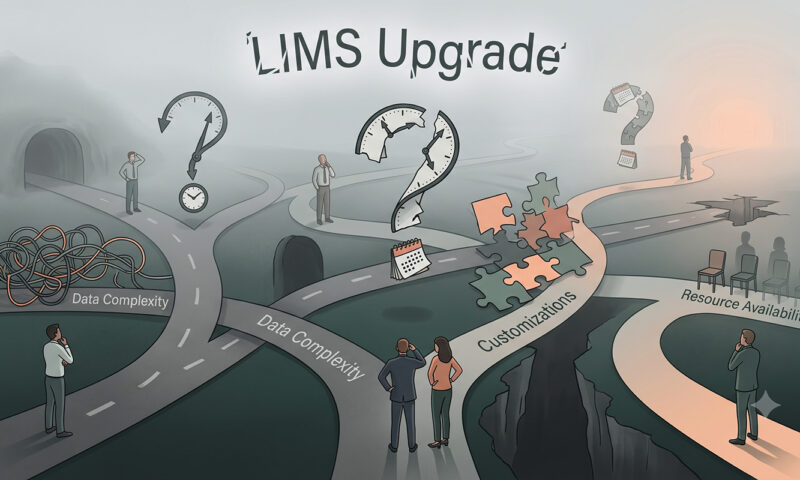
LIMS upgrades can take anywhere from 1–18+ months, depending on scope, resources, and lab-specific requirements. This blog explores the key factors that drive delays and practical strategies to accelerate execution, including data cleaning, out-of-the-box functionality, dedicated backfill staff, and risk-based Computer Software Assurance (CSA).
[Read More]
Posted on August 27, 2026
By Astrix Technology Group
Blog, Featured Content

The FDA and EMA’s 2026 Good AI Practice principles establish a framework for responsible AI use across the drug product life cycle. Regulatory Affairs is uniquely positioned to lead AI governance while ensuring GxP compliance, data integrity, and regulatory confidence. The challenge: accelerating AI adoption while meeting evolving compliance standards.
[Read More]


