Posted on October 16, 2025
By CSols Inc.
Blog

In this case study, CSols replaced an outdated LIMS with Thermo Scientific SampleManager v11.1, integrating it with the client’s ERP system. The implementation included data migration, process automation, and LIMS-ERP alignment—resulting in standardized workflows, higher efficiency, and improved release speed.
[Read More]
Posted on October 16, 2025
By Confience
Blog

Baruel, a leading Brazilian foot-care and cosmetics manufacturer, modernized its quality control lab by replacing manual processes with myLIMS. The transformation improved efficiency, enhanced traceability, and enabled faster, more reliable reporting through digitalized, real-time operations.
[Read More]
Posted on October 16, 2025
By LabLynx
Blog

Accurate allergen testing is essential to protect consumers and maintain trust in food production. Modern food labs use advanced tools and workflows to detect hidden allergens, ensure regulatory compliance, and prevent costly recalls while helping every product reach the market with confidence and safety.
[Read More]
Posted on October 16, 2025
By Labbit
Blog
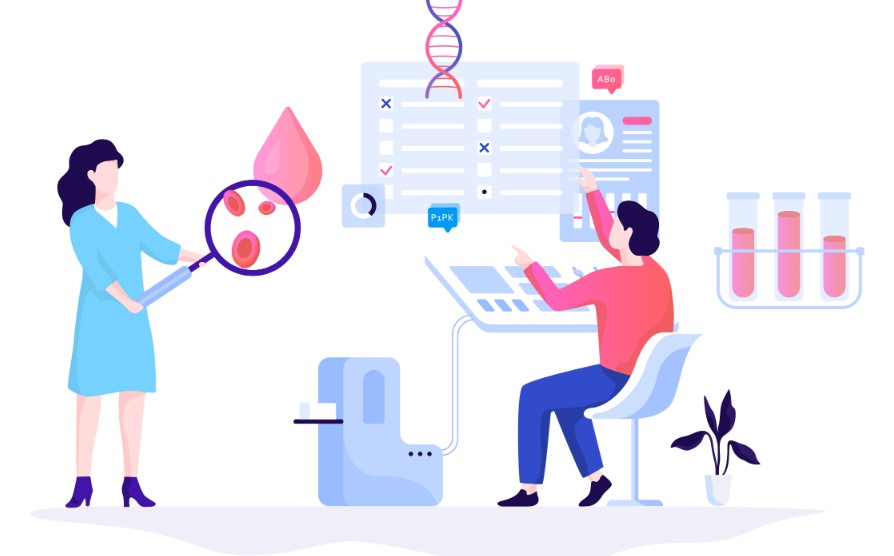
FAIR Data Principles are guidelines to make scientific data
Findable,
Accessible,
Interoperable, and
Reusable. Rather than a single standard, FAIR is a framework for making data easier to locate, share securely, and reuse. As data volumes and collaborations grow, adopting FAIR is key to accelerating discovery and improving compliance. This series explores each FAIR component—starting with
Findable—and how modern LIMS solutions can help labs apply these principles.
[Read More]
Posted on October 16, 2025
By CSols Inc.
Blog

In this episode, we break down what different LIMS hosting models—on-prem, cloud, and SaaS—really mean for the end user. Hear how each option impacts user empowerment, collaboration, and your lab’s ability to adapt in a fast-changing environment.
[Read More]
Posted on October 12, 2025
By Corinne Jones
Newsletter
October 13, 2025 Laboratory Informatics Weekly Update Volume 23, Issue 41 In This Issue Featured Books LIMS Selection Guide for ISO/IEC 17025 Laboratories Featured Content Clinical Diagnostics Is Powering Medicine’s FutureClinical diagnostics is transforming healthcare by enabling earlier disease detection, personalized treatments, and faster decision-making. With consistent, accurate, and efficient testing supported by advanced lab management systems, laboratories are driving better outcomes, reducing errors, and shaping the future of medicine. [Read More] 10 Fundamental Steps to Obtain ISO/IEC 17025 AccreditationBecoming certified to ISO/IEC 17025 is a complete process that requires commitment, planning, and meticulous execution by the laboratory. This…
Posted on October 10, 2025
By LabLynx
Blog

Clinical diagnostics is transforming healthcare by enabling earlier disease detection, personalized treatments, and faster decision-making. With consistent, accurate, and efficient testing supported by advanced lab management systems, laboratories are driving better outcomes, reducing errors, and shaping the future of medicine.
[Read More]
Posted on October 10, 2025
By Confience
Blog

Becoming certified to ISO/IEC 17025 is a complete process that requires commitment, planning, and meticulous execution by the laboratory. This blog explores the 10 fundamental steps a laboratory needs to follow to obtain accreditation in ISO/IEC 17025.
[Read More]
Posted on October 10, 2025
By CSols Inc.
Blog
Justifying a LIMS purchase requires documenting both measurable cost savings from reduced labor and greater efficiency, as well as qualitative benefits like improved data quality, better decision making, and enhanced regulatory compliance. The quantitative case uses a nine-step ROI process that assesses current inefficiencies, estimates time savings from automation, and compares those savings to total LIMS costs.
[Read More]
Posted on October 10, 2025
By Labbit
Blog
This presentation explores how business process modeling notation (BPMN) can be transformed into a semantic representation using knowledge graphs. This approach enables richer data integration, queryability, and reasoning across enterprise processes.
[Read More]
Posted on October 10, 2025
By Sapio Sciences
Blog
Scientific notebooks have always been at the center of discovery. But today, an ELN that simply records and stores data is no longer enough. Scientists require more. They require a solution that truly thinks the way they do—working as an active collaborator to help them design, plan, execute, and analyze experiments seamlessly.
[Read More]
Posted on October 10, 2025
By LabLynx
Blog

Many labs don’t realize they’re falling behind until competitors surge ahead with advanced tools and smarter management. Warning signs include paper logbooks, missed deadlines, instrument downtime, and audit stress. Modern laboratory software and LIMS boost efficiency, cut costs, improve accuracy, and drive profitable growth.
[Read More]





