Posted on November 7, 2019
By Thermo Fisher Scientific
News

Thermo Fisher Scientific announced the launch of its Ion Torrent Genexus System, the first fully integrated, next-generation sequencing (NGS) platform featuring an automated specimen-to-report workflow that delivers results economically in a single day.
Posted on November 7, 2019
By Corinne Jones
News
MathWorks and Coursera, the world’s leading online learning platform, today announced a joint effort to address the data science skills gap. MathWorks is developing a series of courses entitled “Practical Data Science with MATLAB,” with the first course, “Exploratory Data Analysis with MATLAB,” now available on Coursera.
Posted on November 7, 2019
By Corinne Jones
Newsletter
November 7, 2019 Laboratory Informatics Weekly Update Volume 17, Issue 45 In This Issue Upcoming Webinars 11/12/2019 - Lonza to Host New Webinar – “Paper to EBR in 9 Months: How a Strong Collaboration Leads to Project Success”11/20/2019 - Webinar: Don’t roll the dice on your lab informatics implementation – Fill each required role with care Featured Books Laboratory Information Management for Cannabis Quality AssuranceNext-Generation Sequencing: A Brief Introduction Journal Articles Development and validation of a fast gas chromatography–mass spectrometry method for the determination of cannabinoids in Cannabis sativa LIn this 2018 paper published in the Journal of Food…
Posted on November 4, 2019
By Shawn Douglas
Journal articles
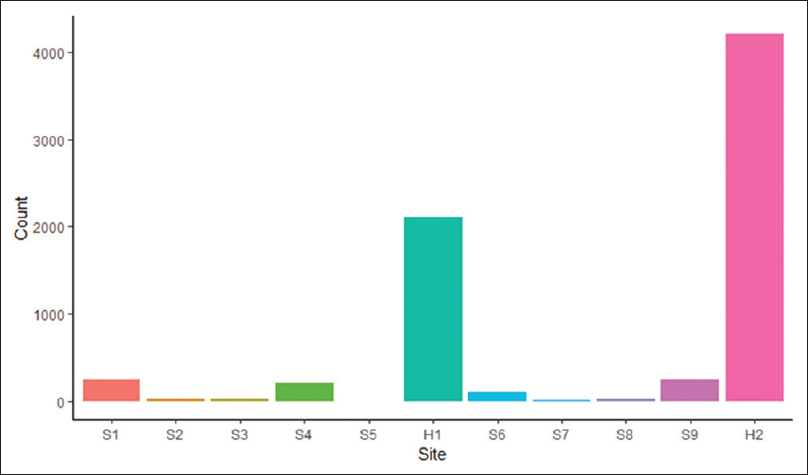
In this brief journal article by Ochsner Health System's Gretchen Galliano, a case is made for a programmatic approach to analyzing missing data in various laboratory information systems (LIS) and determining potential correlations with procedural and systemic processes in the health system. Using the R programming language, homemade scripts, and existing R packages, Ochsner Health Systems visualized and analyzed data from more than 70,000 cases of missing timestamp data, splitting the various cases into five pools. Galliano concludes that the process of "evaluating cases with missing predefined process timestamps" has the potential for improving "the ability to detect other data variations and procedure noncompliance in the AP workflow in a prospective fashion." She added that as an additional benefit, "[p]eriodically evaluating data patterns can give AP LIS teams and operations teams insight into user–LIS interactions and may help identify areas that need focus or updating."


