Posted on May 18, 2020
By Shawn Douglas
Journal articles
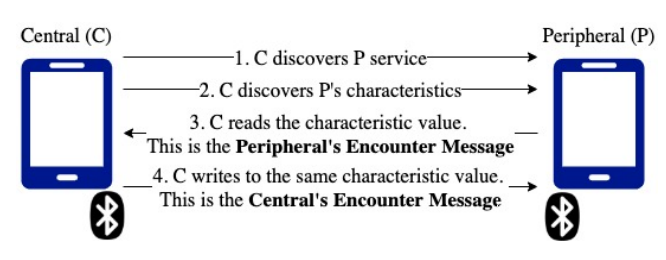
This April 2020 whitepaper authored by Bay
et al. of Singapore's Government Technology Agency presents BlueTrace, a privacy-preserving protocol that underpins Singapore's nationally deployed Bluetooth-based contact tracing system TraceTogether. The white paper describes the purpose of BlueTrace as addressing the key limitation of manual contact tracing: "an infected person can only report contacts they are acquainted with and remember having met." They describe the protocol's design considerations and implementation challenges, as well as how it meets interoperability requirements of health authorities considering its use. Finally they address potential security concerns surrounding the tech. They conclude that while not a stand-alone solution to solving contract tracing issues during a pandemic, Bluetooth-based automated tracing instances can still "ultimately coexist and support the pandemic response plans and processes of the public health authorities guiding us through" a pandemic. The authors also make available OpenTrace, an open-source reference implementation of BlueTrace, on GitHub.
Posted on May 12, 2020
By LabLynx
Blog, News

The latest edition of the longtime industry reference guide to systems, vendors, information and resources concerning laboratory data management has been made available to the public.
Posted on May 12, 2020
By Shawn Douglas
Journal articles
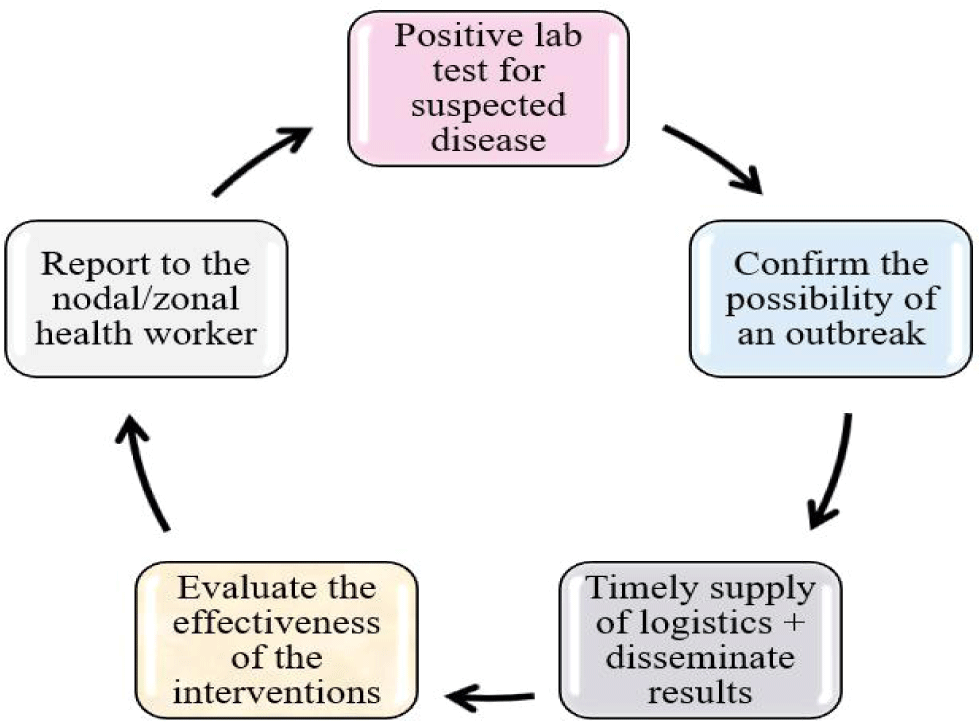
In this 2019 paper published in
AIMS Public Health, Bhattacharya
et al. argue for the benefits of using blockchain technology in public health surveillance. Noting the transparency and trust aspects of the technology, as well as the benefits of " data security and privacy, cost-effectiveness, and verifiability of data," the authors discuss four primary ways blockchain can be applied to healthcare activities, including community disease surveillance. "Blockchain could help independent organizations to manage data more efficiently during pandemics," they note, particularly in unison with machine learning and AI techniques. They conclude that blockchain-based disease surveillance "can be more effective and rapid than traditional surveillance in terms of coverage, durability, consensus, selective privacy, uniqueness, and timing."
Posted on May 12, 2020
By Astrix Technology Group
Blog

The National Institutes of Health (NIH) is our nation’s medical research agency and strives to make scientific discoveries that improve health and save lives. Founded in 1870, the NIH conducts its own scientific research through its Intramural Research Program (IRP), which supports approximately 1,200 principal investigators and more than 4,000 postdoctoral fellows conducting basic, translational and clinical research. In this blog, we will highlight recent ground-breaking NIH research.
Posted on May 12, 2020
By Thermo Fisher Scientific
News

As countries begin to ease restrictions and allow some businesses to reopen, contact tracing and epidemiological studies will be critical to understand resurgence of potential COVID-19 outbreaks. Scientists not only need to know who is infected, they also need to rapidly identify which strain of the virus is spreading. To expedite such analysis, Thermo Fisher Scientific has now optimized its Ion AmpliSeq SARS-CoV-2 Research Panel for the Ion Torrent Genexus System.
Posted on May 12, 2020
By Autoscribe Informatics Inc.
News

The Liverpool Good Clinical Practice Laboratory (GCPLab) Facility directed by Professor Bill Greenhalf, has a crucial role in supporting the International Severe Acute Respiratory and Emerging Infection Consortium. To improve delivery and provide better standardisation the Glasgow team wanted to use the same MATRIX LIMS system as Liverpool, Autoscribe were asked to help and stepped in to provide licences for the MATRIX system, allowing remote access for Glasgow to the Liverpool database.
Posted on May 12, 2020
By Benchling
Blog

We are thrilled to announce Benchling Insights, a new solution for life science R&D companies to make faster, more informed decisions from their data. Insights is seamlessly integrated with all Benchling applications, and enables users to query, visualize, and collaborate around high quality, structured data that resides on the platform.
Benchling enables the creation of higher quality data through a unified data model. Now, with Insights, our customers have the tools to make faster, more informed decisions about their scientific pipeline and operational processes, ultimately accelerating the pace of their research. Best of all, this product is automatically included in subscriptions to the Benchling Professional and Benchling Enterprise editions.
Posted on May 12, 2020
By Corinne Jones
Newsletter
May 12, 2020 Laboratory Informatics Weekly Update Volume 18, Issue 19 In This Issue Featured Books CannaQA Catalog & Price List Featured Content 05/12/2020 - National Institutes of Health (NIH) Research Updates – May 2020The National Institutes of Health (NIH) is our nation’s medical research agency and strives to make scientific discoveries that improve health and save lives. Founded in 1870, the NIH conducts its own scientific research through its Intramural Research Program (IRP), which supports approximately 1,200 principal investigators and more than 4,000 postdoctoral fellows conducting basic, translational and clinical research. In this blog, we will highlight recent…
Posted on May 5, 2020
By Shawn Douglas
Journal articles
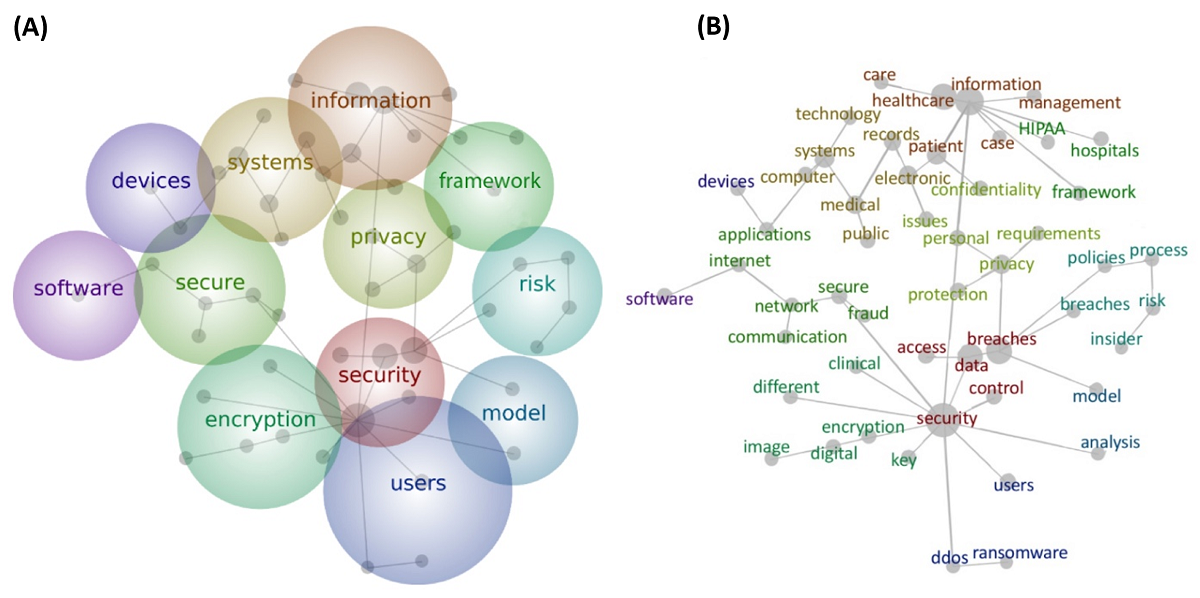
Cybersecurity remains a vital consideration for entities within the healthcare setting, with academic researchers publishing on the topic frequently. But since computer security in healthcare first started getting researched in the mid-1980s, how have topical focuses shifted? What areas, if any, are underserved by current research? Jalali
et al. attempt to answer those and other questions in this 2019 paper published in
Journal of Medical Internet Research. Using bibliometric analysis as their tool, the authors conducted chronological analysis, domain clustering analysis, and text analysis on 472 English-language articles ranging from 1985 to September 2017. The conclude that "[d]espite the increase in research and attention to cybersecurity, there are persistent shortcomings in the research on cybersecurity," including implications that emerging cyber threats, physical security methodologies, and several human elements of cybersecurity have not been sufficiently captured in research. They worry that "a school of thought that knowledge, especially specific strategies and tactics, should not be shared openly," further suppresses research growth and utility.
Posted on May 5, 2020
By Astrix Technology Group
Blog
As part of its mission to ensure public safety, the FDA inspects manufacturers or processors of FDA-regulated products to verify that they comply with relevant regulations. The FDA also inspects facilities that conduct clinical trials with humans and laboratories that conduct studies with animals or microorganisms when these studies are used to apply for FDA approval of a medical product. A typical inspection can last for 2-3 days and involves a number of key steps that you should be aware of.
Posted on May 5, 2020
By STARLIMS Corporation
News

Abbott Informatics is proud to announce the availability of the STARLIMS Technology Platform v12. This milestone in the evolution of the Technology Platform (TP) brings numerous enhancements and fixes that will help with the proper operation and maintenance of your STARLIMS system.
Posted on May 5, 2020
By Autoscribe Informatics Inc.
News
Bringing new levels of field sampling optimization, compliance and field data collection, Autoscribe Informatics has announced the integration of Trilogy TAPS sample planning and scheduling management software with its Matrix Gemini configurable laboratory information management system (LIMS). Integration of field data collection and laboratory activities is especially useful in water, environmental, waste and similar industries.
Posted on May 5, 2020
By CSols Inc.
Blog

No more validation.
CSV is a thing of the past.
These are just some of the attention-grabbing headlines I’ve seen in various blogs and LinkedIn posts over the last 12 months about Computer System Assurance (CSA), and the reality couldn’t be more different.
The U.S. FDA originally targeted their
Case for Quality initiative (2011) at improving medical device quality and usability for patient safety. More recently, FDA’s Center for Devices and Radiological Health has sponsored an industry pilot team under the CSA title to improve Computer System Validation (CSV) approaches, as the existing practices were identified as a barrier to the adoption of new technologies.
But, really, how much difference can there be between Validation and Assurance?
Posted on May 5, 2020
By Benchling
News
Benchling, the leading life sciences R&D cloud, today announced the launch of Benchling Insights, a new solution that gives life sciences companies the ability to query, visualize and collaborate around high quality, structured data that resides on the platform. Benchling Insights delivers a 360-degree view of scientific programs and operations to drive faster, more informed decision-making.
Posted on May 5, 2020
By Corinne Jones
Newsletter
May 5, 2020 Laboratory Informatics Weekly Update Volume 18, Issue 18 In This Issue Featured Books The Complete Guide to LIMS and Laboratory Informatics: 2020 Edition Featured Content 05/05/2020 - Strategies for Surviving an FDA AuditAs part of its mission to ensure public safety, the FDA inspects manufacturers or processors of FDA-regulated products to verify that they comply with relevant regulations. The FDA also inspects facilities that conduct clinical trials with humans and laboratories that conduct studies with animals or microorganisms when these studies are used to apply for FDA approval of a medical product. A typical inspection can…


