

Informal Written Quote: Biogas Testing on an Annual Contract
Solicitation #: BL171-23
Gwinnett County, Georgia is seeking informal written quotes for annual biogas testing. The contractor will “[p]rovide appropriate sample collection bottles, shipping materials, analytical services, and other related supplies and services described or reasonably implied herein for the analysis of bio-gas samples.…
Request for Proposals: Implementation of Santa Ana River Regional Bacteria Monitoring Program
Solicitation #: None
“The Santa Ana Watershed Project Authority (SAWPA) requests proposals from qualified firms to provide services related to implementing and overseeing the Santa Ana River (SAR) Regional Bacteria Monitoring Program. The primary purpose of the program is to test water quality in local lakes and streams and determine if measured bacteria concentrations meet the Middle Santa Ana River Total Maximum Daily Load (TMDL) targets and the revised Basin Plan standards.”…
Invitation for Bids: Industrial Hygiene Analytical Lab Services
Solicitation #: IFB_23ASD004
“The California Air Resources Board (CARB)’s Environmental Health and Safety Branch is seeking a qualified analytical laboratory contractor, which has laboratory equipment sensitive enough to provide analytical laboratory testing services. The contractor shall test for the permissible exposure limits for chemical contaminants, mandated by federal and/or state regulations, as defined by the Title 8 CCR 5155(e).…
Webinar: Building Capacity for Automated Sample Prep and Ultra Trace PFAS Analysis
“Solid Phase Extraction (SPE) represents a crucial step in PFAS analysis to achieve the lowest detection limits, but lends itself to substantial inefficiencies when performed manually. Additionally, analytical separation and detection requirements for PFAS have been getting more challenging as advisory and regulatory limits are constantly being updated.…
Webinar: Hands-free microbiology: Empower your laboratory with automation and artificial intelligence solutions
“Microbiology labs today are being challenged to achieve more with fewer resources. Automation solutions effectively address these challenges, reducing the manual workload required for sample processing and reducing turnaround times.
This exclusive webinar provides the opportunity to see total lab automation (TLA) in practice and hear from four microbiology lab leaders who have successfully integrated this technology.…
Laboratory Informatics Weekly Update – Volume 21, Issue 49
December 14, 2023 Laboratory Informatics Weekly Update Volume 21, Issue 49 In This Issue Featured Books The Complete Guide to LIMS and Laboratory Informatics Featured Content What types of lab testing are affected by ISO/IEC 17025?Historically, all types of labs and their associated testing have been positively affected by adopting part of ISO/IEC 17025 (or the entire standard). Some of these labs include analytical, regulatory, product development, manufacturing, research, reference, calibration, and clinical labs, though not without some resource investment. [Read More] The Future of Lab Productivity: Consolidated LIMSWhen it comes to laboratory testing, data is mission critical for…Invitation for Bids: Environmental Analytical Testing Services
Solicitation #: IFB P2375007
The California Department of Fish & Wildlife is seeking bids for environmental lab testing. “Analytical testing services are provided to support enforcement actions where the goal is to protect the beneficial uses of State waters and to identify pollutants that may imperil wildlife.…
What types of lab testing are affected by ISO/IEC 17025?
 Historically, all types of labs and their associated testing have been positively affected by adopting part of ISO/IEC 17025 (or the entire standard). Some of these labs include analytical, regulatory, product development, manufacturing, research, reference, calibration, and clinical labs, though not without some resource investment. [Read More]
The Future of Lab Productivity: Consolidated LIMS
 When it comes to laboratory testing, data is mission critical for laboratories. It provides lab managers with the information they need to evaluate samples, identify patterns, and make decisions, ensuring successful experiments and results. And yet, it is not uncommon for labs to find themselves buried under the weight of inefficient workflows, numerous testing processes, and a deluge of mismanaged data — and many labs are still operating on pen and paper. [Read More]
QIAGEN’s Path to Lab Digitalization with L7|ESP™
 In a world where technological advancements are driving innovation across industries, the field of molecular biology and diagnostics is no exception. Helen Pye of QIAGEN's Molecular Assay Development Department, Manchester, UK, discusses implementing L7|ESP, a fully digitalized platform that is a game changer for QIAGEN's laboratory operations. In this blog post, we'll dive into the fascinating digital transformation taking place at QIAGEN and explore the potential benefits of digitalization in molecular biology and precision diagnostics. [Read More]
3 Reasons Why QLIMS
 Are you on the hunt for the perfect Laboratory Information Management System (LIMS) for your business? Look no further. Here are three compelling reasons why QLIMS stands out from the crowd. [Read More]
What is the importance of a material testing lab to society?
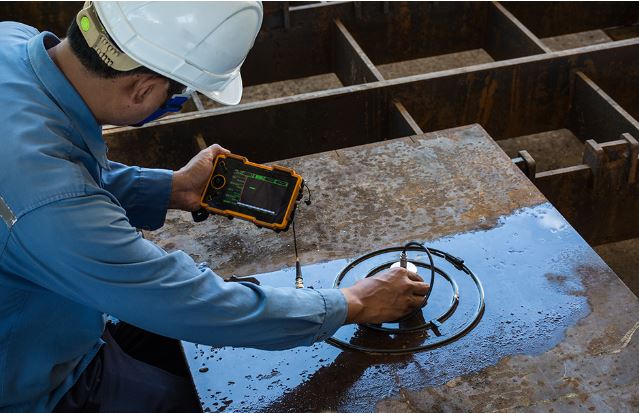 Standardized and regulatory-driven material testing laboratories ensure high-quality, safe, and reliable materials which are paramount to how society functions. Without materials testing laboratories testing the mechanical, chemical, and other properties of materials on a standardized, regular basis, much of the fabric of modern society would be in question. [Read More]
Webinar: Setting QC Standards in the Expanding Landscape of NGS-Based Testing
“Next generation sequencing (NGS) has transformed the practice of molecular diagnostics and is now an approach utilized across multiple disciplines, including genetics, oncology, and infectious disease. Despite its broad application, standardized quality control (QC) metrics are lacking, and little guidance is available for laboratories planning to develop their own NGS-based assays.…
Webinar: Laboratory Nonconformance (Event) Management
“A high-functioning nonconformance management system is a crucial component of regulatory/accreditation compliance, client satisfaction, and continual process improvement.
This ‘Continual Improvement’ webinar provides an overview of the event management process deployed by the Mayo Clinic Department of Laboratory Medicine and Pathology.…
Implementing LIMS in a GMP Cellular Therapy Manufacturing Facility—Dana-Farber Cancer Institute’s Experience with L7|ESP™
 Over the past year, Dana-Farber Cancer Institute's Connell and O'Reilly Families Cell Manipulation Core Facility (DFCI CMCF) has been working to implement a LIMS (Laboratory Information Management System) for their GMP cellular therapy manufacturing facility. In this blog post, we'll take you through their challenges before implementation, their experience with L7|ESP, and the benefits they've realized. [Read More]
Developing a framework for open and FAIR data management practices for next generation risk- and benefit assessment of fish and seafood
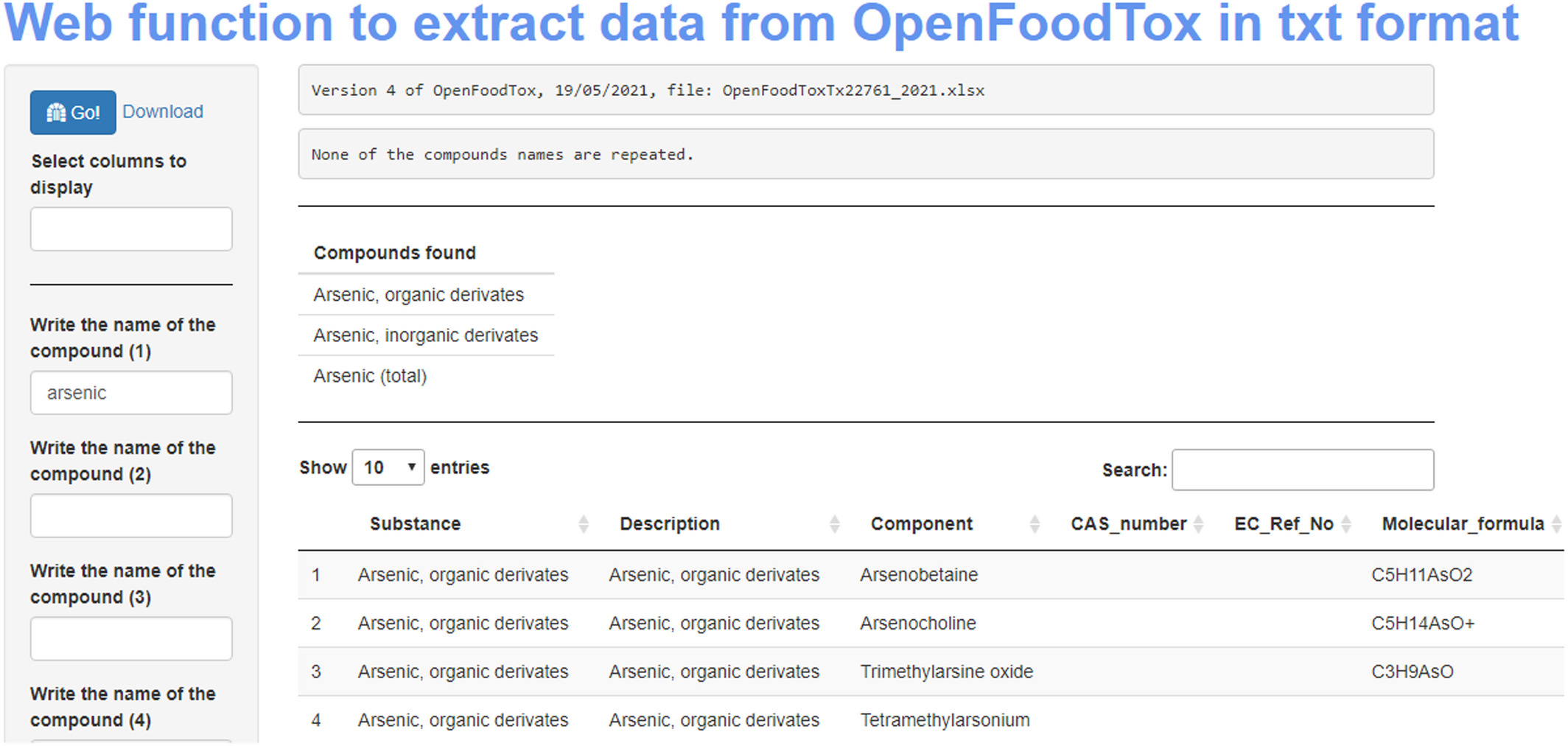 In this brief paper published in the EFSA Journal (from the European Food Safety Authority), Pineda-Pampliega et al. of the Norwegian Scientific Committee for Food and Environment (VKM) discuss the specifics of their work-related project to see "if existing commonly used [food safety] databases in risk assessment are in line with the FAIR principles" (which ensure data and information is findable, accessible, interoperable, and reusable), as well as to determine how to improve deficiencies in meeting FAIR principles. The authors describe their approach using data from both the EFSA's Chemical Hazards Database, OpenFoodTox, and the Institute of Marine Research's Seafood database. After evaluating these databases and describing the necessary framework activities to make them more FAIR, the authors conclude that their methods of using the R programming language, Shiny, GitHub, Zenodo, and appropriate file formats "is an essential step to ensuring the success of the future risk–benefit assessment [towards food safety], by offering more timely results with adequate spending of human and economic resources."
Webinar: Agile Formulation of Recycled Polymers
“Polymer recyclates have a variation in properties that can affect the end properties of recycled polymers. In this session, Dr. Mark Sullivan of Citrine Informatics will present a case study to show how AI can be used to rapidly reformulate recycled polymers to maximize the use of recyclates while consistently meeting end customer requirements.…
Sources Sought: Radioanalytical Laboratory Services for Decommissioning Sites
Solicitation #: NRC-NMSS-11-06-2023
“The U.S. Nuclear Regulatory Commission (NRC) is issuing this Sources Sought Synopsis as a means of conducting market research or as a market survey to determine the availability of potential qualified vendors with the technical capability to provide all management, supervision, administration, and labor for technical support and independent verification work in the form of radioanalytical laboratory services to support the analysis of samples from nuclear materials, non-power reactor, power reactor, fuel, uranium recovery facilities, and complex decommissioning sites.…
Webinar: Enhancing efficiency in quality control procedures through optimization of resources and sustainable practices
“Efficiency in quality control (QC) within the medical laboratory is critical, given its direct impact on patient safety, cost savings, and the sustainability of healthcare practices.
In this webinar, Oswald Sonntag will explain how to take a comprehensive approach to QC processes that integrates the principles of efficiency, cost-effectiveness, and sustainability.…
Webinar: Error Reduction Through Lab Labeling: Trends to Improve Productivity and Reduce Costs in Your Lab
“We’re witnessing advances in the way we diagnose, treat, and cure disease. Along with these advances come a rising tide of samples. Scientists in all kinds of labs are now facing the possibility and even the likelihood that their existing methods of identifying, tracking, and reporting on those samples may be insufficient to the task ahead.…

