Posted on September 28, 2026
By Brandon Holland
Newsletter
 |
|
September 28, 2026
Laboratory Informatics Weekly Update
|
Volume 24, Issue 39
|
|
| Featured Books |
|
The Laboratory Workflow Automation Ladder
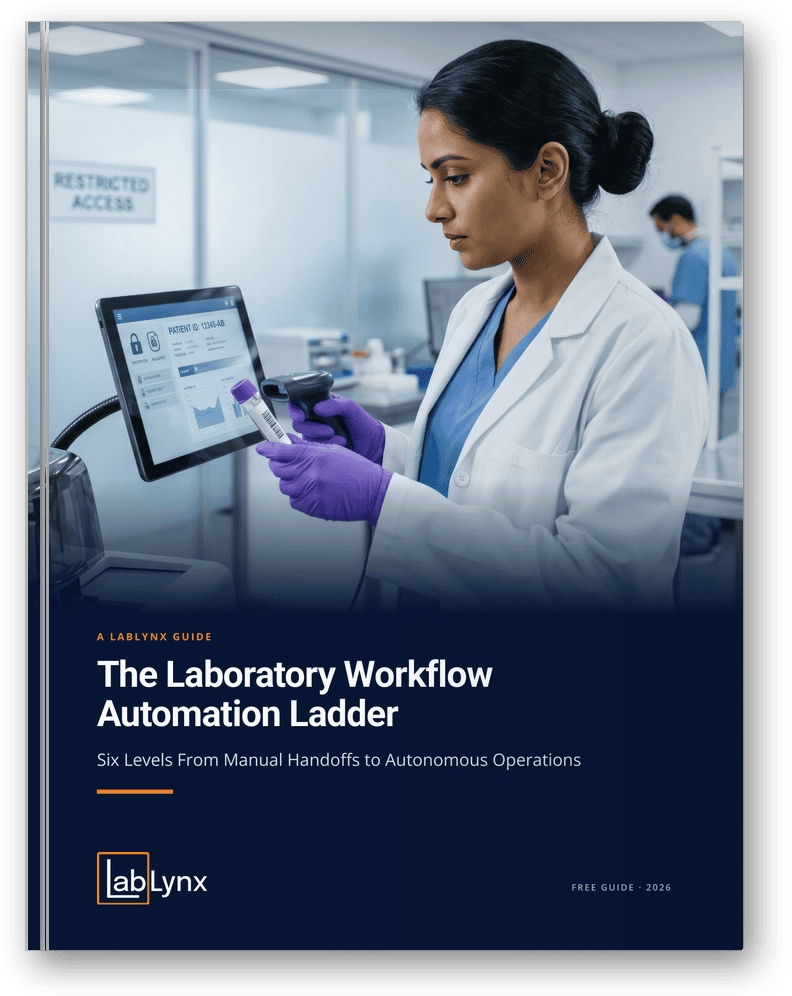 Laboratory workflow automation is a decision about who, or what, carries each handoff in a lab, and who decides what happens next.
| | |
…
Posted on September 24, 2026
By CSols Inc.
Blog, Featured Content

Choosing the right LIMS comes down to identifying your specific lab archetype rather than relying on surface-level software reviews. With vastly different options built for enterprise GxP, agile biotech, and specialized R&D environments, clear, multi-stakeholder requirements are essential before selecting a vendor.
[Read More]
Posted on September 24, 2026
By Kalleid
Blog, Featured Content

When a new system feels confusing, cumbersome, or disruptive, employees quietly fall back on what they know. Personal spreadsheets, unsanctioned collaboration tools, private cloud storage, and improvised workarounds create shadow IT, a symptom of failed user adoption that creates immediate regulatory exposure in GxP environments.
[Read More]
Posted on September 24, 2026
By SciY
Blog, Featured Content

Still using spreadsheets and manual workflows? You may be wasting time and profit each week. Request a personalized ROI analysis to pinpoint waste, quantify the benefits of going digital, and see how LIMS improves throughput, compliance, and reporting. Get tailored recommendations you can take straight to your leadership team to support your digital transformation initiative.
[Read More]
Posted on September 24, 2026
By Astrix Technology Group
Blog, Featured Content

Life sciences labs lose valuable time to manual documentation, review, and data reconciliation. Fragmented systems and transcription errors create costly data debt, limiting AI and predictive analytics. Automated Review-by-Exception workflows cut cycle times and help transform disparate laboratory data into a unified, AI-ready asset.
[Read More]
Posted on September 24, 2026
By LabLynx
Blog, Featured Content

Environmental monitoring results are largely decided before a sample reaches the instrument. Collection, preservation, custody, and holding time controls can invalidate data before analysis begins. Laboratories must track these critical steps accurately, maintain control of records, and ensure deliverables meet the required state format and version.
[Read More]
Posted on September 21, 2026
By Brandon Holland
Newsletter
|
|
September 21, 2026
Laboratory Informatics Weekly Update
|
Volume 24, Issue 38
|
|
| Featured Books |
|
The Laboratory Workflow Automation Ladder
Laboratory workflow automation is a decision about who, or what, carries each handoff in a lab, and who decides what happens next. | | |
…
Posted on September 16, 2026
By CSols Inc.
Blog, Featured Content
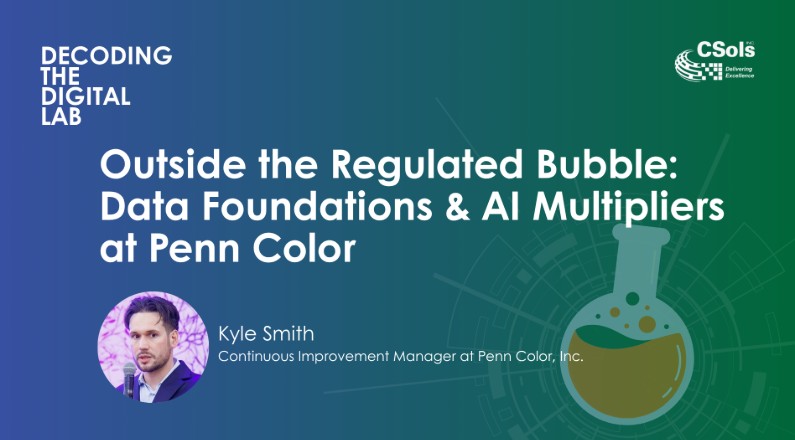
Structuring R&D data turns AI into an organizational "high-speed librarian," multiplying scientists' expertise, drastically slashing formulation trial-and-error, and driving real ROI. Lisa Richard and Kyle Smith explore how coatings and performance materials companies can digitize faster and smarter while unlocking greater value from their R&D data.
[Read More]
Posted on September 16, 2026
By Kalleid
Blog, Featured Content

Protocol amendments add costly delays to drug development, yet roughly 23% are considered preventable. AI helps sponsors catch design flaws, assess feasibility, and simulate operational performance before enrollment begins, reducing costly mid-trial changes while improving protocol quality and shortening development cycles.
[Read More]
Posted on September 16, 2026
By SciY
Blog, Featured Content

Missed the live webinar? Watch the recording to understand how connected digital lab workflows help streamline sample tracking, automate data capture, and enhance traceability across the laboratory. Featuring a real-world use case, this session demonstrates how paperless processes can improve efficiency while supporting regulatory compliance.
[Read More]
Posted on September 16, 2026
By Astrix Technology Group
Blog, Featured Content

With 71% of ELN initiatives failing to realize users’ objectives, selecting the right system requires more than tactical software acquisition. A vendor-agnostic framework helps organizations evaluate interoperability, scalability, and regulatory rigor while aligning scientific informatics with business objectives and building a unified digital strategy for long-term ROI.
[Read More]
Posted on September 16, 2026
By CSols Inc.
Blog, Featured Content

The post identifies 10 warning signs that a laboratory is not ready for AI, including biased data, paper-based workflows, siloed systems, inconsistent naming, and weak leadership support. It also outlines four steps labs can take to build a FAIR-compliant, AI-ready informatics foundation.
[Read More]
Posted on September 16, 2026
By Astrix Technology Group
Past Events, Webinars

Most labs have good systems but broken workflows. When ELNs and LIMS don’t connect around the scientist’s needs, people become the integration layer, manually copying and reconciling data. This session shows how designing around end-to-end scientific workflows can improve adoption, reduce data plumbing, and prevent shadow systems.…
Posted on September 14, 2026
By Brandon Holland
Newsletter
|
|
September 14, 2026
Laboratory Informatics Weekly Update
|
Volume 24, Issue 37
|
|
| Featured Books |
|
The Ultimate Guide to Smarter Sample Management
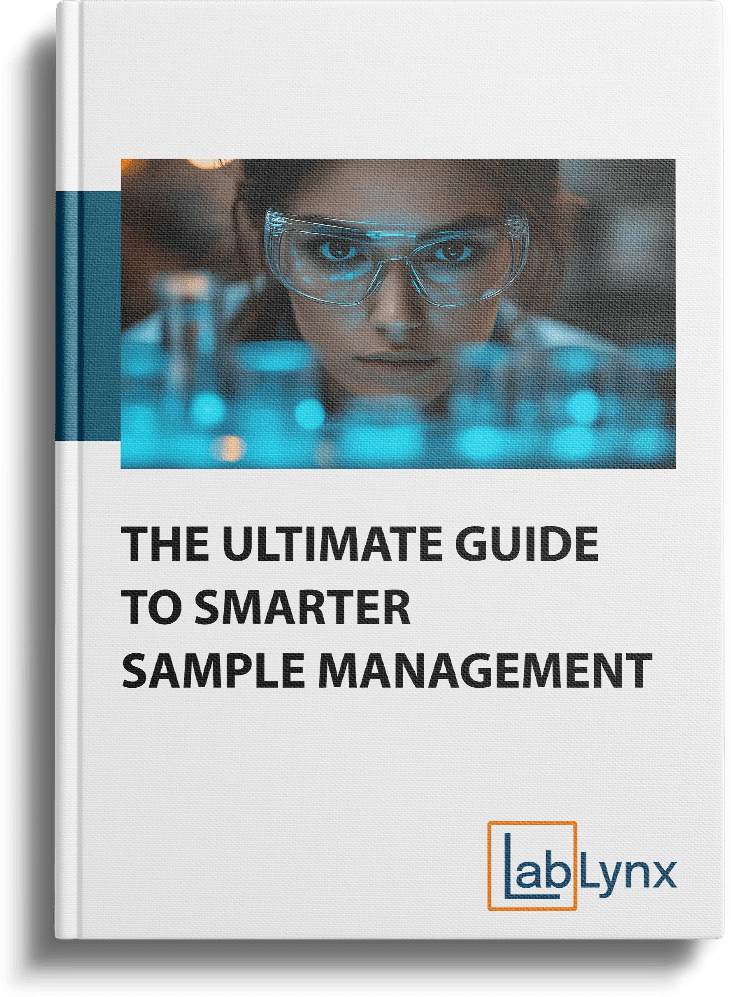 Sample management is invisible until it fails, and then lost samples, labeling errors and disorganized storage slow everything down.
| | |
…
Posted on September 9, 2026
By Kalleid
Blog, Featured Content

AI is transforming Computer System Validation in biopharmaceutical R&D by accelerating documentation and reducing repetitive work. But automation alone cannot ensure compliance. This guide explores how organizations can use AI to streamline validation while preserving human oversight, data integrity, reproducibility, and scalability.
[Read More]
Posted on September 9, 2026
By LabLynx
Blog, Featured Content

Laboratory informatics is not a single product or platform. It encompasses five types of laboratory data, each requiring appropriate ownership and management. This guide helps laboratories identify data gaps, understand system boundaries, evaluate audit trail obligations, and determine which capabilities are needed to build a practical LIMS shortlist.
[Read More]
Posted on September 9, 2026
By SciY
Blog, Featured Content

Legacy LIMS can slow processes, delay projects, and limit agility. WebLab takes a different approach. Combining a modern user experience with a cloud-ready, API-based architecture, it connects laboratory instruments, devices, and business systems seamlessly. Built-in support for ALCOA+, traceability, and 21 CFR Part 11 helps laboratories stay compliant while improving efficiency and visibility.
[Read More]
Posted on September 9, 2026
By CSols Inc.
Blog, Featured Content

Choosing the right LIMS requires balancing laboratory workflows, IT requirements, compliance, AI readiness, budget, and long-term ROI. This ebook provides a practical roadmap with vendor evaluations, user reviews, and comparison matrices to help selection teams identify the solution that best fits their requirements.
[Read More]
Posted on September 9, 2026
By Astrix Technology Group
Blog, Featured Content

FDA scrutiny of laboratory data integrity is intensifying as documentation failures, legacy systems, and hybrid workflows create growing compliance risks. This strategic analysis examines FDA and MHRA expectations and provides a roadmap to a compliant-by-design informatics architecture that strengthens reliability and reduces regulatory risk.
[Read More]
Posted on September 8, 2026
By LabLynx
Blog, Featured Content

A LIMS is built around the sample, an ELN around the experiment, and every shared feature sits on one of those two spines. A 2017 survey synthesis found 98 percent awareness of electronic notebooks against 11 percent use, with recurring cost the barrier. Many labs need both; the expensive mistake is expecting one to do the other's job.
[Read More]


