CSols is hiring a senior STARLIMS developer to design, customize, and maintain v11 and higher across Life Sciences, Quality Manufacturing, and Public Health verticals. The position is remote with global collaboration. It calls for deep technical expertise, strong problem solving, and the instincts to work well across cross-functional implementation teams.
[Read More]

Generalist tech recruiters scan for Python and SQL, then send candidates who have never set foot in a regulated lab. Kalleid breaks down how that language gap stalls LIMS, CDS, and MES projects, burns out hiring managers, and misses the passive specialists entirely. The fix is a recruiter fluent in GxP, CSV, and the science behind the role.
[Read More]

A LIMS replacement is a long term decision that reaches well past the feature checklist. SciY walks through what a future ready system needs: cloud native architecture, API first integration, embedded security and compliance, and an interface teams will actually use. The piece also weighs vendor partnership, migration support, and total cost of ownership.
[Read More]
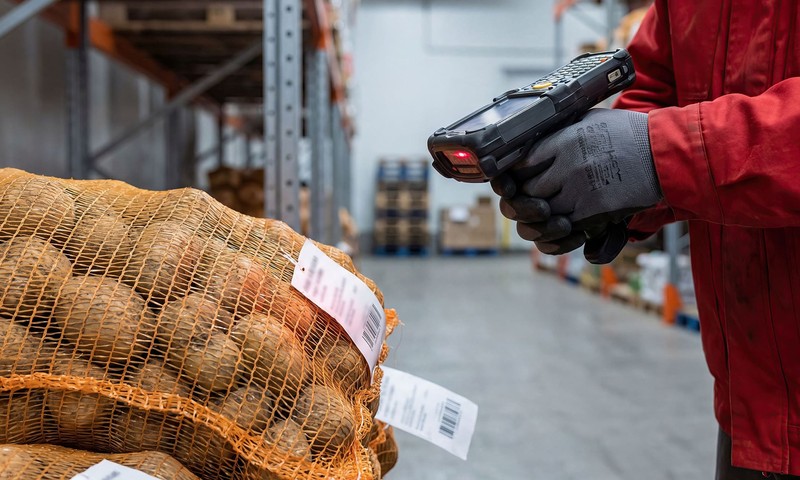
The FDA pushed its Food Traceability Rule to July 2028, but Kroger, Walmart, Sam's Club, Albertsons, Target, and KeHE never moved theirs, and most now require traceability data on all foods rather than only listed ones. This breaks down what the retailer requirements actually involve, where an ASN build leaves lab records unjoined, and what to fix first.
[Read More]
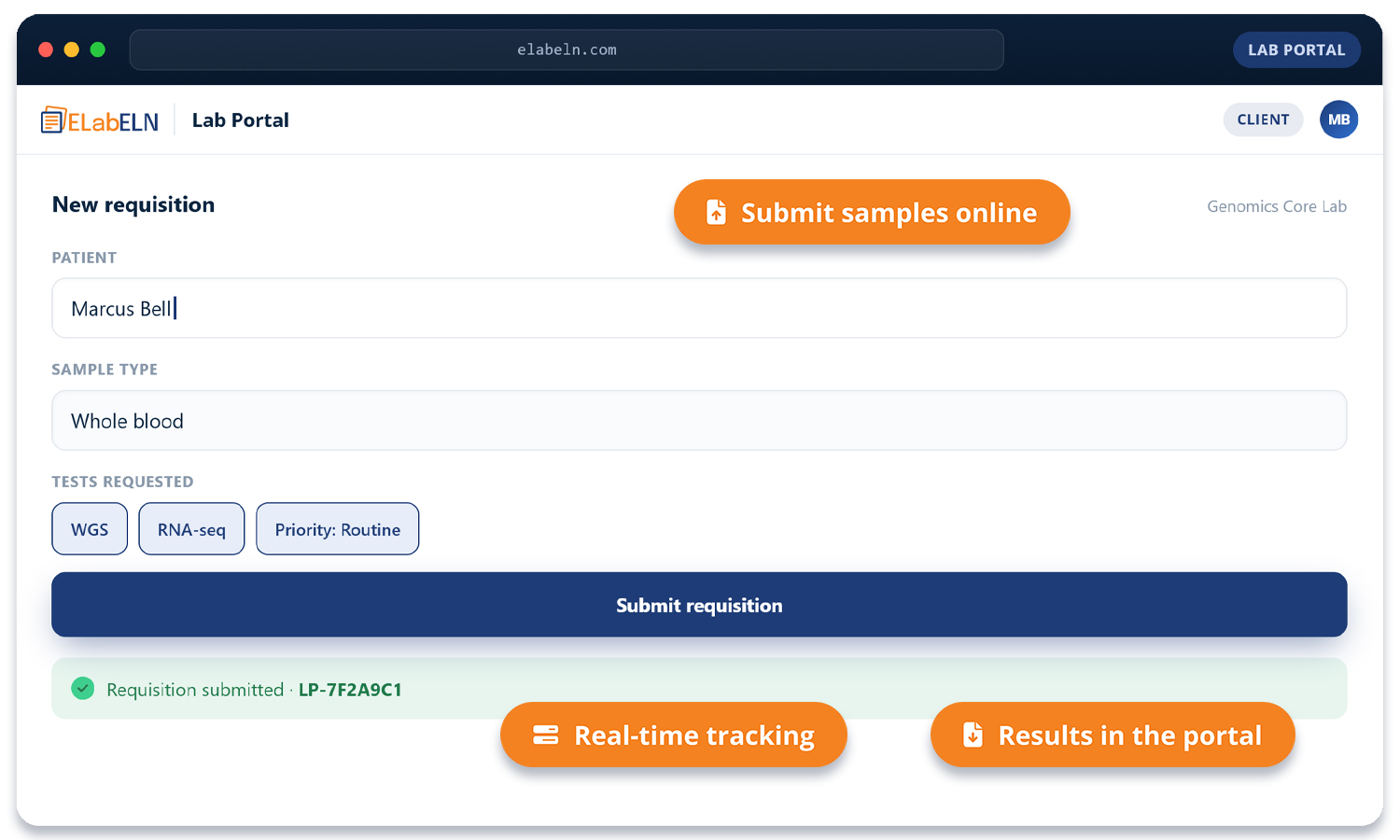
At many labs, sample intake still runs on emailed PDFs, phone calls, and requisitions re-keyed by hand. The ELabELN Lab Portal replaces that with a secure, branded site where clients submit requisitions, track live status, and download their reports. Every submission writes straight into the lab's own ELabELN, so there is no second database to reconcile.
[Read More]
CSols Inc. is hiring a junior to mid-level SampleManager LIMS configuration developer, remote in the USA or Canada. The role blends configuration and customization work, using Workflows, Forms, C#, and VGL to turn lab and business requirements into working LIMS solutions. Ideal candidates know lab processes, sample lifecycle, and instrument integration.
[Read More]

Artificial intelligence is transforming pharmaceutical R&D, yet fragmented, inconsistently annotated data across legacy systems limits what AI can reliably deliver. Kalleid casts ontologies as the semantic backbone linking human expertise to machine reasoning, turning scattered knowledge into AI-ready structures that accelerate trustworthy drug discovery.
[Read More]

A lab's protocols in Google Docs, data in Excel, notes in OneNote: it works until a reviewer asks about an experiment from fourteen months ago, or the person who owns the file leaves. ELabELN lays out how to move that record into an electronic lab notebook without losing the work already done, and without stopping the lab to do it.
[Read More]
Most labs delay leaving spreadsheets and Access not over cost, but over the fear that switching systems means stopping work. LabLynx explains how a phased migration to a LIMS runs alongside the old setup, moving one workflow at a time so samples keep flowing and the lab never goes dark, while dirty data gets cleaned before anything moves.
[Read More]
For lab managers who need to justify AI spending, CSols lays out how to identify, measure, and prove both the cost savings and the operational value of AI in the lab. The guide offers cost-avoidance formulas and a Crawl, Walk, Run framework to audit data readiness and build an executive-ready business case for AI expansion.
[Read More]
The FDA's February 2026 guidance on Computer Software Assurance now favors critical thinking and risk over paperwork. Astrix maps out a risk-based approach to Computer Systems Validation that helps life sciences teams reach audit readiness, stay 21 CFR Part 11 compliant, and cut validation cycle times without compromising data integrity.
[Read More]

CSols, Inc. is hiring a remote Business Development Manager for the Western and Central US. It is a consultative role, acting as a strategic advisor to labs transforming their scientific data management, finding new opportunities and nurturing relationships across informatics strategy, validation, and implementation. Must reside in the territory.
[Read More]
Most lab AI projects fail, and not because the algorithms are weak. They fail on messy, siloed data. CSols lays out a 5-pillar framework for AI data readiness and a quick assessment that benchmarks a lab's current infrastructure, scores it, and maps the exact steps to bridge the gap between raw data and AI excellence.
[Read More]

Kalleid, a laboratory IT consulting firm serving science since 2014, is now a Premier Sponsor of PHUSE, a leading global forum for data scientists. It is joining the PHUSE Nonclinical Topics Working Group to help shape non-clinical data standards, bridge regulatory requirements, and drive efficiencies from early research through clinical development.
[Read More]
The lab informatics landscape is crowded with overlapping terms, and choosing the right platform is now one of a lab's most strategic decisions. Sapio breaks down what a Lab Informatics Platform really is, how it differs from a LIMS and an ELN, and why integrating them into one system is critical for data integrity, compliance, and AI-ready insights.
[Read More]
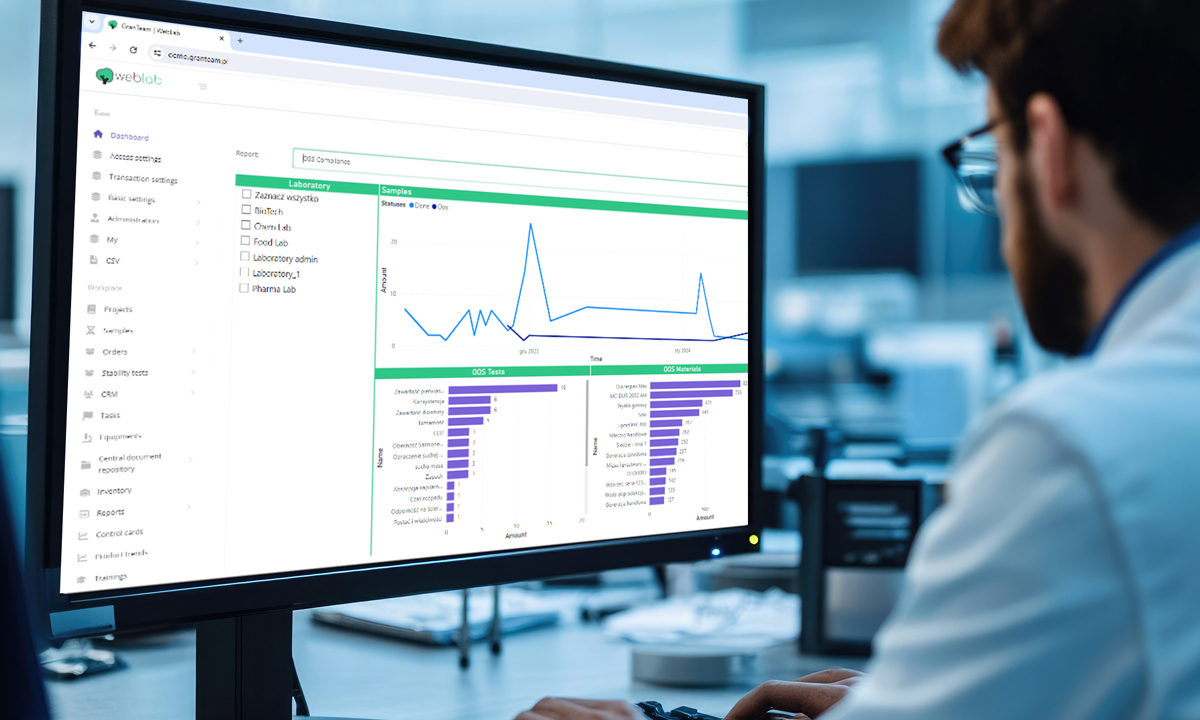
If your team cannot tell which spreadsheet is the latest, whether a sample is done, or where the approval email went, your lab may have outgrown spreadsheets, emails, and manual coordination. As workloads grow, visibility drops and traceability suffers. WebLab offers a smarter alternative for managing critical lab processes.
[Read More]
Most labs are not replacing an old system, they are running on spreadsheets, paper logs, and a shared drive only one person understands. That works until sample volume climbs or an auditor wants a full history. LabLynx walks through five repetitive tasks a LIMS takes off your team, so analysts spend their day on science instead of data entry.
[Read More]

Academic labs lose more than a researcher when a trainee moves on, they lose protocols, context, and data no one else can find. This piece explains what continuity actually requires and how ELabELN keeps that knowledge in the lab with protocol versioning, full text search, and unlimited users so onboarding the next rotation student costs nothing.
[Read More]

LIMS pricing varies widely based on users, configuration, instruments, hosting, and compliance needs. This piece breaks down the four cost components every proposal includes and explains why the lowest quote often costs more over time. It also shows where LabLynx publishes fixed pricing and how to get a real number for your lab.
[Read More]
Traditional electronic lab notebooks record experiments, but they rarely help scientists interpret results or decide what to test next. This piece explains how AI lab notebooks add governed, explainable intelligence to the ELN, linking data, models, and decisions so researchers can move from documentation to real time scientific reasoning.
[Read More]


