
Imagine waiting a lifetime for an idea to become a reality, and then it is over in 100 trillionths of a second. That’s exactly what happened to a group of scientists at Lawrence Livermore National Laboratory in California at 1:03 a.m. on December 5, 2022, when 192 giant lasers blasted a tiny cylinder of hydrogen and achieved an energy gain known as ignition, a major breakthrough in nuclear fusion.
[Read More]

The drive to establish capabilities cannot come at the expense of measuring meaningful impact. Establishing criteria for success will help guide sponsors in selecting the appropriate decentralized clinical trials (DCT) elements for a given trial to best meet goals for patient recruitment, diversity, and retention, along with the site and sponsor benefits. As sponsors carefully consider different DCT elements and as the industry progresses through to the point of increasing adoption, it’s important to measure both short and long-term value and to determine how to best interpret that value for future decision-making.
[Read More]

OnQ Software has a special interview with Jonathan Gannoulis that focuses on the journey to releasing the
QLIMS platform. In part one, we got an inside look at the introduction, initial stages, and journey that led to the creation of QLIMS. In part two, we will dive into how OnQ Software translated its principles into a product, resulting in a LIMS system that revolutionizes laboratory management.
[Read More]

Test result entry and report generation are two important aspects of laboratory operations. Unfortunately, it is the dire reality that many labs struggle to get both done. Agaram Technologies’ Logilab ELN provides a more efficient way to execute & automate test result entry & report generation in the lab. Here’s a quick overview of how result entry and reporting become easier with Logilab ELN implemented.
[Read More]

LinkedIn is a powerful tool for connecting with recruiters, hiring managers, and potential scientific industry customers. Creating a profile that accurately reflects your expertise, experience, and qualifications is essential. Here are some steps for crafting the perfect LinkedIn profile as a life science professional.
[Read More]

Textile manufacturing depends heavily on laboratory testing to both monitor production and help ensure product quality. That requires fast access to information and the ability to generate reports that are meaningful to management, production personnel, and customer support specialists. Through its workflow management, results management, audit trail, and regulatory support functionality, a LIMS system can provide the support textile companies need to streamline lab operations and make it easier to produce, manage, access, and utilize lab data and information while reducing labor costs.
[Read More]
 The need for better organization of laboratory operations is well known. While today’s selection of commercial laboratory information management systems (LIMS) is a good start to organizing and running a lab, these solutions are only geared toward the management of wet lab operations. Existing solutions are inefficient for data-intensive laboratory operations that require significant bioinformatic data analyses. Therefore, in labs already burdened with the inefficiencies caused by unlinked functional silos, current LIMS solutions do nothing to resolve inefficiencies, and worse, laboratory operations remain fragmented. [Read More]

Customer satisfaction continues to fall below the levels seen during the height of the COVID-19 pandemic. A recent study found that 53 percent of US consumers have cut spending after having a bad customer service experience with a company, and 60 percent said they would spend more with a company if they had a better customer relationship. Per the same study, businesses across the globe stand to lose nearly $4.7 trillion in revenue due to poor customer engagement. Customers should not settle for an automated chatbot, after-hours answering service, or sitting on hold for an hour listening to Kenny G.
[Read More]
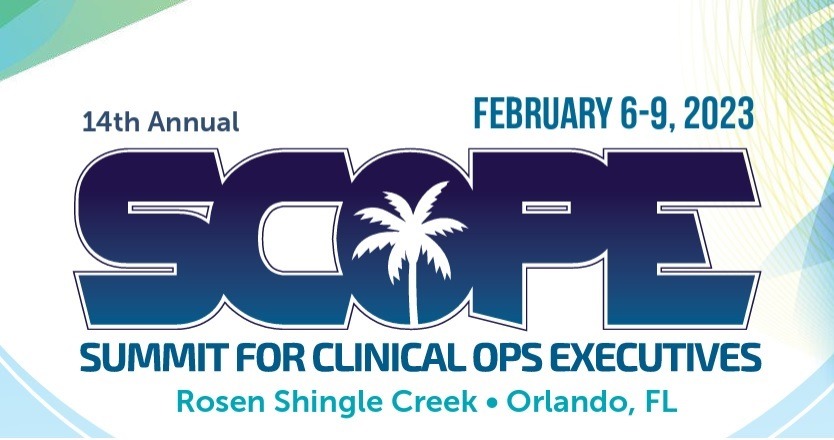
Astrix participated in the
SCOPE Summit 2023 as a Corporate Sponsor. The conference took place from February 6 to 9, 2023 in Orlando, FL at the Rosen
Shingle Creek hotel. It was four stimulating days of in-depth discussions. There were 28 different tracks, 3 plenary keynote sessions, special cross-department panels, and interactive breakout discussions.
[Read More]

The laboratory informatics space has been challenged to create a functionally competent and technically advanced LIMS. R&D and QA/QC laboratories are trying to solve this complex problem. At this point, the AI-based model disrupts the old approach to LIMS and enables a configuration that is driven by the user and operates independently. OnQ Software has a special interview with Jonathan Gannoulis that focuses on the journey to releasing the
QLIMS platform.
[Read More]

ISO 15189 is an international standard, prepared the International Organization for Standardization (popularly referred to as ISO, which brings together a worldwide federation of national standardization bodies to formulate standards), that specifies requirements for competence and quality that are specific for medical laboratories to meet both the technical competence and management system requirements necessary for delivering consistent technically valid results.
[Read More]

Changing the way your lab works to fit the rigid structure of an off-the-shelf LIMS does little to improve your lab’s performance. Implementing a LIMS that fits your lab’s unique capabilities will elevate performance and customer service. Configurability, extensibility, integrations, and customizations ensure LabLynx clients get the perfect LIMS solution for their labs, both today and into the future.
[Read More]

The management of diagnostic testing in veterinary pathology laboratories is complicated because of the multiple species/breeds that must be supported, on top of the fact that animals cannot tell you what is wrong with them to point you in the right direction!
Luckily Autoscribe has been supporting veterinary laboratories for many years and so our Veterinary LIMS has evolved, with customer feedback, to include many extras to help them provide a fast, efficient service in this highly competitive market.
[Read More]

In today’s ever changing Pharmacovigilance system organizations, companies often find themselves in a situation where it is advantageous to upgrade their pharmacovigilance system by migrating data from legacy systems into a new or even existing system. A data migration project will often involve the use of ETL technology to assist. In this blog, we will discuss some of the benefits, challenges and best practices involved in using automated ETL (Extract-Transfer-Load) tools to migrate data from legacy systems to a new safety system.
[Read More]

Collecting personally identifiable information (PII) increases your lab’s cybersecurity risk. Even if you don’t deal directly with the public, your business clients may send PII with their orders. You also keep data about your lab’s employees and contract staff. Storing this sensitive information in databases and spreadsheets with limited access control opens your lab to financial, legal, and regulatory repercussions.
[Read More]

L7 Informatics aspires to help life-sciences, research, and manufacturing organizations accelerate success in today’s data-driven world.
As a comprehensive Digital Life-Sciences Platform,
L7|ESP provides the environment for your scientists and engineers to co-innovate to improve process velocity, operational efficiency, and compliance via data-integrity, with continuous improvement and increasing ‘data+intelligence.’
[Read More]

Whether you record it or not, every single process within the lab generates data. From the quantities of reagents used to sample tracking, a vast wealth of information is available—giving deeper insights and enabling scientists to run more efficient workflows. But the data is only useful if it is accurately captured and stored. A lab information management system, or a
LIMS, allows you to manage your lab processes safely, efficiently, and digitally, unlocking the door to productivity and freeing up time so you can focus on the tasks that need your expertise.
[Read More]

Electronic Laboratory Notebook (ELN) systems have revolutionized the way that laboratories record, organize, and access experiment data. In moving away from paper lab notebooks, the
LabVantage ELN module offers a more secure, organized, and legible way of accessing and analyzing data. However, to fully grasp the benefits of the ELN module, it is essential to have a strong foundation.
[Read More]
What becomes important, as the use of decentralized clinical trials expands, is the level of digitalization and how well various parts are connected. Moreover, the level of patience centricity, which can be thought of as
customer centricity, can be enhanced as we are interfacing not only with sites, but with the patients and some of the longer-term vision within HCPs or other care entities, towards ‘value-based care outcomes’.
[Read More]

When it comes to managing a laboratory, choosing the right Laboratory Information Management System (LIMS) can make all the difference. LIMS software can streamline operations, increase efficiency, and provide valuable insights into your data. However, with so many options available, choosing the best LIMS software for your lab can be a daunting task. How to choose the best LIMS for your lab?
[Read More]


