
How much should you realistically expect to pay for a LIMS and what are the important factors to consider?
When laboratories start thinking about a laboratory information management system (LIMS) a common question they ask is ‘what is it going to cost?’.
[Read More]

Accurate expiration dates on consumer packaging are crucial to keeping the public safe. Expiration dates are calculated using stability studies that determine the shelf life of materials or products. With the importance of stability studies across multiple industries, it is imperative that labs seek a laboratory informatics solution that allows them to operate as efficiently and accurately as possible.
[Read More]

With Agilent SLIMS software, 'questions become answerable'.
After Implementing Agilent SLIMS, a lab in London says it sees information with 'depth and richness that didn't exist before'.
[Read More]
 The L7 LIMS app helps in securely managing data (such as sample, patient, sample location, and sample inventory), assigning role-based access to authorized users to this data, generating configurable reports, and enabling organizations to be regulatory-compliant. L7's powerful Workflow Management enables the automation of complex wet lab, genomics, biobanking, and bioinformatics workflows. [Read More]

SCC's LIMS application is a cloud-based, multi-tenant laboratory information management system which provides many features. This low-cost, configurable solution is designed to provide software support for day-to-day operational automation in clinical, environmental, research, bio banking, and other environments.
[Read More]

Battery manufacturers employ a broad range of pre-production and in-process analysis and quality testing techniques, to assure the quality and purity of raw and in-process materials, and ultimately the safety and quality of the battery. SampleManager software supports every part of battery manufacturing, from the extraction and processing of raw materials, to quality assurance in the production line, to the research and development of the next generation of batteries.
[Read More]

Introduction to the LIMS is a crucial aspect of modern laboratory management. In this article, we will provide a summary of the introduction to the LIMS by discussing its key benefits, exploring its functionalities, highlighting its applications across different laboratories, and offering guidance on how to choose the right LIMS provider for your organisation.
[Read More]

Cloud computing brings a number of attributes that require major attention when it comes to trusting the system. There are three major potential threats in cloud computing, namely, security, privacy, and trust. Security plays a critical role in the current era of long dreamed vision of computing as a utility.
[Read More]

Climate change has the potential to damage marine ecosystems, leaving coastal regions with diminished food supplies and economic instability. The LabLynx ELab LIMS for environmental laboratories enables labs to schedule and manage sample collection, allows for chain of custody tracking, and produces quality control charts and reports.
[Read More]

Maintaining a paper-based system poses several risks to your lab including unintelligible, unreachable, rigid data that is difficult to share, store, and secure. A laboratory information management system (LIMS) is the solution to a paper-based laboratory’s challenges and risks.
[Read More]

In today’s fast-paced world, laboratories are expected to produce research at a rapid rate. All too often, organizations attempt to face this challenge by simply purchasing faster, newer instruments and overlook the keys to successfully getting the most out of their investments – automation and instrument management. To maximize the efficiency and utilization of equipment and instruments while minimizing risk and waste, it is crucial that automated laboratories efficiently manage their laboratory equipment lifecycle through every phase...
[Read More]
 With increasingly complex manufacturing and supply chains in the life sciences, there is a requirement for flexible and extensible tools to support data management. Through partnership, L7 Informatics and SciBite are leveraging FAIR (Findable, Accessible, Interoperable, and Reusable) to deliver an ontology-backed data unification solution to address this unmet and growing need. This connection, and use of both systems, will help you end up making use of your data, and providing limitless data intelligence. [Read More]

Agilent SLIMS was developed to facilitate you digital transformation. SLIMS uses a modular approach to support any type of lab and integrate with laboratory equipment. To make setup even easier, we have prepackaged configurations to install from the SLIMS Store to save you time and money during the process.
[Read More]
Everyone feels lucky on St. Patrick’s Day (unless you’re an island-dwelling snake). It takes wisdom, however, to recognize that “Luck is what happens when preparation meets opportunity.” So, today is your lucky day; this is your opportunity to learn what preparation you need to undertake a successful
LIMS selection process. It’s our business to impress upon you, in plain English, the wisdom of working with a consultant in making your LIMS selection.
[Read More]

In today’s global scientific community, laboratories worldwide are recognizing the importance and necessity of implementing a Laboratory Information Management System (LIMS). The implementation of a LIMS provides a plethora of advantages to laboratories, including the ability to eliminate paper records, reduce human error, increase precision, streamline data management, improve efficiency, and automate processes.
[Read More]

When a US election season is in full swing or gas prices at the pumps start to rise, the discussions among partisan politicians and constituents alike turn to the phrase “energy independence.” But what does energy independence mean, and is it reasonable to expect the United States to ever achieve it?
[Read More]

The Biorepository Solution is an implementation and validation accelerator which uses industry-standard features, expertise, and experience to expedite return on investment and reduce project risk.
Learn more about how Thermo Scientific SampleManager software provides industry-leading laboratory, process, and data management capabilities, with the foundation to track and manage samples securely.
[Read More]

AWS (Amazon Web Services) brings significant benefits to QLIMS customers by providing a secure and scalable cloud-based infrastructure for comprehensive laboratory data management. With AWS, QLIMS users can enjoy easy access to their data from anywhere, powerful computing resources for data processing and a range of security and compliance features to ensure the confidentiality and integrity of their data.
[Read More]
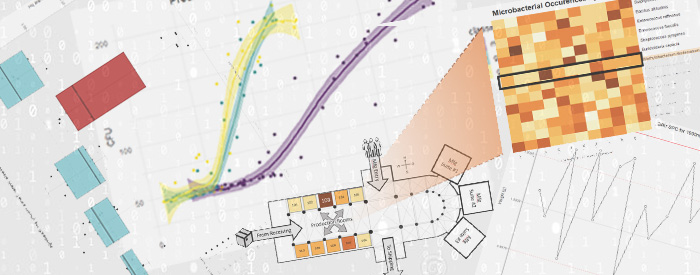 Data visualization
 is a crucial element of any life science work, and it is especially important in communicating the work coming out of labs. The ability to explore and mine complex datasets is essential for communicating meaningful conclusions. Life sciences researchers rely on a variety of data visualization tools to help them analyze and interpret their data, including graphs, charts, and other more complex digital representations like artificial neural networks (ANN) and machine learning (ML). In this blog post, we’ll discuss four common data visualization techniques.
[Read More]

Starting and operating a laboratory is a vast and challenging undertaking. The right tools and equipment for a laboratory's purpose are essential to the operation. But there is no instrument more valuable than a well-designed laboratory information management system (LIMS) customized to fit your lab's unique workflows and data management procedures.
[Read More]


