Posted on January 24, 2024
By LabLynx
Blog
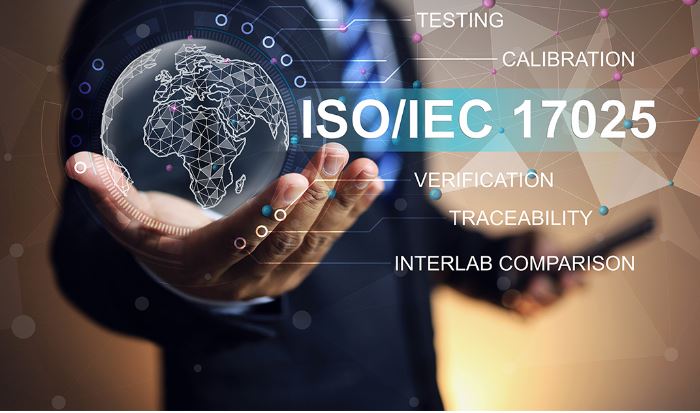
Accreditation to and compliance with ISO/IEC 17025 drive laboratory quality, which in turn better meets the requirements of the lab's customers. ISO/IEC 17025, and its quality focus throughout the lab’s workflow, provides tangible benefits by producing valuable analytical results that drive safer, more high-quality products and services, and improving costs, efficiencies, customer satisfaction, safety, and economic value.
[Read More]
Posted on January 23, 2024
By LabLynx
Journal articles
In this 2023 paper published in the journal
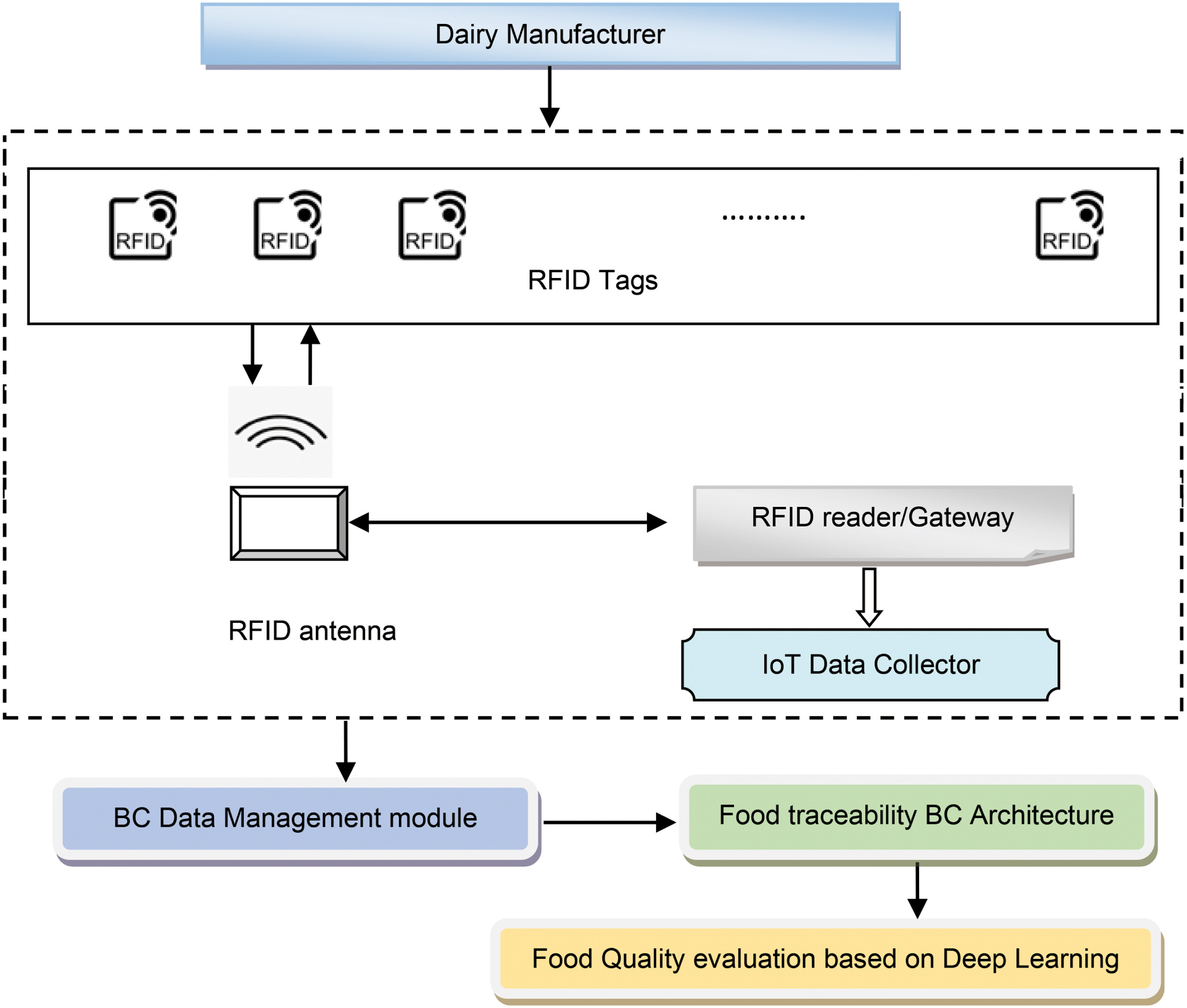
High-Confidence Computing, Manisha and Jagadeeshwar present their custom food quality traceability system, which combines various tools like blockchain, internet of things (IoT) mechanisms, and deep learning architecture for improving traceability about perishable food supply chains (PFSCs). Noting previous works that incorporated some but not all of these elements, each with their own downsides, the authors chose a system model that incorporates blockchain-enabled RFID scans that, upon verification, get added to the overall secure ledger, along with associated IoT-base metadata from sensors gauging humidity and temperature. The duo turns to milk manufacturing and distribution in their case study, applied to their blockchain-enabled deep residual network (BC-DRN) methodology. After examining and comparing their results to other prevalent methodologies used in supply chain management (SCM). The authors conclude that their BC-DRN traceability system, when gauged on metrics like sensitivity, response time, and testing accuracy, beat out other methods. They add "the performance of the devised scheme can be improved by considering better feature extraction techniques. "
Posted on January 18, 2024
By Corinne Jones
Newsletter
January 18, 2024 Laboratory Informatics Weekly Update Volume 22, Issue 3 In This Issue Featured Books The Complete Guide to LIMS and Laboratory Informatics - 2024 Edition Featured Content Why Next-Generation Genomics Labs Need LIMSDNA, the code that governs all life on Earth, has fascinated scientists for decades. Next-generation sequencing (NGS) technologies have revolutionised genomics by enabling faster and more accurate reading of DNA. This has opened up new avenues for research and insights into the complexities encoded within our genes. This is where the indispensable role of Laboratory Information Management Systems (LIMS) comes into play. Why do Next-Generation…
Posted on January 17, 2024
By onQ Software
Blog

DNA, the code that governs all life on Earth, has fascinated scientists for decades. Next-generation sequencing (NGS) technologies have revolutionised genomics by enabling faster and more accurate reading of DNA. This has opened up new avenues for research and insights into the complexities encoded within our genes. This is where the indispensable role of Laboratory Information Management Systems (LIMS) comes into play. Why do Next-Generation Genomics laboratories need LIMS?
[Read More]
Posted on January 17, 2024
By LabLynx
Blog

Labs that get accredited to Laboratory Accreditation for Analyses of Foods (LAAF) need to demonstrate ISO/IEC 17025 compliance to food and beverage test methods and specific LAAF requirements. This requires a well-designed LIMS that can address the needs of ISO/IEC 17025 and the requirements LAAF places on the lab for LAAF accreditation.
[Read More]
Posted on January 17, 2024
By CSols Inc.
Blog

This white paper provides a comprehensive guide to validating your electronic learning management system (LMS). It explains what LMS validation involves, why it's important for regulated industries, and how the process addresses three main challenges.
[Read More]
Posted on January 17, 2024
By LabLynx
Blog

Materials testing and the standardized test methods are as diverse as the material types and industrial applications of those material types. These standard test methods are created by numerous national and international entities and adopted by accrediting organizations, regulatory bodies, and the materials testing labs themselves. Materials testing labs should understand how these regulations drive business and testing demand.
[Read More]
Posted on January 16, 2024
By LabLynx
Journal articles
In this brief 2023 article published in
Journal of Clinical and Diagnostic Research, Patel
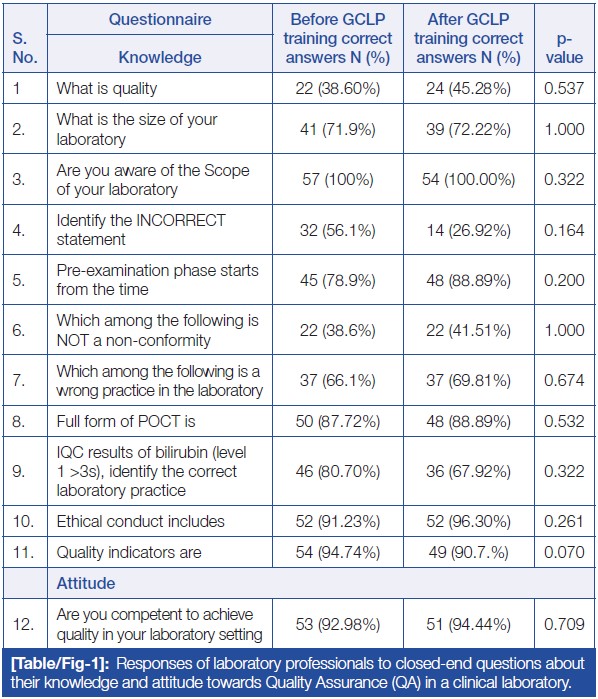
et al. provide the results of their survey-based analysis of laboratorians' knowledge, attitude, and practice (KAP) towards laboratory quality through good clinical laboratory practice (GCLP) training. Noting the "ethical obligation to provide accurate and precise results that are cost- and time-effective," the authors state that it's imperative for clinical laboratory personnel to adhere to quality planning and system implementation, while also possessing an understanding of quality management principles as they apply to the lab. The authors describe their survey format and present the results of their survey, concluding that while no statistically significant differences could be found towards staff attitudes towards quality in the lab after GCLP training, laboratorians in their survey acknowledged the benefits of GCLP guidelines and accreditation, as well as the importance of training on such matters. "Such training and assessments would also aid in evaluating the performance of laboratory staff, contributing to improved learning, execution of GLPs, and consistent patient care services."
Posted on January 11, 2024
By Corinne Jones
Newsletter
January 11, 2024 Laboratory Informatics Weekly Update Volume 22, Issue 2 In This Issue Featured Books LIMS Selection Guide for Food Safety and Quality Featured Content How can a LIMS assist food and beverage industry compliance with ISO 22000 and ISO/IEC 17025?Maintaining compliance to standards like ISO 22000 and ISO/IEC 17025 for food and beverage labs drives the need for an informatics tool such as a LIMS. Large amounts of data and information need to be captured by the LIMS, which can better empower the food and beverage company (and its laboratory) to comply with and gain insight from…
Posted on January 10, 2024
By LabLynx
Blog

Maintaining compliance to standards like ISO 22000 and ISO/IEC 17025 for food and beverage labs drives the need for an informatics tool such as a LIMS. Large amounts of data and information need to be captured by the LIMS, which can better empower the food and beverage company (and its laboratory) to comply with and gain insight from regulations and standards affecting their activity.
[Read More]
Posted on January 10, 2024
By onQ Software
Blog
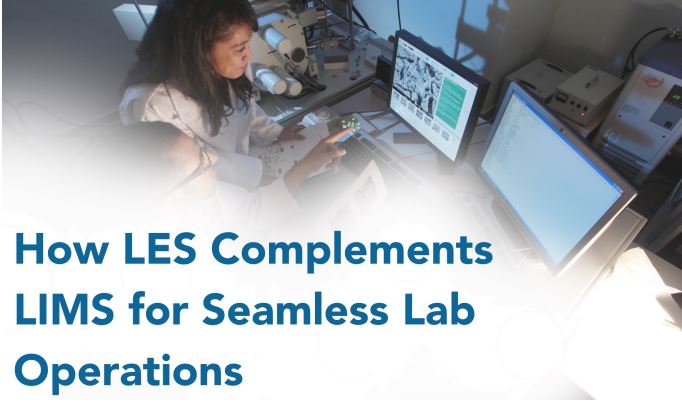
The integration of LES (Lab Execution Systems) and LIMS has become increasingly popular. This powerful combination can help to boost efficiency, accuracy, and compliance across a wide range of laboratory processes. By working together, LES and LIMS can revolutionise the way labs operate. Let’s take a closer look at some of the key benefits of this integration.
[Read More]
Posted on January 10, 2024
By Astrix Technology Group
Blog

Scientific organizations face ever increasing pressure from business stakeholders to reduce costs while improving operational efficiency, scalability, and agility. Laboratory research is more complicated and dependent on informatics than ever. IT organizations are seeking a solution through the development and deployment of an integrated laboratory informatics strategy and infrastructure. Making the transition to an integrated laboratory ecosystem requires substantial IT work and resources. In this blog, we explore the benefit from partnering with a 3rd party informatics provider with specialized scientific expertise to help support and maintain laboratory systems.
[Read More]





