Posted on January 10, 2024
By LabLynx
Blog
With a LIMS as a critical component of maintaining quality and ISO/IEC 17025 compliance labs, we discover that a LIMS should address aspects like complete sample data capture, unique sample identifiers, multi-level test result reviews, validation of sampling and test methods, calibration and training documentation, nonconformance and deviation tracking, data retention, and secure granular user access, among other things.
[Read More]
Posted on January 9, 2024
By LabLynx
Journal articles
In this 2023 paper published in the journal
Digital Discover, Scroggie
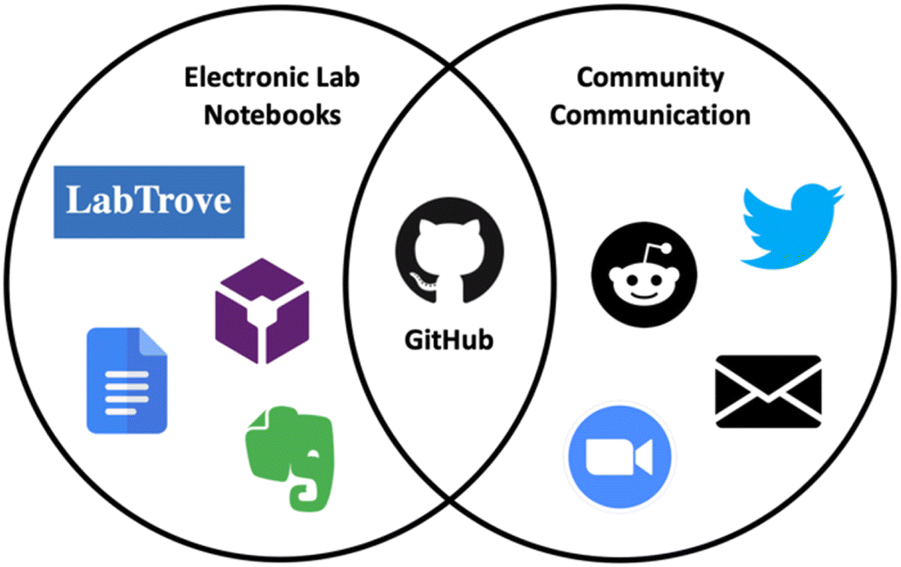
et al. of the University of Sydney present their efforts towards utilizing the open developer platform GitHub as an electronic laboratory notebook (ELN) for chemistry research. Noting a lack of open-source ELNs with a focus on non-organic chemistry that have a wealth of collaboration tools, as well as problems with expensive and inflexible commercial ELNs, the authors turned to the many open facets of GitHub to repurpose its workings for synthetic chemistry projects. After a brief discussion of GitHub, the authors explain how they used the various facets of GitHub for ELN-related tasks, including notebooks, data and metadata management, and collaborative tools. They also acknowledged several shortcomings of their approach, including learning Markdown, dealing with data storage limitations, and integrating discipline-specific applications. The authors conclude that some of GitHub's features "are undeniably more oriented towards coders, such as the Actions tab in which users can set up workflows using code, these features do not detract from GitHub's usefulness as an ELN, which lies mainly in its adaptability and capacity for knowledge-sharing and collaboration."
Posted on January 4, 2024
By Corinne Jones
Newsletter
January 4, 2024 Laboratory Informatics Weekly Update Volume 22, Issue 1 In This Issue Featured Books LIMS Selection Guide for Food Safety and Quality Featured Content Streamlining Your Sample Tracking ProcessAny laboratory that handles large quantities of samples knows the pain of mishandling one (or a whole batch). In some industries, sample mishandling can get you sued or run out of business. If you’re working with lots of samples from lots of sources, you should know that there are ways to streamline your sample tracking process to avoid those scenarios. This blog post will show you how SampleVision works…
Posted on January 3, 2024
By LIMS Wizards
Blog

Any laboratory that handles large quantities of samples knows the pain of mishandling one (or a whole batch). In some industries, sample mishandling can get you sued or run out of business. If you’re working with lots of samples from lots of sources, you should know that there are ways to streamline your sample tracking process to avoid those scenarios. This blog post will show you how SampleVision works with your organization’s laboratory information management system (LIMS) or laboratory information system (LIS) to keep track of samples and streamline many common laboratory workflows.
[Read More]
Posted on January 3, 2024
By LabLynx
Blog

Despite the benefits, it’s usually not a straightforward process to justify a LIM’s acquisition, implementation, and maintenance. The justification must go beyond monetary costs, to the organizational context, including short-/long-term goals, real and potential risks, and tangible/intangible benefits, painting a complete picture of how a LIMS benefits the organization, its staff, and its external stakeholders.
[Read More]
Posted on January 3, 2024
By Astrix Technology Group
Blog

In the world of medical research, clinical trials are the forefront of advancement of research. They bridge the gap between laboratory breakthroughs and real-world treatments, ensuring that new drugs, therapies, or devices are both safe and effective. This comprehensive guide aims to shed light on these vital components of healthcare advancement.
[Read More]
Posted on January 3, 2024
By onQ Software
Blog

Data has become one of the most valuable assets for any organisation, and laboratory data is no exception. However, accessing laboratory data has been difficult so far due to the use of outdated applications and architectures that underpin many LIMS applications.
[Read More]
Posted on January 3, 2024
By LabLynx
Blog

Software-based requirements are detailed lists describing the functions, capabilities, and qualities a software system must possess. These requirements are the foundation for designing, developing, testing, and delivering a software product that meets the goals and expectations of its users. Lab requirements for a LIMS are typically a combination of wish list items and regulation-mandated needs.
[Read More]
Posted on January 2, 2024
By LabLynx
Journal articles
In this 2023 paper published in the journal
GigaScience, Nieminen
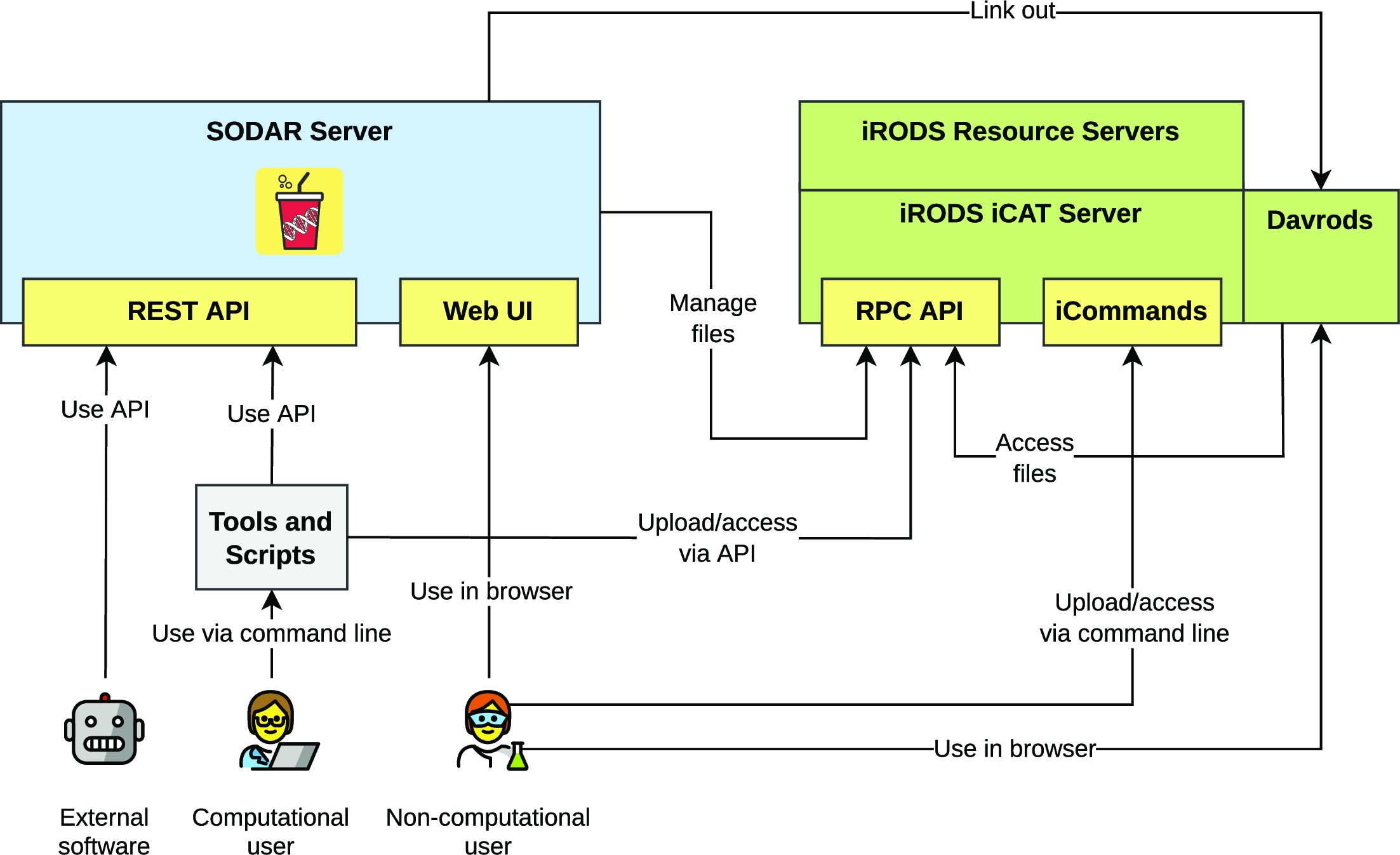
et al. of the Berlin Institute of Health at Charité–Universitätsmedizin Berlin present SODAR (System for Omics Data Access and Retrieval), an open-source scientific data management system (SDMS) with a focus on omics data management during multiassay research studies. Noting numeroud data management challenges and dearth of open-source options, the authors describe the software framework, features, and limitations of the system. Highlighting SODAR's "programmable application programming interfaces (APIs) and command-line access for metadata and file storage," the authors conclude that SODAR can readily "support multiple technologies such as whole genome sequencing, single-cell sequencing, proteomics, and mass spectrometry," though some aspects such as automated data export and "data commons" access are currently not available.
Posted on December 26, 2023
By LabLynx
Journal articles

In this 2023 paper published in
Healthcare Informatics Research, Chang
et al. perform a literature review of current research in order to better characterize the currently viewed benefits of of artificial intelligence (AI), the internet of things (IoT), and personal health records (PHR) in the healthcare setting. Noting "limited empirical evidence regarding the benefits of information technology in healthcare settings," the authors examined 24 reviews and meta-analysis studies on these three technologies, with a strong focus on four outcome domains of clinical, psycho-behavioral, managerial, and socioeconomic implications. After detailing their findings, the authors conclude that "AI and PHRs can enhance clinical outcomes, while IoT holds promise for boosting managerial efficiency," though further research is required to address "the organizational and socioeconomic benefits of PHR," as well as the greater role of IoT in the healthcare setting.
Posted on December 21, 2023
By Corinne Jones
Newsletter
December 21, 2023 Laboratory Informatics Weekly Update Volume 21, Issue 50 In This Issue Featured Books The Complete Guide to LIMS and Laboratory Informatics Featured Content What are the alternatives to a LIMS?Alternatives to LIMS such as paper-based systems, spreadsheets, databases, and ERP systems can work for small, lightly regulated labs. but increasing competition and regulatory oversight stretch these tools to their limits, showing their weakness compared to a well-designed, purpose-built LIMS. Labs of today are more complex, requiring more modern tools like LIMS to better automate processes and methods. [Read More] How is AI Used in Labs?Technology is…
Posted on December 20, 2023
By LabLynx
Blog

Alternatives to LIMS such as paper-based systems, spreadsheets, databases, and ERP systems can work for small, lightly regulated labs. but increasing competition and regulatory oversight stretch these tools to their limits, showing their weakness compared to a well-designed, purpose-built LIMS. Labs of today are more complex, requiring more modern tools like LIMS to better automate processes and methods.
[Read More]





