

Cyberbiosecurity for biopharmaceutical products
Cybersecurity for biopharmaceutical manufacturing? The "rapid pace of innovation dictates that it is not too early to consider the cyberbiosecurity implications" of the potential dangers that can arise in the industry, argue Mantle et al. in this 2019 paper published in Frontiers in Bioengineering and Biotechnology. From compromised master cell banks to intentional corruption of " the design, reading, and writing of DNA sequences to produce pathogenic, self-replicating entities," the authors demonstrate worst case scenarios and practical considerations that scientists should be considering when incorporating various forms of automation into biopharmaceutical manufacturing. After presenting their scenarios and considerations, they conclude that "current best practices from industrial manufacturing and state-of-the-art cybersecurity could serve as a starting point to safeguard and mitigate against cyberbiosecurity threats to biomanufacturing."Laboratory Informatics Weekly Update – Volume 17, Issue 28
July 10, 2019 Laboratory Informatics Weekly Update Volume 17, Issue 28 In This Issue Upcoming Webinars 07/15/2019 - A Structured Approach to Implementing a LIMS07/24/2019 - Webinar: Managing Change in the Lab – The People Side of Data Management Innovation07/24/2019 - Webinar: Project Leadership: The Key to Excellence in Laboratory Informatics Featured Books CannaQA Catalog and Price List Journal Articles A bibliometric analysis of Cannabis publications: Six decades of research and a gap on studies with the plantWhat are the trends and glaring holes in scientific publications regarding the Cannabis plant? We know some parts of the world have…Scientific Business Analyst
Responsibilities:
- Lead scientific-related business needs assessment, as well as facilitate the design, build and implementation of IT systems. Work with scientists and laboratory personnel to understand their business processes and suggest improvement opportunities to enhance end-user experience
- Work closely with end-users and technical team members to translate high-level business and user requirements into functional and design specifications using structured business and technical analysis and data modeling techniques (e.g.
LIMS Validation Plan
Many companies purchasing a LIMS in a regulated industry realize Computer System Validation (CSV, or, hereafter, “validation”) will be a major consideration. But many are so consumed with requirements gathering, vendor selection, and negotiation they sometimes set aside, if not overlook, the looming validation issues awaiting them.
To read the complete blog, please visit: https://cloudlims.com/blog/lims-validation-plan.html
How QLIMS supports the medicinal cannabis process

How QLIMS supports the medicinal cannabis process
As the cannabis testing industry grows more and more, so does the need for greater efficiency relating to results, reports, regulatory compliance and the many other aspects of data management. Here we will explain to you how our solution, QLIMS, supports companies involved in each part of the chain and the items that medicinal cannabis companies should consider when selecting a LIMS and software for quality control. [Read More]FBI Approves Thermo Fisher Scientific Forensic Sequencing Solution for National DNA Index System
 The U.S. Federal Bureau of Investigation (FBI) has approved Thermo Fisher Scientific's Applied Biosystems Precision ID System mtDNA analysis solution for use by forensic laboratories to generate mitochondrial DNA (mtDNA) profiles for submission to the U.S. National DNA Index System (NDIS) CODIS database.
A bibliometric analysis of Cannabis publications: Six decades of research and a gap on studies with the plant
 What are the trends and glaring holes in scientific publications regarding the Cannabis plant? We know some parts of the world have been more proactive in said research, often thanks to slightly more lax regulations than other countries. But where is the research coming from, and what still must be addressed? Matielo et al. tested this concept in a bibliometric analysis of roughly six decades of publications. They found an increase in the relational study of cannabis and its affects on human genetics but a significant dearth of publications on the genetics of the plant itself. Only since about 2005 has genetics studies of the plant picked up. The authors found several other patterns in their analysis, included in the paper's "Discussion" section.
Holo4Labs Wins Emerging Europe Award for Innovation in 2019
Poland-based laboratory technology firm Solution4Labs has been named among the winners of the prestigious Emerging Europe awards in 2019. The company's Holo4Labs, a software application designed for use with the Microsoft HoloLens mixed reality (MR) goggles, received the award for the Best Innovation Initiative of 2019. Emerging Europe is an international intelligence and networking platform that produces independent studies and reports for the EU region.CRISPR Researchers to Benefit from COBO Technologies and SCIEX Partnership
COBO Technologies, a company specialised in quality control services and products in genome editing, today announces a new partnership with SCIEX, a global leader in life science analytical technologies, to develop PIPPR, a unique protein expression analysis platform.SES Water Chooses Matrix Gemini LIMS
 SES Water has chosen the Matrix Gemini LIMS (Laboratory Information Management System) from Autoscribe Informatics to manage water testing results in its UKAS-accredited laboratory. SES Water is a water-only company and supplies residents in East Surrey, parts of West Sussex, West Kent and South London in the UK.
Integra LifeSciences partners with Tissue Analytics to advance data analytics in wound care clinical trials
Integra LifeSciences, a leading global medical technology company, is pleased to announce a pioneering partnership with Tissue Analytics, an AI-powered software solution for wound assessment and monitoring.Cellara, LLC, releases CultureTrax, Productivity Software Designed for the Unique Complexities of Stem Cell Research
Cellara, LLC, a software-as-a-service company, announced today the commercial release of CultureTrax software V2.0. It is the first productivity software designed to meet the unique needs of stem cell scientists.Abbott Informatics Launches A Modernized STARLIMS HTML5 QM Solution
 Abbott announced the launch of a laboratory information management system, STARLIMS Quality Manufacturing Solution QM 12.0, to support integration with various types of platforms and manage data from product concept to consumer.
Laboratory Informatics Weekly Update – Volume 17, Issue 27
July 3, 2019 Laboratory Informatics Weekly Update Volume 17, Issue 27 In This Issue Upcoming Webinars 07/08/2019 - A Structured Approach to Implementing a LIMS07/24/2019 - Webinar: Managing Change in the Lab – The People Side of Data Management Innovation07/24/2019 - Webinar: Project Leadership: The Key to Excellence in Laboratory Informatics Featured Books LIMSjournal - Summer 2019 Journal Articles Leaner and greener analysis of cannabinoidsThis 2017 paper by Mudge et al. proposes a means for analyzing the Cannabis plant and its flowers in such a way so as to reduce the use of chlorinated solvents and provide a safer…Leaner and greener analysis of cannabinoids
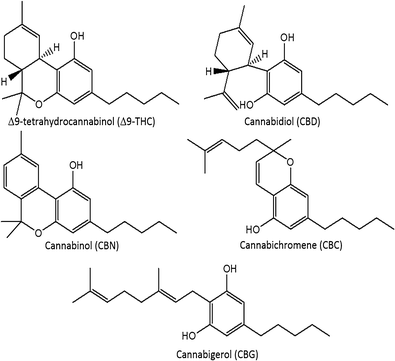 This 2017 paper by Mudge et al. proposes a means for analyzing the Cannabis plant and its flowers in such a way so as to reduce the use of chlorinated solvents and provide a safer work environment for laboratorians. The authors test methanol as a greener alternative and present the results of their tests, concluding the method as "a significant improvement over previous methods that can be used in a variety of settings and has the potential to be expanded for inclusion of new cannabinoids as required." Along with being greener and improving lab safety, the authors also suggest a reduction in material cost as a benefit of the method.

