

QC LIMS Specialist 100% (h/f) CDD – Fribourg
Afin de renforcer notre équipe, nous sommes à la recherche d'un / e QC LIMS Spécialiste pour un contrat en CDD jusqu'au 31 juillet 2021. A ce poste, vous utilisez au sein du département contrôle qualité et participez au maintien des données relatives au LIMS et aux projets en relation avec le LIMS.…
Laboratory information system requirements to manage the COVID-19 pandemic: A report from the Belgian national reference testing center
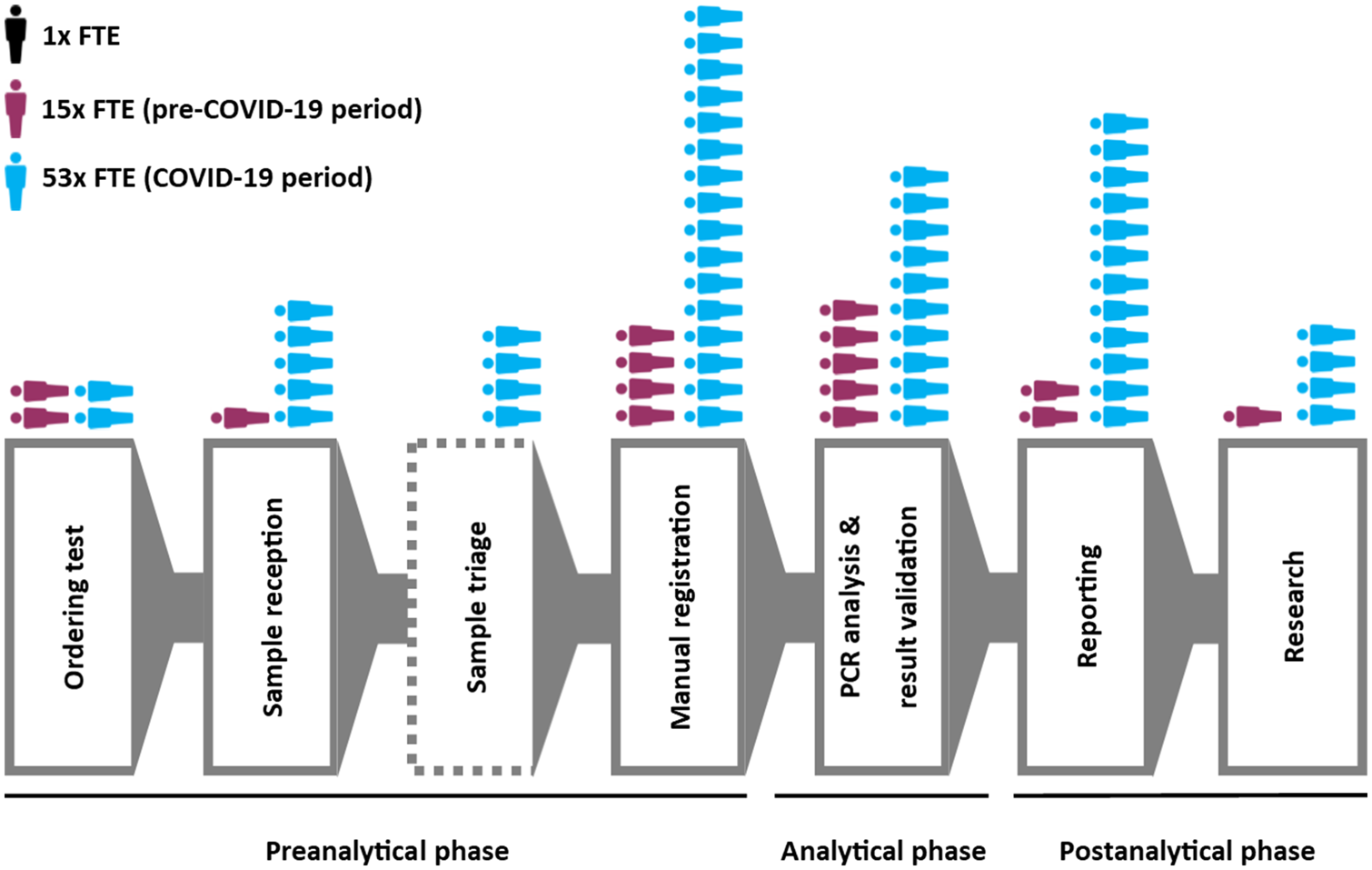 Though the COVID-19 pandemic has been in force for months, seemingly little has been published (even ahead of print) in academic journals of the technological challenges of managing the growing mountain of research and clinical diagnostic data. Weemaes et al. are one of the exceptions, with this pre-print June publication in the Journal of the American Medical Informatics Association. The authors, from Belgium's University Hospitals Leuven, present their approach to rapidly expanding their laboratory's laboratory information system (LIS) to address the sudden workflow bottlenecks associated with COVID-19 testing. They describe how using a change management framework to rapidly drive them forward, the authors were able "to streamline sample ordering through a CPOE system, and streamline reporting by developing a database with contact details of all laboratories in Belgium," while improving epidemiological reporting and exploratory data mining of the data for scientific research. They also address the element of "meaningful use" of their LIS, which often gets overlooked.
Proscia and UMC Utrecht Establish Center of Excellence to Accelerate Adoption of Computational Pathology in Clinical Practice
Proscia®, provider of AI-enabled digital pathology solutions, and Dutch hospital University Medical Center Utrecht (UMC Utrecht), are collaborating to establish a Center of Excellence to advance the use of computational pathology in clinical practice.Laboratory Informatics Weekly Update – Volume 18, Issue 34
August 25, 2020 Laboratory Informatics Weekly Update Volume 18, Issue 34 In This Issue Featured Books The Complete Guide to LIMS and Laboratory Informatics: 2020 Edition Journal Articles 08/18/2020 - Comprehensive analyses of SARS-CoV-2 transmission in a public health virology laboratoryWith COVID-19, we think of small outbreaks occurring from humans being in close proximity at restaurants, parties, and other events. But what about laboratories? Zuckerman et al. share their tale of a small COVID-19 outbreak at Israel’s Central Virology Laboratory (ICVL) in mid-March 2020 and how they used their lab tech to determine the transmission sources. With eight known…Comprehensive analyses of SARS-CoV-2 transmission in a public health virology laboratory
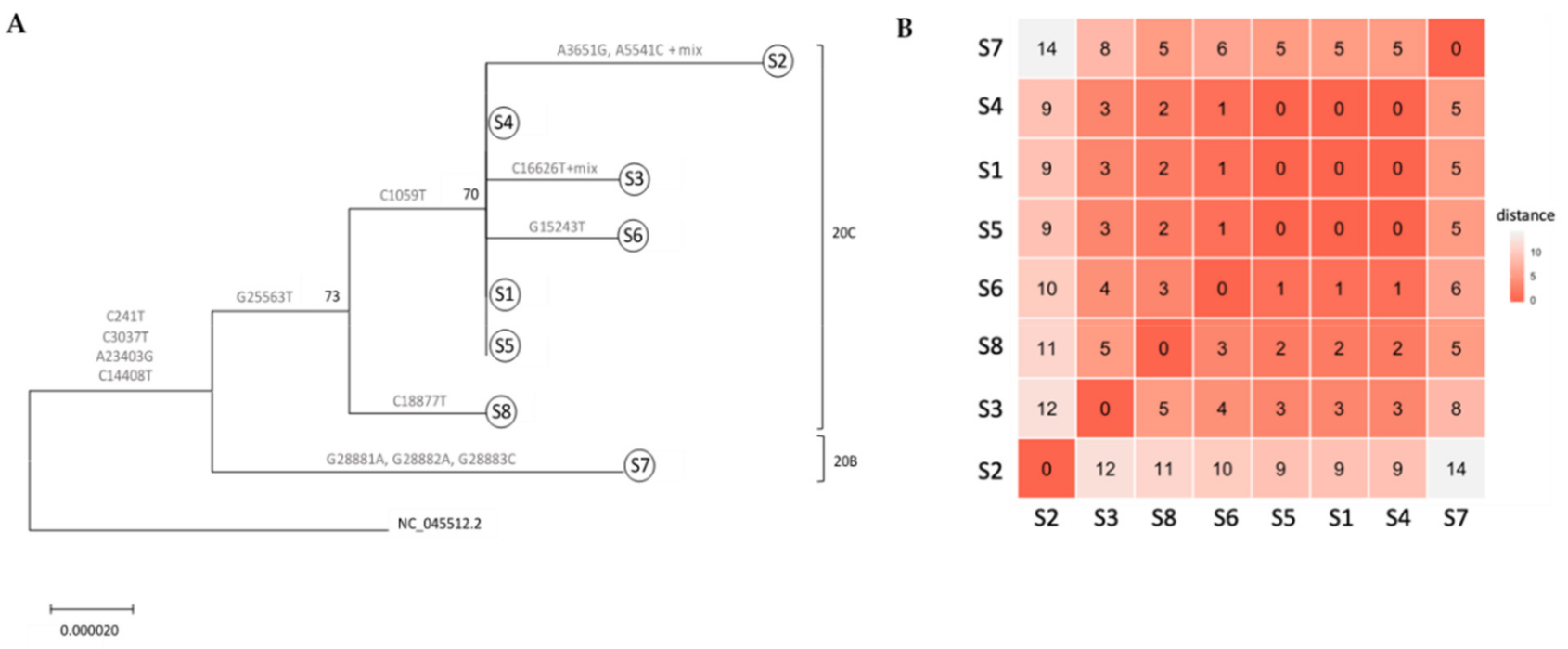 With COVID-19, we think of small outbreaks occurring from humans being in close proximity at restaurants, parties, and other events. But what about laboratories? Zuckerman et al. share their tale of a small COVID-19 outbreak at Israel’s Central Virology Laboratory (ICVL) in mid-March 2020 and how they used their lab tech to determine the transmission sources. With eight known individuals testing positive for the SARS-CoV-2 virus overall, the researchers walk step by step through their quarantine and testing processes to "elucidate person-to-person transmission events, map individual and common mutations, and examine suspicions regarding contaminated surfaces." Their analyses found person-to-person contact—not contaminated surface contact—was the transmission path. They conclude that their overall analysis verifies the value of molecular testing and capturing complete viral genomes towards determining transmission vectors "and confirms that the strict safety regulations observed in ICVL most likely prevented further spread of the virus."
Sunquest Provides Continuous Suppport Amid COVID-19 Pandemic

 Sunquest is here to continuously and seamlessly support the business operations of the lab amid the COVID-19 pandemic. From molecular LIMS support, to orders and results automation, to reporting, to broader-scale disease surveillance, we are proud to offer COVID-19 resources across the spectrum of the laboratory workflow.
[Read More]
Importing Spreadsheets and CSV Files into LabVantage LIMS
 Two of the most popular file formats used in science settings are Excel spreadsheets and CSV (Comma Separated Value) files. So, it comes as no surprise to hear that they are heavily relied on in the laboratory informatics market as well. Teams using a LIMS frequently collaborate on analyzing test result data, which often involves columns and tables. Formulas to analyze the data can be added via most spreadsheet editing programs, and these calculations may be crucial to seeing patterns in the data.
[Read More]
Designing the Unified Lab of the Future with BIOVIA ONE Lab

 The need for optimizing operational efficiency while maintaining data integrity is at the core of every laboratory informatics roadmap. Innovative technologies such as BIOVIA ONE Lab, that enable digital transformation holds the key to driving process improvement and automating daily tasks within the laboratory, but the challenge lies within how to go about this effort?
[Read More]
Laboratory Informatics Weekly Update – Volume 18, Issue 33
August 18, 2020 Laboratory Informatics Weekly Update Volume 18, Issue 33 In This Issue Featured Books Comprehensive Guide to Developing and Implementing a Cybersecurity Plan Featured Content 08/18/2020 - Sunquest Provides Continuous Suppport Amid COVID-19 PandemicSunquest is here to continuously and seamlessly support the business operations of the lab amid the COVID-19 pandemic. From molecular LIMS support, to orders and results automation, to reporting, to broader-scale disease surveillance, we are proud to offer COVID-19 resources across the spectrum of the laboratory workflow. [Read More] 08/18/2020 - Importing Spreadsheets and CSV Files into LabVantage LIMSTwo of the most popular file…Swittons Introduces Smart IoT Devices for Pharmaceutical Lab Digital Transformation Initiatives
Swittons, a P360 company, today announced a new line of Internet of Things (IoT) enabled smart devices built specifically for pharmaceutical labs.METTLER TOLEDO and TetraScience Collaborate to Power the Digital Lab Movement
METTLER TOLEDO International Inc. and TetraScience, Inc. announce a new collaboration to knock down life sciences R&D data silos by providing complete and unified R&D data in the cloud.National Institutes of Health (NIH) Research Updates – August 2020
The National Institutes of Health (NIH) is our nation’s medical research agency and strives to make scientific discoveries that improve health and save lives. Founded in 1870, the NIH conducts its own scientific research through its Intramural Research Program (IRP), which supports approximately 1,200 principal investigators and more than 4,000 postdoctoral fellows conducting basic, translational and clinical research. In this blog, we will highlight recent ground-breaking NIH research.
[Read More]
Guide to Laboratory Information Management System Software Validations

 Clinical laboratories are often uncertain about the requirements for validation across the Laboratory Information Management System (LIMS) lifecycle. After your laboratory adopts a new LIMS, you must perform a full LIMS validation prior to using...
[Read More]
Autoscribe Publishes New Medical Devices Case Study
 Autoscribe Informatics has just released a new case study in conjunction with Swiss Precision Diagnostics (SPD) who have replaced their legacy Laboratory Information Management System (LIMS) with Matrix Gemini. The new LIMS integrates data from volunteer sample collection, laboratory testing and a clinical biobank to provide integrated data management across their organization.
Extending an open-source tool to measure data quality: Case report on Observational Health Data Science and Informatics (OHDSI)
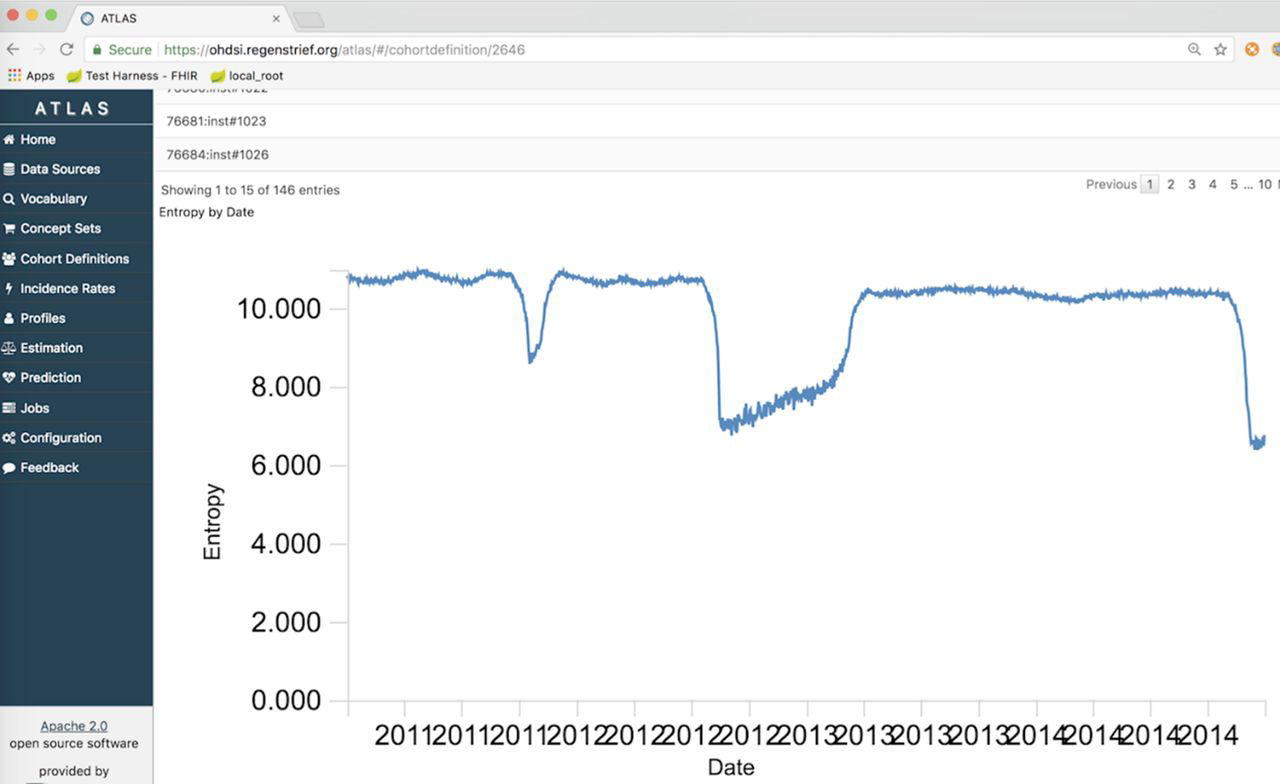 In this 2020 short report from Dixon et al., lessons learned from attempts to expand data quality measures in the open-source tool Observational Health Data Science and Informatics (OHDSI) are presented. Noting a lack of data quality assessment and improvement mechanisms in health information systems in general, the researchers sought to improve OHDSI for public health surveillance use cases. After explaining the practical uses of OHDSI, the authors state their case for why measuring completeness, timeliness, and information entropy within OHDSI would be useful. Though not getting approval to add timeliness to the system, they conclude that high value remains "in adapting existing infrastructure and tools to support expanded use cases rather than to just create independent tools for use by a niche group."
LIMS Data Analytics and Visualization
LIMS Data Analytics and Visualization tools graphically present data from your LIMS, and potentially other applications, to provide powerful business intelligence for your laboratory and organization. Like all LIMS, Matrix Gemini uses a relational database (usually Microsoft SQL or Oracle) to store the LIMS data.
[Read More]
Sunquest Physician Portal SM for Sunquest Mitogen ™ LIMS

[LEARN MORE]
Fluidigm and De Novo Software to Offer Mass Cytometry Customers a Streamlined Solution for Data Analysis
Fluidigm Corporation, a biotechnology tools provider, announced a distribution agreement with De Novo Software™ to provide customers with access to a data analysis solution for the high-parameter data files generated by mass cytometry using De Novo’s FCS Express™ 7 Flow software.Leaf Software Solutions and ARIA Diagnostics Team Up on COVID-19 Test Tracking Application
Leaf Software Solutions has developed a COVID-19 test tracking and compliance solution. In collaboration with ARIA Diagnostics, which operates COVID-19 testing sites throughout central Indiana, the software application is now being offered to organizations wishing to proactively address the sudden changes required as people return to work, school, and other activities.Thermo Fisher Scientific Develops COVID-19 Antibody Assay Targeting Transplant Community
 Thermo Fisher Scientific continues to expand its response to the COVID-19 pandemic, developing a new serological assay targeted towards transplant candidates and recipients that can detect antibodies directed against COVID-19 (SARS-CoV-2). The assay will be provided under the company's One Lambda brand representing leading in vitro diagnostic products for the transplant community.

