

Structured Content Authoring and its Impact on a Digital Transformation of Life Sciences
 Structured Content Authoring (SCA) is a standardized method where technical content is controlled by pre-defined guidelines. The technical writer marks up the content according to what it semantically represents and agreed guidelines. The writer is not concerned with editing styling or formatting. The idea is to develop discoverable, reusable, adaptable, reconfigurable templates for storing, tagging, standardizing, and translating critical content. [Read More]
LIMS – In house development vs off the shelf enterprise class
 Laboratories are rapidly adapting to latest technologies for a variety of reasons like: High quality standards, Stringent regulatory norms set by industry governing bodies, Standard operating procedures, Need for better control over workflow & processes, High standards to maintain data security & data integrity, Need for higher productivity due to increasing cost & workload [Read More]
Upcoming Events to see QLIMS in 2022
 With 2022 seemingly finishing just as fast as it arrived here are the upcoming events that you can meet either the OnQ Software team or one of our esteemed partners [Read More]
Laboratory Informatics Weekly Update – Volume 20, Issue 37
September 14, 2022 Laboratory Informatics Weekly Update Volume 20, Issue 37 In This Issue Featured Content 09/14/2022 - The Growing Importance of Wastewater Surveillance | ApolloLIMSWastewater surveillance is becoming an increasingly important component of human health monitoring. In 1854, wastewater testing in London revealed the source of the city’s cholera outbreak. Nearly a century later, scientists used wastewater as part of the detection and eradication strategy against polio. Over time, pathogen testing of wastewater has expanded from a handful of analytes to a complete compendium of chemistries, microbiology, and most recently, virology. [Read More] 09/14/2022 - Managing Change in Lab…Chemical profiling and characterization of different cultivars of Cannabis sativa L. inflorescences by SPME-GC-MS and UPLC-MS
 In this 2022 journal article published in Separations, Cicaloni et al. present their finding from applying advanced analysis techniques and statistical survey methods to five different Cannabis sativa cultivars grown in Italy. After providing an introduction on the chemical characteristics of cannabis, the authors describe their materials and methods used, including solid-phase microextraction and ultra-performance liquid chromatography–mass spectrometry, as well as statistical methods such as partial least squares discriminant analysis (PLS-DA) and heat mapping with principal component analysis (PCA). After thoroughly presenting their results, the authors discuss their findings, concluding that given the vital importance of understanding the chemical composition of cannabis "for the development of new products for pharmaceutical, medical, and other uses," their results should "provide more information on C. sativa inflorescences from five different cultivars, which may be useful for further investigations of metabolite applications in scientific research."
Information Security: Introduction to Information Security
 This is a New York University course that is released on the edX platform. The five-week course is designed as "a self-paced course that provides an introduction to information security and cybersecurity." The course is free to take, with a Verified Certificate of completion available for $166. (Note that the free Audit track expires October 15, 2022.) The course requires on average eight to 10 hours a week of effort. Access to the class started in September 2022.
Designing a knowledge management system for naval materials failures
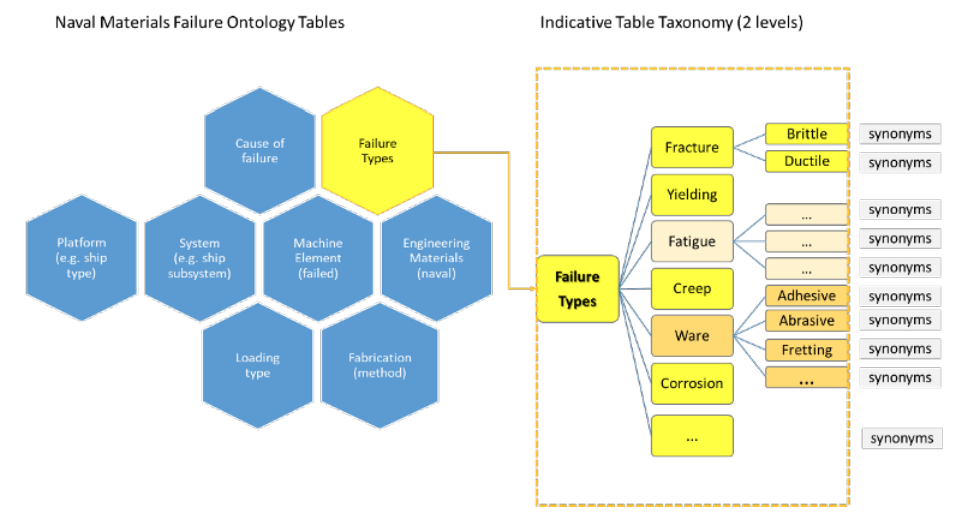 Melanitis et al. present a materials informatics approach applied by the Hellenic Naval Academy in this 2021 paper published in MATEC Web of Conferences. Their approach resulted in NAVMAT, developed "by integrating materials engineering and informatics under a platform of knowledge management." After providing some background on the topic of materials informatics and the management of research information associated with it, the authors describe their system architecture and key features, along with its potential applications. They conclude by providing six expected outcomes associated with the platform, adding that NAVMAT "aims to optimize naval materials failure analysis management and support decision making in maintenance and repair operations (MRO), materials supply management, and staff training."
AI-Driven Analytics Turn Pharma LIMS Data Into Useful Insights
 Many research and development centers increasingly generate and process massive amounts of data. As such, because of the volume and processing of data, in addition to the advancement of technology, laboratories need to upgrade their laboratory management and technology strategies to improve operations and minimize costs.
Within regulated labs, there has been a significant emphasis on data protection in recent years. Many of the control systems put in place to ensure safety or minimize concerns, however, are not real-time. [Read More]
Data Integrity
 Data integrity refers to the overall completeness, accuracy and consistency of data during its entire life cycle. Though seems simple, the whole process of genuinely generating, maintaining & transforming data with completeness and accuracy is a challenging task for any organization. This white paper discusses the issues faced by organizations in achieving data integrity and briefly describes how and what technology can be effectively used to achieve better data integrity. [Read More]
Agilent Collaborates with METTLER TOLEDO to Reduce Errors in Sample Preparation Workflows for Better Chromatographic Results
 Agilent Technologies Inc. announces that it is collaborating with METTLER TOLEDO to address one of the biggest concerns in any laboratory—error-prone sample preparation. This integrated solution allows the automatic and seamless transfer of weighing results and the associated metadata from METTLER TOLEDO LabX™ Balance software to Agilent OpenLab software. [Read More]
Laboratory Informatics Weekly Update – Volume 20, Issue 36
September 7, 2022 Laboratory Informatics Weekly Update Volume 20, Issue 36 In This Issue Featured Content 09/07/2022 - AI-Driven Analytics Turn Pharma LIMS Data Into Useful InsightsMany research and development centers increasingly generate and process massive amounts of data. As such, because of the volume and processing of data, in addition to the advancement of technology, laboratories need to upgrade their laboratory management and technology strategies to improve operations and minimize costs. Within regulated labs, there has been a significant emphasis on data protection in recent years. Many of the control systems put in place to ensure safety or…Cannabis Lab Director, CSO, Tech Needed
Michigan-based startup cannabis testing laboratory looking for a Lab Director, CSO and Lab Tech. Email alan@avconsulting-llc.com for details.…

