

Webinar: Current state of pharmacogenomics and its future
“Pharmacogenomics is a tool that can assist providers in optimizing drug selection and dosing, help avoid costly adverse effects, and identify responders and non-responders to medications. New and revised guidelines published by the Clinical Pharmacogenetics Implementation Consortium (CPIC) are available to aid clinicians in utilizing pharmacogenomics in clinical practice.…
Webinar: Novel Digital Solutions for Your Lab: Ensuring Data Integrity
"When it comes to lab efficiency and compliance: it’s all about the basics and the basics of any modern lab are digital. This means choosing the right software tools to ensure data integrity while increasing efficiency and guaranteeing compliance. Your balances and tools have to support the right applications (e.g. weighing, pipette checks) and be open to managing information about third party instruments. Also, to minimize qualification efforts, novel software tools need to be modular. Modularity ensures that users can expand and update software capabilities without affecting the functionalities of separate modules. To discover how novel digital solutions can eliminate manual data management steps when it comes to your balances, resulting in increased lab efficiency while ensuring compliance, sign up now!"
Request for Tender: Laboratory Information Management System for University College Dublin
Solicitation #: LA2051C
“University College Dublin wishes to procure the Supply, Delivery, Installation and Commissioning of a Laboratory Information Management System. The LIMS must be capable of managing the sample processing and biorepository of multiple sites (scientific units), all under the umbrella of the same system, and with independent and personalised access to each unit/site, with an overhead access to all sites for a selected managerial team.…
Beyond cannabinoids: Application of NMR-based metabolomics for the assessment of Cannabis sativa L. crop health
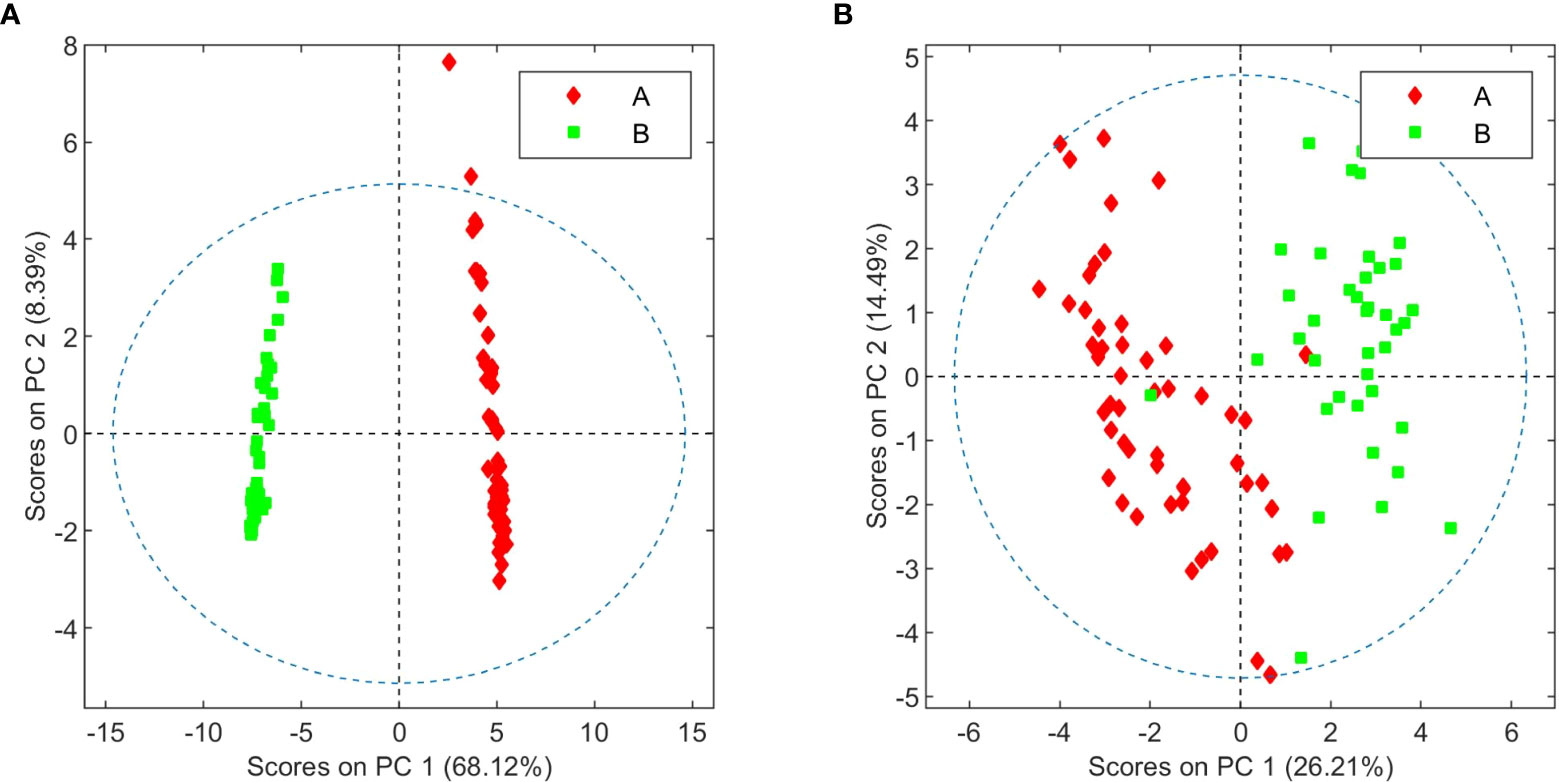 In this 2023 paper published in the journal Frontiers in Plant Science, Fernández et al. propose that Cannabis should be characterized "according to its chemical composition (i.e., its metabolome) and not only its botanical traits," while conducting a series of experiments to back their claim. After an introduction to cannabis and its chemical characterization, the authors describe the materials, methods, and results of their experimentation using metabolomics on high-THCA and high-CBDA C. sativa chemovars with medicinal potential. They conclude that many "differences between the two varieties beyond their cannabinoid composition" could be found through this experimentation, and that these differences could be "instrumental to breeders in the development of plant varieties agronomically adapted to specific environmental conditions." They also noted that fungal infections changed the metabolome of tested plants, which can better aid in the "classification of healthy and diseased plants."
Request for Quotation: Analytical Laboratory Sample Analysis for Delta Mendota Canal
Solicitation #: 140R8123Q0134
“Bureau of Reclamation (Reclamation): Reclamation is a water management agency with 600 dams in the 17 western states. We are known best for construction of dams, power plants, and canals, including Hoover Dam on the Colorado River, Grand Coulee Dam on the Columbia River, and Delta Mendota Canal (DMC).…
Request for Quotation: Sequencing Services
Solicitation #: 12905B23Q0036
The U.S. Department of Agriculture, Agricultural Research Service is seeking sequencing services from a qualified facility. “The facility will provide Illumina-based metabarcoding (amplicon), metagenomic and metatranscriptomic sequencing using Illumina technology and Nanopore-based genomic sequencing, plus library preparation. Quality checks for DNA and RNA quantity and quality should be performed prior to library preparations and/or sequencing to ensure successful library generation and sequencing.”…
Request for Proposals: Water and Wastewater Sample Collection and Testing
Solicitation #: 2023-007-OPS
The Pittsburgh Water and Sewer Authority (PWSA) “is requesting proposals for sampling services for the Sample Collection and Testing. The selected company will be responsible for providing sample kits, analyzing the samples at a Pennsylvania Department of Environmental Protection (PADEP) accredited laboratory, sending required PADEP notifications, managing customer communication for sample kits, delivering sample result letters and reporting sample results and project status to PWSA.”…
Invitation for Bid: Utilities Laboratory Testing
Solicitation #: IFB 23-023-5040-SB
“The purpose of this Invitation for Bid (IFB) is to solicit bids from qualified bidders to establish up to two term contracts to provide regular laboratory services for the primary goal of ensuring the County’s two water treatment facilities comply with federal, state, and local regulations.…
Laboratory Informatics Weekly Update – Volume 21, Issue 15
April 13, 2023 Laboratory Informatics Weekly Update Volume 21, Issue 15 In This Issue Featured Books The Complete Guide to LIMS and Laboratory Informatics Featured Content The Importance of Data Integrity in a Pharmaceutical R&D EnvironmentThe FDA is responsible for protecting public health by ensuring that human and veterinary drugs, biological products, and medical devices are safe, effective and of high quality. Verification of data integrity is a critical aspect of this mission, and the FDA therefore expects that all data submitted to the Agency is both reliable and accurate. [Read More] LIMS Customization vs. Configuration: What’s the Difference?Off-the-shelf…Request for Bids: Air Quality Sampling & Analysis
Solicitation #: 20230323-1SYS
The City of Redlands, California’s “Municipal Utilities and Engineering Department is currently soliciting bids for Air Quality Sampling and Analysis. The successful bidder(s) will be issued an annual purchase order for 12-months, July 1, 2023 – June 30, 2024, with extension options as indicated on the Price and Fee Bid Sheet…”
Due date: 12 April 2023, 1:00 p.m.…
Astrix Webinar – Biology’s Modern LIMS
As organizations seek to modernize their IT infrastructures and move to the cloud, there are a number of technical challenges that need to be addressed. One of these challenges is the process of moving a chromatography data system like Waters Empower 3 CDS from an on-premises server to a cloud-based service. A successful migration to the cloud can result in increased scalability, flexibility, and accessibility of the chromatography data system, as well as improved collaboration and cost savings for the organization.
The Importance of Data Integrity in a Pharmaceutical R&D Environment
 The FDA is responsible for protecting public health by ensuring that human and veterinary drugs, biological products, and medical devices are safe, effective and of high quality. Verification of data integrity is a critical aspect of this mission, and the FDA therefore expects that all data submitted to the Agency is both reliable and accurate. [Read More]
LIMS Customization vs. Configuration: What’s the Difference?
 Off-the-shelf applications seem like easy, low-cost ways to replace laboratory paperwork, if you’re willing to accept their limitations. Rather than trying to meet your lab’s unique needs with a generic laboratory information management system, adopt a tailored LabLynx LIMS software solution that offers user-controlled configuration combined with extensions, integrations, and customizations. [Read More]
Empowering Life Sciences While Reducing Operational Costs and Driving Efficiency
 As the two sides of the same coin, researchers in wet and dry labs (bioinformatics, AI/ML) work in unison to further scientific discovery. However, several challenges have been associated with connecting the wet and dry labs as well as integrating complex scientific instruments. Moreover, healthcare and pharmaceutical facilities face challenges related to data management – multiple disjointed and point IT systems have evolved over the past 20 years. L7 Informatics is taking a modern look at this architecture and building a scientific process and data platform with multiple apps on top of it. [Read More]
LIMS for Molecular Testing
 With Laboratory Information Management Systems (LIMS) playing a critical role in the speed and efficiency of today’s molecular testing, it’s essential for laboratory managers and other stakeholders to understand the impact LIMS can have and how to choose the software that’s best for them. Here at SCC Soft Computer, we know it can be an overwhelming research process – but we are here to break it all down in this blog post. [Read More]
LIMS in Pharmaceutical
 The pharmaceutical industry faces unique challenges as it is complex and challenging. Companies need to maintain a large amount of data on their products, including manufacturing, distribution information, and test results, while also ensuring the security of this information. Successful drug manufacturing in today’s competitive market requires navigating rigorous regulatory scrutiny, managing increased financial pressures, and executing complex testing methods. At this juncture, QLIMS comes to the forefront with its range of solutions. In this blog post, we will explore the advantages and applications of LIMS in the pharmaceutical industry. [Read More]
Request for Quotation: Wastewater Sampling Analysis and Reporting
Solicitation #: 12405B23Q0175
The U.S. Department of Agriculture, Agricultural Research Service of Stuttgart, Arkansas “requires effluent sample collection, analysis and reporting per attached Statement of Work.”
Due date: 11 April 2023, 3:00 p.m. CDT…
Logilab ELN and its applications across industries
 Logilab ELN is a generic and dependable Laboratory Notebook application software, designed and developed by Agaram Technologies. It provides a fully configurable sheet template with a test-based workflow design to meet the needs of QA/QC and R&D operations for industries including pharmaceutical, life sciences, biopharmaceutical, chemical, petrochemical, environmental, food, feed, milling, and dairy. [Read More]
Integrative diagnostics: The time is now—a report from the International Society for Strategic Studies in Radiology
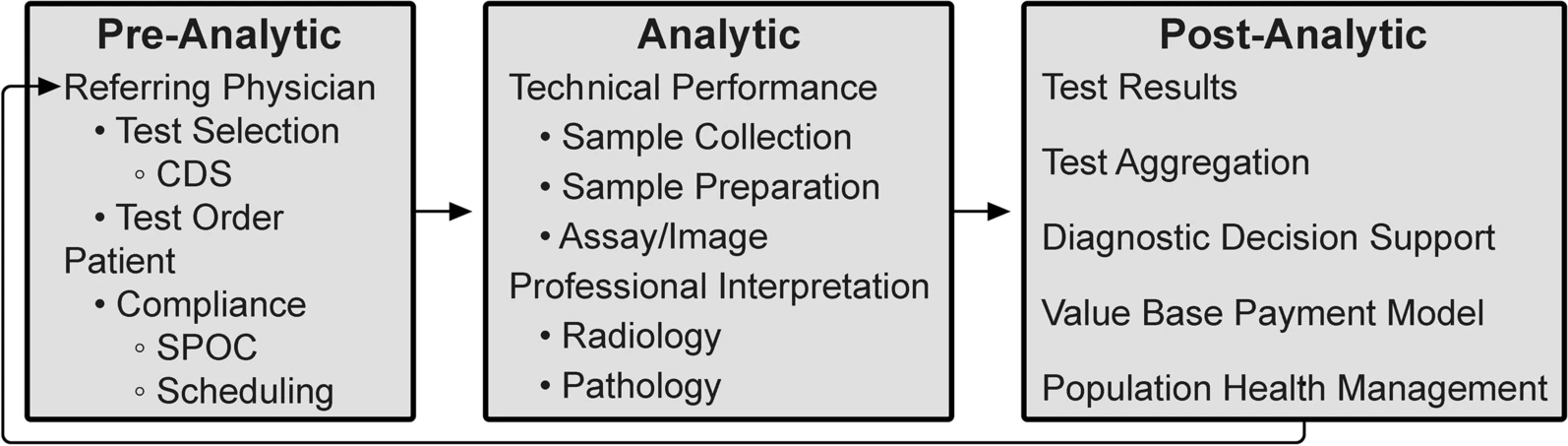 In this 2022 paper published in Insights into Imaging, Beauchamp et al. focus in on the promise of "integrative diagnostics" as a means towards aggregating diagnostic data for more meaningful interpretation and contextualization, by extension translating to directly relatable clinical action. Looking specifically at radiology and pathology workflows, the authors describe what integrative diagnostics looks like, how the process should work, and what promise it holds for in vivo and in vitro radiology and pathology workflows. The authors turn to 24 different sources in highlighting the clinical potential of integrative diagnostics for a wide variety of diseases, highlighting the added clinical value and improved discovery possible with integrative diagnostics' application. After examining the current state of the art, the authors conclude by making several recommendations towards implementing integrative diagnostics, while also noting that "[c]reating financial models that demonstrate the economic value proposition of [integrative diagnostics] will be a necessary catalyst for change" for the overall health care system.
Configurable LIMS Highlighted at Paperless Lab Academy
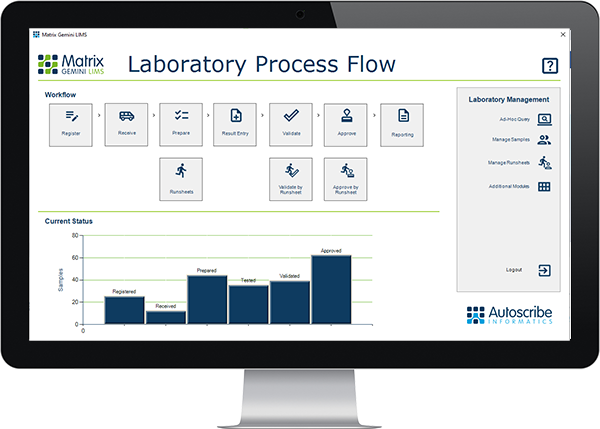 Known for its ease of configurability, the latest version of Matrix Gemini LIMS (Laboratory Information Management System) from Autoscribe Informatics will be on show at the Paperless Lab Academy 2023. Unique among LIMS vendors, every configuration for each customer uses the same software. Configuration is performed using the built-in Matrix Configuration Tools which keeps all configuration separate from the core software. [Read More]

