

How does a LIMS benefit microbiological sampling and testing in the food and beverage industry?
 Microbiology labs are critical in ensuring food and beverage safety. A purpose-built LIMS helps streamline operations for food-safety-oriented microbiology labs with well-developed and standardized sampling and test methods. Factors like flexibility, data integrity, and integration capabilities with monitoring devices help enhance efficiency, data integrity, and regulatory compliance. [Read More]
Looking for a LIMS? Here Are the Top 5 Things to Consider
 With countless systems, complex workflows, and vast amounts of data, navigating the complex world of informatics is enough to make your head spin. Homegrown systems and disconnected data silos decrease productivity and increase risk in already complicated industries. Laboratory Information Management Systems (LIMS) are essential for productivity in laboratory testing, helping teams manage samples, workflows, and inventory to keep processes and workflows moving forward. [Read More]
Envision the Lab of the Future with an AI-enabled Digital Lab Assistant
 Interconnected systems and data are what the future lab will run on. If you want to bring your lab into the future, an AI-enabled and voice-powered digital lab assistant like LabTwin can be a foundational step. LabTwin’s 95% accuracy with voice capture means that you can be confident that your data is accurately transcribed. In this blog post, you’ll learn how the AI features in LabTwin can help when you adopt a digital lab assistant to bring your organization closer to the Lab of the Future today. [Read More]
Five Ways a LIMS can Improve your Lab
 A well-deployed LIMS can have a myriad of benefits for your R&D laboratory. From operational efficiency to speed to market, LIMS can play a vital role in these and other mission critical business and scientific processes. This white paper takes a close look at some of the key ways in which a LIMS should be deployed and used to reap the most benefit in your lab. [Read More]
AI in a Research and Development Lab: Are We There Yet?
 Artificial intelligence (AI) is a term we see and hear a lot nowadays. It is associated with the things surrounding us daily: home electronics, cars, public transportation, shopping, etc. Has this trend reached the benches of the general research and development (R&D) lab yet? Can AI make the lives of R&D lab analysts easier? Well, yes, but not in all aspects of the work—at least not yet. This blog looks at potential applications of AI in R&D labs today and where it might still need to improve. [Read More]
Cloud hosted LIMS – 10 Things to Know Before You Jump
 The choice of whether to keep your LIMS and its associated data local to the laboratory and on-premise, or remotely in the cloud, is a more complex choice than it may seem. Autoscribe Informatics took the opportunity in a recent webinar to discuss the much-misunderstood subject of cloud hosted laboratory software solutions. Laboratory Information Management Systems (LIMS) are the heart of any modern laboratory, recording and storing all sample and associated meta data, as well as inventory, quality, staff training, and instrumentation information in one place. [Read More]
Trends in LIMS
 LIMS are evolving rapidly, driven by technological advancements and the changing needs of modern laboratories. Keeping up with these trends is crucial for laboratories looking to enhance their efficiency, data management, and compliance. In this article, we’ll explore some of the trends in LIMS. [Read More]
What types of testing occur within a materials testing lab?
 Materials testing is as diverse as the available material types and industrial applications of those material types, and such testing is found across a wide variety of domains. from automotive and aerospace to metals and rubbers. Materials science testing methodologies can be divided into destructive or non-destructive analysis of physical, mechanical, chemical and biological properties. [Read More]
Knowledge of internal quality control for laboratory tests among laboratory personnel working in a biochemistry department of a tertiary care center: A descriptive cross-sectional study
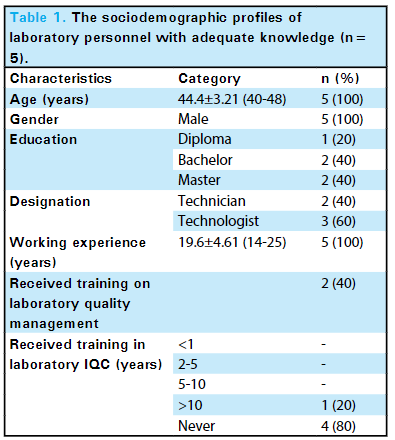 In this brief study by Mishra et al. in the Journal of Nepal Medical Association, the level of knowledge of internal quality control (IQC) in the Department of Biochemistry, B.P. Koirala Institute of Health Sciences (BPKIHS), a tertiary care center, is explored. Noting the importance of laboratory quality control and knowledge of IQC to patient outcomes, the authors conducted a descriptive cross-sectional study of its laboratory staff (n=20), asking questions related to "the understanding of the purpose of IQC, the types of control materials, various control charts, how and when IQC should be performed, and interpretations of the Levey-Jennings Chart using the Westgard rule." The authors concluded from their results were inline with other studies conducted in similar environments (25% had adequate knowledge of IQC), their facility had work to do in improving IQC knowledge and quality management systems more broadly. They add: "Hence, providing training opportunities on laboratory IQC can be reflected as a necessity in our current laboratory set-up. This could add value to the knowledge of IQC on laboratory personnel to ensure that the reports generated within the laboratory are accurate, reliable, and reproducible."
Webinar: Nasty Nematodes: Laboratory roles in diagnostics and investigations
“This webinar will cover the basics of laboratory testing from molecular to serology to morphological identification for tissue nematodes of public health importance. Diagnosis is often challenging for this group of organisms due to limited test availability, their often unexpected, zoonotic nature, and a general lack of awareness among clinicians.…
Webinar: Antimicrobials, Susceptibility Testing, and Antimicrobial Resistance: A Primer
“This session seeks to help develop a working knowledge of the primary antimicrobial drugs in use, the clinical and laboratory aspects of antimicrobial susceptibility testing (AST), and some of the important antimicrobial resistance mechanisms encountered in the clinical laboratory.
A certificate of participation will be granted to each participant based on 1.0 contact hours of instruction toward credit.”…
Request for Proposals: Water and Wastewater Laboratory Analytical Services
Solicitation #: VW0368
“Laboratory testing and analyses are requested by [Santa Clara Valley Water District in California] for purposes of compliance with the National Pollutant Discharge Elimination System (NPDES), Safe Drinking Water Act (SDWA), Resource Conservation and Recovery Act (RCRA), and special projects.…
Invitation to Bid: HPV & PAP Lab Services
Solicitation #: 3000022421
“This solicitation is to establish a Service Contract to provide HPV & PAP Lab Services as specified for the Louisiana Department of Health for an initial period beginning date of award and ending June 30, 2024. At the option of the State of Louisiana and acceptance by the Contractor, this contract may be renewed for two additional 12-month periods at the same prices, terms and conditions.…
Laboratory Informatics Weekly Update – Volume 22, Issue 7
February 15, 2024 Laboratory Informatics Weekly Update Volume 22, Issue 7 In This Issue Featured Books The Complete Guide to LIMS and Laboratory Informatics - 2024 Edition Featured Content Conquering Laboratory Data Management: Decoding Data Platforms for Life SciencesBusinesses in the life sciences sector are navigating complex decisions regarding their laboratory data management. They face demands for data accuracy, compliance, and integrity that drive decisions about data platform use. A platform serves as a bespoke hub for data regardless of which or how many data sources are involved. Your platform choice can be a game changer for accessibility, flexibility,…Conquering Laboratory Data Management: Decoding Data Platforms for Life Sciences
 Businesses in the life sciences sector are navigating complex decisions regarding their laboratory data management. They face demands for data accuracy, compliance, and integrity that drive decisions about data platform use. A platform serves as a bespoke hub for data regardless of which or how many data sources are involved. Your platform choice can be a game changer for accessibility, flexibility, and data management as the life sciences industry adapts to technological advancements. [Read More]
What are the LIMS key elements for construction & engineering?
 A construction & engineering lab can involve many test methods defined by various accreditations and regulations, benefiting from various LIMS functionalities. Many LIMS vendors will already provide support for unique sample IDs, user qualification management, and data import and export. However, FAQ examines more specific functionality specific to a construction and engineering laboratory. [Read More]
LIMS Wizards Unveils New Features of LabTwin and SampleVision 3.1 at Pittcon 2024
 LIMS Wizards, LLC, a global scientific software solutions provider, will exhibit LabTwin and SampleVision at Pittcon 2024. Both products have made technological advances to provide the end user with increased functionality across various industries. These features will be on display at booth 940. Recent breakthroughs in AI technology are set to revolutionize laboratory operations, and LabTwin’s AI-powered, voice-activated digital lab assistant is at the forefront of this transformation. [Read More]
Customer Q&A: Key Takeaways from a 14 Year Partnership with Bayer
 With over 14 years of working with STARLIMS, Senior Business Solution Architect at Bayer AG, Tassilo Steffl, knows how to get the most value out of a laboratory information management system (LIMS). In this fireside chat with STARLIMS Chief Strategy & Marketing Officer Brandon Henning, Tassilo discusses some of the key takeaways and benefits from the partnership with STARLIMS. [Read More]
What is the importance of a construction and engineering laboratory to society?
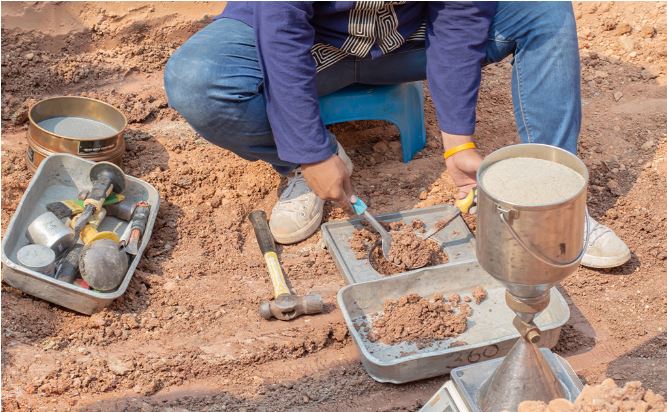 The proper quality and characterization of construction and engineering materials is critical to a construction project’s long-term success. The analysis of construction and earth materials is driven largely by society’s desire for safer, more durable structures to live, work, and play in. This testing benefits society by saving lives and reducing pre-construction, construction, and post-construction costs. [Read More]
Sigma metrics as a valuable tool for effective analytical performance and quality control planning in the clinical laboratory: A retrospective study
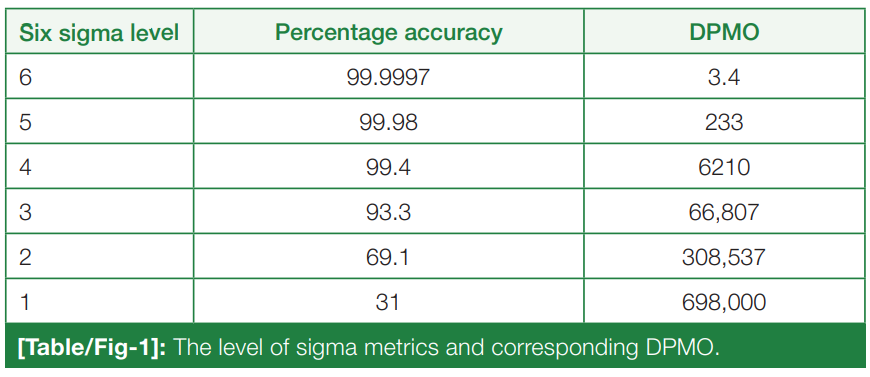 In this 2023 article published in the National Journal of Laboratory Medicine, Karaattuthazhathu et al. of KMCT Medical College present the results of a performance assessment of its clinical laboratories' analyte testing parameters using a Six Sigma approach. Examining a six-month period in 2022, the authors looked at 26 parameters in biochemistry and hematology using both internal quality control (IQC) and external quality assurance (EQAS) analyses. After presenting materials and methods used, as well as the results, the authors reviewed their results and concluded that according their sigma metrics analysis, their laboratories are "able to achieve satisfactory results, with world-class performance of many analytes," though recognizing some deficiencies, which were corrected mid-study.

