


Webinar: Preparing Your Laboratory for CLIA 2024
“Revisions to the CLIA proficiency testing regulations go into effect on July 11, 2024. They include 29 newly regulated analytes and tighter proficiency testing acceptable limits for many currently regulated analytes, along with changes to grading and reporting. These revisions will drive updates to the proficiency testing conducted by laboratories.…
Laboratory Informatics Weekly Update – Volume 22, Issue 11
March 14, 2024 Laboratory Informatics Weekly Update Volume 22, Issue 11 In This Issue Featured Books LIMS Selection Guide for ISO/IEC 17025 Laboratories Featured Content CSols Summit 2024: The Next-gen Lab: Pioneering Tomorrow, TodayLearn how to optimize existing tools and embrace emerging technologies like artificial intelligence, data science, simulations, analytics, and lab informatics integrations for enhanced daily operations at this virtual conference - April 3 - 4, 2024. Gain insights on deriving additional value from organizational data, deepen your understanding of AI and digital twins, and be an early adopter of integration platforms and digital transformations. [Read More] What…BIOTECHNO 2025

An international conference on bioinformatics, biocomputational systems, and biotechnologies…
RDAP24
The Research Data Access and Preservation Summit is an annual conference for “data managers and curators, librarians who work with research data, and researchers and data scientists” looking for solutions to research data management issues.
NOTE: The conference will be held online.…
CSols Summit 2024: The Next-gen Lab: Pioneering Tomorrow, Today
 Learn how to optimize existing tools and embrace emerging technologies like artificial intelligence, data science, simulations, analytics, and lab informatics integrations for enhanced daily operations at this virtual conference - April 3 - 4, 2024. Gain insights on deriving additional value from organizational data, deepen your understanding of AI and digital twins, and be an early adopter of integration platforms and digital transformations. [Read More]
What role does interoperability and systems integration play in the laboratory, and why is this important to address?
 Interoperability and integration are important to today's laboratories. Integration is a critical enabler for access, exchange, and cooperative use of data and information, the other components of interoperability. Whether it's a middleware solution, a LIMS, or a custom automation solution, each lab will need to address interoperability and integration in the greater scope of data, data standards, systems, workflows, inefficiencies, and organizational risks. [Read More]
The Clock Ticks for US Food Testing Labs to be LAAF-Accredited
 FDA is gradually tightening the rules on food testing labs to mandate that, under certain circumstances, food testing must be performed only by LAAF-accredited laboratories. This article discusses how this affects contract testing labs and how the can comply with the amendments to Food Safety Modernization Act. The introduction of a laboratory accreditation program for food testing labs by the U.S. Food and Drug Administration (FDA) is intended to improve the testing of food under certain circumstances. [Read More]
Why Choose QLIMS? Insights from a Customer
< In the competitive world of laboratory informatics, choosing the right LIMS can be a daunting task. We emphasise the features of QLIMS as the OnQ Software team, but we have decided that nothing will be more real than what we hear from a customer. We have compiled feedback from our customers and asked them why they chose us. Here is ‘Why Choose QLIMS’ insights from the customer. [Read More]
Why equipping scientists to harness digitisation is key to driving laboratory innovation
 Digital transformation can deliver significant benefits for laboratories and their customers, but investing in the latest, greatest technology is not an immediate path to success. Technology is a key enabler when harnessed correctly, but it’s equally possible to invest in the wrong software for your business needs, or even implement the right software but fail to fully leverage its capabilities and reap the expected rewards. [Read More]
WHITE PAPER: AI Use Case Catalog
 To compete in the era of Industry 4.0, laboratories must leverage artificial intelligence (AI) and machine learning (ML). The use cases in this white paper will show you why working with LabTwin can accelerate your organization’s realization of value from AI and ML. Request this white paper to read the presented use cases for situations familiar to many in biotechnology and pharmaceutical labs. [Read More]
Why is it important for a LIMS to be scalable?
 LIMS scalability is the ability to handle growing amounts of data, users, and transactions without performance compromise. As your laboratory expands, the LIMS can adapt and accommodate increased data volume, user interactions, and overall workload. When considering a LIMS, assessing the scalability features, such as system architecture, database capabilities, and performance benchmarks, is essential for meeting current and future needs. [Read More]
Invitation for Bids: Drinking Water Sampling, Analysis, Reporting and Support Services – Camp Roberts
Solicitation #: 0000030260
“The Contractor shall furnish all labor, equipment, and materials necessary to provide Drinking Water Sampling, Analysis, Reporting and Support Services for the Water System for the California National Guard facility known as Camp Roberts located off of Highway 101, Camp Roberts CA 93451 in accordance with the terms, conditions, and requirements of this Invitation for Bid (IFB).…
Webinar: Better Lab Design for a Successful Build or Renovation
“The design of the lab is critical to its performance. Scientists require the right space to complete the technical work. Taking advantage of the knowledge, experience, and expertise of architects, lab planners, and lab designers is the best way to create the space required for your lab to be successful.…
Webinar: Ask Me Anything: Lab of The Future
“The lab of the future will integrate the latest technologies to enable a more efficient, compliant and sustainable workplace for the next generation of researchers. From innovations such as automation and robotics to connectivity and the cloud, the lab of the future should integrate physical and virtual technology.…
Paperless Lab Academy 2024 – Europe
Everything you always wanted to know about Scientific Digital Data Management The Paperless Lab Academy® is the ideal learning platform for all companies that own a laboratory, involved in running, consolidating, integrating or simplifying laboratory data management processes. Once again, we are setting the stage for discussions on strategies and implementation of 21st-century technologies in your laboratory. We work on an agile combination of future horizon views, already running in some industries, and tangible real cases on how to solve today’s concerns.
Invitation for Bid: Water Reclamation Facility Laboratory Testing
Solicitation #: BID B-1717
“The City of North Las Vegas (‘City’) conducts its Water Reclamation Facility (‘WRF’) and Industrial Pretreatment and drinking water testing with one vendor.
The testing for the WRF consist of daily, weekly, and quarterly testing of influent and effluent samples with the Acute Toxicity Testing on a monthly basis and chronic Testing on a quarterly basis.”…
Invitation for Bid: Air Quality Sampling and Analysis
Solicitation #: 20240227-01JP
“The City of Redlands [California] Municipal Utilities and Engineering Department is soliciting bids for: Air Quality Sampling and Analysis.” See documents for more.
Due date: 12 March 2024, 10:00 a.m. PDT…
Critical analysis of the impact of AI on the patient–physician relationship: A multi-stakeholder qualitative study
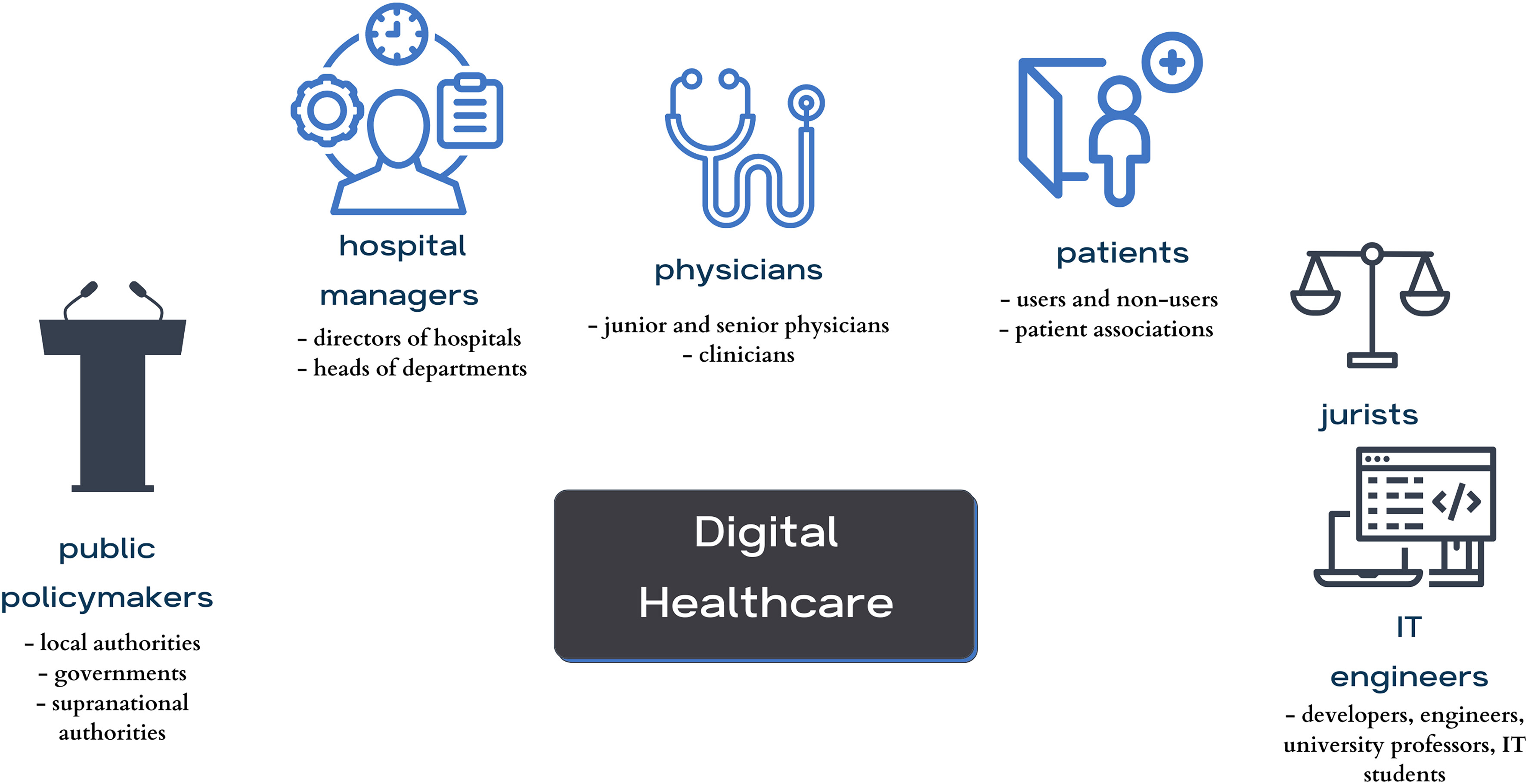 In this 2023 paper published in the journal Digital Health, Čartolovni et al. present the results of their qualitative, multi-stakeholder study regarding the "aspirations, expectations, and critical analysis of the potential for artificial intelligence (AI) to transform the patient–physician relationship." Pulling from hours of semi-structured interviews, the authors developed a number of themes from the interviews and discussed how to reach a consensus on their interpretation and use. The authors focused on four main themes and a variety of subthemes and present the results of their work in the framework of these themes and subthemes. From their work, they conclude a definitive "need to use a critical awareness approach to the implementation of AI in healthcare by applying critical thinking and reasoning, rather than simply relying upon the recommendation of the algorithm." Additionally, they highlight how "it is important not to neglect clinical reasoning and consideration of best clinical practices, while avoiding a negative impact on the existing patient–physician relationship by preserving its core values," strongly urging for the preservation of patient-physician trust in the face of increased AI use.
Request for Quotation: University Health Services Laboratory Interface Software
Solicitation #: 490000-00925-RFQ
“University of Oregon Health Services (UHS) Laboratory is a moderate to high complexity laboratory serving the patients and providers of University Health Services. To serve our clients effectively and efficiently we require a laboratory information system (LIS) that can meet the specific requirements described in the RFQ … To ensure that we are good stewards of University of Oregon (UO) resources and support the needs of our patients, providers, and caregivers we are seeking a LIS that can meet the needs of our lab, and interface effectively with our instruments, reference lab partners, and electronic health record.…

