

Laboratory Informatics Weekly Update – Volume 23, Issue 29
July 28, 2025 Laboratory Informatics Weekly Update Volume 23, Issue 29 In This Issue Featured Books Justifying LIMS Acquisition and Deployment within Your Organization Featured Content 10+ Scientific AI Tools Every Scientist Should Know in 2025/26Artificial Intelligence (AI) is rapidly transforming how scientific research is conducted, offering new ways to accelerate discovery, optimize experiments, and make sense of complex datasets. In 2025, Scientific AI is more than just a tool—it’s a necessity. This article explores more than 10 essential AI tools that are shaping the future of hypothesis generation, molecular modeling, data analysis, and beyond. [Read More] 6 Signs Your…10+ Scientific AI Tools Every Scientist Should Know in 2025/26
 Artificial Intelligence (AI) is rapidly transforming how scientific research is conducted, offering new ways to accelerate discovery, optimize experiments, and make sense of complex datasets. In 2025, Scientific AI is more than just a tool—it’s a necessity. This article explores more than 10 essential AI tools that are shaping the future of hypothesis generation, molecular modeling, data analysis, and beyond. [Read More]
6 Signs Your Lab is Falling Behind and How to Turn It Around
 Labs that struggle with manual tasks, poor data visibility, compliance gaps, or fragmented collaboration may be falling behind. Recognizing these signs early allows teams to modernize workflows, improve accuracy, and boost overall efficiency using integrated digital tools that support adaptability and growth. [Read More]
Understanding Electronic Records: Why They Matter for Every Lab
 In today’s digital world, data is the lifeblood of every laboratory business. However, it’s not just the data itself that matters. It’s how that data is stored, tracked, and managed over time as electronic records. While they’re often discussed in the context of regulatory compliance, electronic records are fundamental to running an efficient, high-quality lab, whether the lab is regulated or not. [Read More]
LIMS Quality Indicators: Ensure Precision in Your Lab
 In today’s high-stakes lab environment, precision, speed, and control are essential. That’s where quality indicators and visual dashboards come in. These powerful tools are game-changers for industries where accuracy is non-negotiable—whether it’s environmental testing, food safety, or industrial analysis. Integrated into a cutting-edge LIMS, they deliver real-time insights, streamline operations, and drive smarter, faster decisions. [Read More]
Top 10 Reasons to Upgrade Your LIMS
 Is your laboratory's LIMS feeling a bit behind the times? In today's rapidly evolving scientific landscape, an outdated LIMS can be a significant bottleneck, silently impacting everything from daily lab efficiency to crucial regulatory compliance. While the thought of a LIMS upgrade may seem daunting, the truth is, the transformative benefits for your modern lab are often too compelling to ignore. [Read More]
Sapio Sciences and Cognizant Life Sciences Manufacturing Partner to Accelerate Digital Lab Transformation in Life Sciences
 Sapio Sciences has partnered with Cognizant Life Sciences Manufacturing, designed to advance lab modernization efforts for life sciences organizations around the world. Together, the two companies will help clients accelerate digital transformation across R&D and manufacturing quality control labs by delivering cloud-enabled, scalable lab solutions that unify LIMS, ELN, and scientific data management. [Read More]
LIMS and ELN: Understanding Their Roles and How They Work Together to Streamline Lab Operations
 LIMS and ELN are powerful laboratory software tools that serve different purposes. LIMS focuses on managing samples, workflows, and compliance, while ELNs support scientific documentation and collaboration. When integrated, they streamline operations, reduce errors, and improve data integrity across the lab. [Read More]
Astrix Webinar -Why Hyperautomation Is the Key to Speed and Scale in Life Sciences R&D
In 2025, businesses are operating in a world defined by rapid disruption, heightened competition, and increasing demand for agility. Innovation is no longer a luxury; it’s a necessity for survival. But as organizations push to evolve, they face complex operational obstacles: disjointed systems, data fragmentation, skill shortages, and soaring expectations from customers and stakeholders alike.…
Laboratory Informatics Weekly Update – Volume 23, Issue 28
July 21, 2025 Laboratory Informatics Weekly Update Volume 23, Issue 28 In This Issue Featured Books Justifying LIMS Acquisition and Deployment within Your Organization Featured Content Laboratory Reporting: Improving Accuracy, Efficiency, and ComplianceClear, efficient reporting is essential for lab success. By automating data capture, standardizing templates, integrating centralized systems, and applying role-based access, labs can streamline reporting, reduce errors, and stay compliant. These strategies boost accuracy, improve decision-making, and support better scientific and operational outcomes. [Read More] LIMS Customization vs. ConfigurationWhether to solve LIMS design puzzles via configuration or customization is an age-old question, right behind “Which came first:…Laboratory Reporting: Improving Accuracy, Efficiency, and Compliance
 Clear, efficient reporting is essential for lab success. By automating data capture, standardizing templates, integrating centralized systems, and applying role-based access, labs can streamline reporting, reduce errors, and stay compliant. These strategies boost accuracy, improve decision-making, and support better scientific and operational outcomes. [Read More]
LIMS vs. ELN: Navigating Today’s Complex Lab Informatics Landscape
 Choosing between a LIMS and an ELN was once straightforward—LIMS managed samples, while ELNs supported experiments. But as platforms evolved and labs grew more complex, these distinctions blurred. Today, it’s less about labels and more about finding a system that fits your workflows and future needs. This article breaks down the strengths of each and how to make the right choice for your lab. [Read More]
LIMS Customization vs. Configuration
 Whether to solve LIMS design puzzles via configuration or customization is an age-old question, right behind “Which came first: The chicken or the egg?” Ok, maybe it’s not that universal, but it is one of the most asked questions within lab informatics. What is the difference between customization and configuration, where is the line between the two, and which approach is the correct one to use in solving your design problems? [Read More]
Acceptance Criteria — The Real Star of Software Requirements in Lab Software
 Labs implementing software systems to help them reach their business goals know they need requirements to keep them on track. However, beyond the six common types of requirements — business, user, functional, non-functional, configuration, and user stories — labs should also define clear user acceptance criteria. [Read More]
How to Structure Laboratory Data for Decision Making
 Digital transformation in labs has created a new challenge for quality control teams: how to organize the growing volume of daily data. Efficiently structuring lab data is no longer a competitive edge—it’s a necessity for faster responses, reduced rework, and better decision-making. This article explores best practices for structuring lab data to boost productivity, traceability, and quality management. [Read More]
LIMS Integration: Connecting Your Lab for Greater Efficiency and Insight
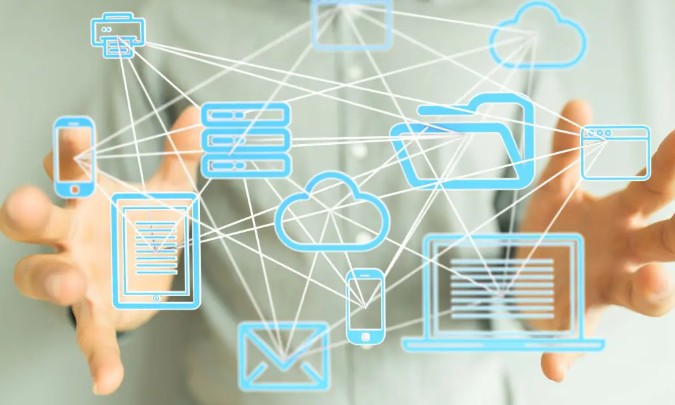 Integrating your LIMS with other lab systems improves efficiency, accuracy, and collaboration. By connecting instruments, databases, and third-party tools, labs can streamline workflows, reduce manual entry, and maintain strong data integrity. This leads to faster turnaround times and better decision-making. [Read More]
LIMS Launchpad Series: Episode #1 – Strategic Planning
Event Overview:
LIMS Launchpad Series: Episode #1 – Strategic Planning
In the rapidly evolving world of laboratory informatics, selecting the right Laboratory Information Management System (LIMS) can be a complex and high-stakes decision. Whether you’re upgrading from a legacy system or exploring a digital transformation for the first time, understanding the LIMS acquisition process is critical for operational success.…
LabAsia 2025
A biennial regional trade fair and conference for the laboratory sector…
Laboratory Informatics Weekly Update – Volume 23, Issue 27
July 14, 2025 Laboratory Informatics Weekly Update Volume 23, Issue 27 In This Issue Featured Books Justifying LIMS Acquisition and Deployment within Your Organization Featured Content Confience myLIMS SaaS: Modernizing Laboratory Operations with Confidence and ControlFor decades, LIMS have been the backbone of quality control, compliance, and traceability in industries like Water & Environment, Food & Beverage, Chemical, and Manufacturing. While on-premises systems offered control and customization, shifting demands and IT landscapes are prompting many to consider Software-as-a-Service (SaaS) alternatives. This blog helps lab and IT decision-makers evaluate the operational, compliance, and scientific benefits of SaaS LIMS. [Read More]…Confience myLIMS SaaS: Modernizing Laboratory Operations with Confidence and Control
 For decades, LIMS have been the backbone of quality control, compliance, and traceability in industries like Water & Environment, Food & Beverage, Chemical, and Manufacturing. While on-premises systems offered control and customization, shifting demands and IT landscapes are prompting many to consider Software-as-a-Service (SaaS) alternatives. This blog helps lab and IT decision-makers evaluate the operational, compliance, and scientific benefits of SaaS LIMS. [Read More]

