
Embrace change and unlock your lab's full potential with LabLynx's expert LIMS implementation services. Our proven methodologies and dedicated support ensure a smooth transition, minimizing disruptions to your workflow and maximizing the return on your investment. Let us show you how to turn change management into a powerful tool for driving growth, efficiency, and innovation in your laboratory.
[Read More]

Choosing the right Laboratory Information Management System (LIMS) is essential for efficient and effective lab operations. A well-chosen LIMS can enhance your lab's operational efficiency, data integrity, and regulatory compliance. Inventory management is a critical component of lab management. Ensuring that your LIMS solution includes an integrated inventory management module is vital to the success of your LIMS and your laboratory.
[Read More]

Laboratory managers seek out a Laboratory Information Management System (LIMS) for many reasons; these include enhancing data quality, meeting compliance requirements, resource maximization, and cost savings. In today’s complex regulatory environment, a LIMS is no longer a luxury; rather, it is a necessity for all professionally staffed and quality certified laboratories.
[Read More]

Stem cells are a particular type of cell with the remarkable ability to develop into many different cell types in the body during early life and growth. They serve as the body’s raw materials, capable of self-renewal (dividing and creating more identical stem cells) and differentiation (transforming into specialized cells with specific functions).
[Read More]

Citizens Energy Group provides several services for the Indianapolis area including water and wastewater, natural gas and thermal energy. Citizens Energy Group Lab Services (CEGLS) conducts testing for the organization's drinking water and wastewater operations. This includes testing thirteen drinking water facilities, two wastewater treatment plants and several production wells.
[Read More]

Cloud or on-premises LIMS: the choice can feel daunting, but with the right information, it doesn't have to be. By understanding the nuances of both cloud-based and on-premises LIMS, you'll be empowered to select the solution that perfectly aligns with your lab's specific requirements and budget constraints, paving the way for a more streamlined and efficient laboratory operation.
[Read More]
“Why do I need a LIMS when I already have SAP Quality Module?” The quality modules of ERP systems are great as they are already tied into your system which likely handles finance, procurement, and logistics, but only cover basic functions needed for the laboratory which is normally only product release.
[Read More]

As we look towards the next decade of biotech and pharmaceutical development, the landscape of project management is set to undergo transformative changes as well. Driven by emerging technologies, evolving regulatory environments, and shifting market dynamics, biotech firms and pharmaceutical companies must anticipate these trends and adapt their project management strategies accordingly.
[Read More]

Lab fires, floods, and cyberattacks: these are the nightmares that keep lab managers up at night. But what if you could rest easy, knowing your critical data and operations are protected? Discover how a LIMS can be your lab's unsung hero in disaster recovery, ensuring business continuity even when chaos strikes. Don't wait for disaster to strike – safeguard your lab's future today.
[Read More]
The fictional pirate Captain Jack Sparrow once said,
“Wherever we want to go, we go. That’s what a ship is, you know. It’s not just a keel and a hull and a deck and sails. That’s what a ship needs. But what a ship is…what the Black Pearl
really is…is freedom.” Similar sentiments can be expressed about LIMS. A LIMS is not just a piece of software with features, functions, specifications, and tests.
[Read More]

The field of tissue engineering is an interdisciplinary one that involves biology, engineering, and material science. It is based on the creation of bio-based alternatives to the repair or replacement of damaged tissues and organs within the human body. Tissue engineers aim to produce engineered tissue that has a similar structure and function compared to natural tissues...
[Read More]

For over twenty-five years, the Analytical Laboratory at the Cary Institute has relied on Sample Master to ensure data integrity and successfully manage its valuable research data.
[Read More]

The use of AI in any organization starts with having their data ready for that journey. “In order to actually reap the benefits of AI in terms of giving predictive or descriptive types of capabilities, it has to be fed clear, contextualized and relevant data,” says Astrix Principal Software & Systems Architect Dave Dorsett in a new AIScoop video interview.
[Read More]

Tired of the phone ringing off the hook? What if your clients could get lab results and updates instantly, without ever dialing your number? Discover the game-changing solution that's transforming lab communication and boosting efficiency.
[Read More]
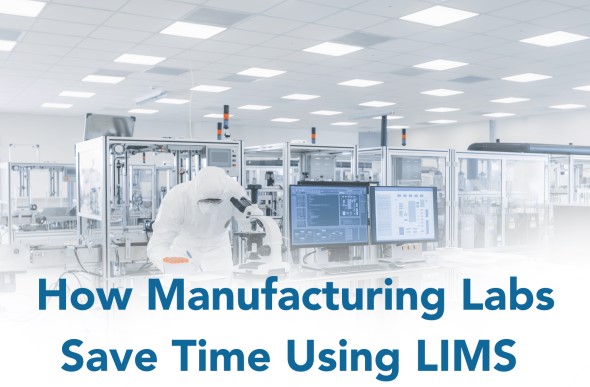
Time is of the essence in manufacturing laboratories. For labs, managing samples, pallets, and production plans can be incredibly time-consuming. This is where a Lab Information Management System (LIMS) like QLIMS comes into play. By integrating a LIMS into your operations, you can significantly increase efficiency and save precious hours every day.
[Read More]
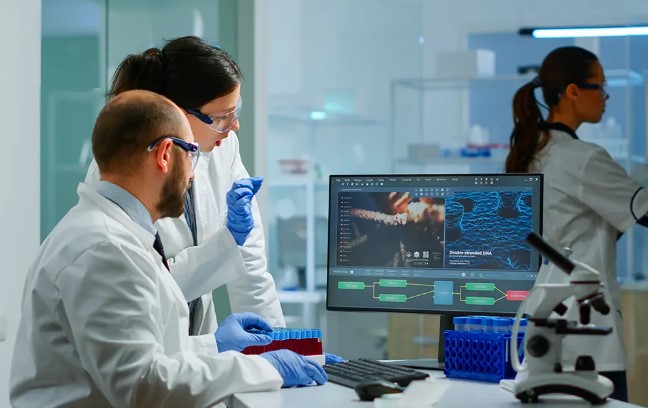
In the high-stakes world of healthcare, even minor lab errors can have devastating consequences for patients. The LabLynx LIMS acts as a digital guardian, safeguarding against errors at every stage of the lab process, from sample collection to result reporting. By automating workflows, ensuring sample integrity, and providing robust quality control measures, LabLynx empowers your lab to prioritize patient safety and deliver accurate, reliable results.
[Read More]

Computer System Validation (CSV) is a process that organizations–particularly those in industries where there is potential risk to the public like product manufacturing and healthcare–go through to ensure products are safe, reliable, and effective as required by regulating bodies like the FDA and CAP/CLIA. We are often asked by clients and prospects if our LIMS software, Labbit, is fully validated off-the-shelf.
[Read More]

The biotech and pharmaceutical industry is typically at the forefront of technological innovation, constantly pushing the boundaries of what is possible in medicine and science. This makes managing research and development (R&D) projects in this sector incredibly complex, especially when these projects involve sophisticated information technology (IT) systems.
[Read More]

The Schedule of Assessments (SoA) in clinical research protocols serves as one of the most important roadmaps clinicians, researchers, sponsors, and monitors use to guide the trial from start to finish. This roadmap, also sometimes referred to as the Schedule of Activities or the Schedule of Events, outlines study visits and scheduled activities expected for each visit throughout the study with detailed timelines to follow.
[Read More]

Gene therapy is a state-of-the-art medical intervention that introduces therapeutic genes into a patient’s cells to treat or prevent disease. Gene therapy, which fixes the underlying genetic cause of a disorder, might provide a long-term or even permanent cure. Breakthroughs in gene therapy have the potential to cure numerous diseases...
[Read More]


