
Efficiency and speed are crucial for any company aiming to lead the market, and this is especially true in R&D, where leaders are under increasing pressure to reduce product development cycle times. R&D is an expedition into the unknown, requiring a mix of scientific techniques and perseverance. Dead ends and setbacks are not just common but expected.
[Read More]

Environmental labs face the complex challenge of managing vast amounts of data while adhering to strict regulations. A LIMS (Laboratory Information Management System) revolutionizes how these labs operate, ensuring data accuracy, streamlining workflows, and simplifying compliance. Discover how a LIMS can optimize your lab's efficiency, save costs, and even contribute to a greener future.
[Read More]

Advanced materials are revolutionizing industries from aerospace to healthcare, pushing the boundaries of what's possible. But the development of these cutting-edge materials requires meticulous data management, streamlined workflows, and unwavering quality control. This is where Laboratory Information Management Systems (LIMS) step in, acting as the backbone of advanced materials innovation.
[Read More]

FDA warning letters issued between January and May 2024 continue to highlight the issue of ensuring data integrity within laboratories. Managing laboratory data in a way that demonstrates it is not altered, or manipulated, remains a keen concern, especially with electronic records, files, and databases. Many instruments include an audit trail within their own database that captures changes to the data but how do you ensure that a ‘super-admin’ cannot go in the backend and manipulate that data.
[Read More]
Data security is a major challenge in modern laboratories. From patient health records to research findings, labs handle sensitive information on a daily basis. As a result, any kind of unauthorized access, data breach or cyber-attacks can lead to significant problems that affect the operational, financial and legal aspects of the organization. A Laboratory Information Management System (LIMS) can help strengthen a laboratory’s data security initiatives.
[Read More]

R&D is a labyrinthine road that journeys into the unknown, toward the promise of discoveries that could potentially revolutionize our world. However, innovation in the modern age requires engaging with a wide array of scientific techniques and the ability to try and fail until a scientific breakthrough is made. Early-stage R&D teams need modern technology to help them ideate, collaborate, and maximize the value of their data.
[Read More]

Every business must minimize risk. In the laboratory testing world, risk management is of particular importance to the daily processes and operations of food & beverage safety labs. In this guest blog, Matt Sica of Perry Johnson Laboratory Accreditation, Inc. breaks down for us how FDA HACCP principles, combined with risk-based thinking from the ISO/IEC 17025:2017 standard, create a powerful toolset, one laboratories in other disciplines can also use to better mitigate risk.
[Read More]

LabWare LIMS™, out of the box (OOTB), leverages the power of a Laboratory Information Management System (LIMS) and the knowledge within your lab, as well as your users. An essential part of LabWare LIMS is its templates. Don’t succumb to using default template solutions from your initial LabWare implementation when there are options to tweak...
[Read More]

A Laboratory Information Management System (LIMS) can revolutionize your lab, but its true potential is unlocked through strategic implementation and expert guidance. LabLynx's experienced LIMS consulting helps you navigate the complexities and create a tailored solution that perfectly aligns with your unique lab environment and goals.
[Read More]

LabLynx's Laboratory Information Management System (LIMS) revolutionizes food testing labs by automating workflows, centralizing data, and optimizing inventory management. This leads to reduced manual errors, improved sample tracking, and efficient resource allocation, ultimately increasing productivity and minimizing waste.
[Read More]

When you’re considering implementing a Laboratory Information Management System (LIMS) system in your lab, there are many elements that you must consider. This includes understanding how the LIMS system will affect, or instead benefit, the lab. By knowing more about the four core functions of a LIMS, it will be easier to understand how it will fit into the lab and the advantages you can expect.
[Read More]

RenBio reimagines the way antibody therapeutics can be produced and delivered by creating a delivery platform that takes advantage of the body’s ability to produce any given antibody or therapeutic protein when provided with a precise set of genetic instructions. Learn how RenBio has transformed their R&D lab operations, by securely centralizing all research data within the Labstep ELN from STARLIMS.
[Read More]

Cellular therapies are a groundbreaking approach to medicine that utilises living cells to treat various diseases and conditions. Unlike traditional pharmaceuticals, which often target symptoms, cellular therapies aim to address the underlying causes of disease by delivering living cells or modifying a patient’s cells to restore or enhance their function. Cellular therapies hold immense promise for personalised and precise treatments, offering new hope to patients with conditions previously considered untreatable.
[Read More]

Want to make your lab more sustainable? LabLynx LIMS helps you go green by optimizing resource management, reducing waste, and automating energy-intensive tasks. Join the movement towards a more eco-friendly lab and make a positive impact on the environment with LabLynx.
[Read More]

Medical microbiology labs play a critical role in fighting infectious diseases. They identify pathogens through various tests like culturing and microscopy, and this data is vital for treating patients and tracking outbreaks. Automation and AI are transforming these labs, increasing efficiency and accuracy in detecting and combating infectious threats.
[Read More]
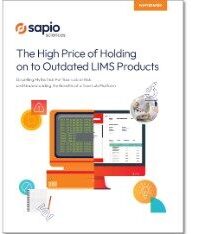
In this whitepaper, we take a closer look at the risks your lab may be facing by sticking with an outdated LIMS system. We also look at the key features you need in a modern LIMS and how you’ll benefit from modernizing your LIMS.
[Read More]

A Laboratory Information Management System (LIMS) is a centralized platform that enables you to store and manage all essential lab data and results in one place. It supports sample tracking, inventory management, instrument integration, workflow optimization, report generation, and compliance with regulatory requirements. One key factor in the success of a LIMS project is choosing the right LIMS Implementation Partner to help with setup, training and support.
[Read More]

Questions abound about our health and the environment. Laboratories are uniquely positioned to possess the answers. Your laboratory’s biggest, most valuable asset may very well be its data. Properly collated and analyzed, data can lead to insight, knowledge, even power. To find those answers and ultimately unlock the value of the data you hold, your laboratory needs strong data analytics capabilities.
[Read More]

The
medical cannabis industry has experienced significant growth worldwide. With this growth comes the need for robust and efficient systems to manage the complex processes involved in cannabis cultivation, processing, and distribution. Laboratory Information Management Systems (
LIMS) play a crucial role. In Part 1, we explored the key features of a LIMS in the medical cannabis industry and how QLIMS conforms to TGO 93 Standards. In Part 2, we’re diving into how QLIMS supports the medicinal cannabis process.
[Read More]

Modern laboratories are filled with various instruments that are essential for running vital experiments and studies. These instruments generate vast amounts of data, which is challenging for lab workers to store and manage manually. A Laboratory Information Management System (LIMS) is a robust system that makes managing and organizing information more efficient.
[Read More]


