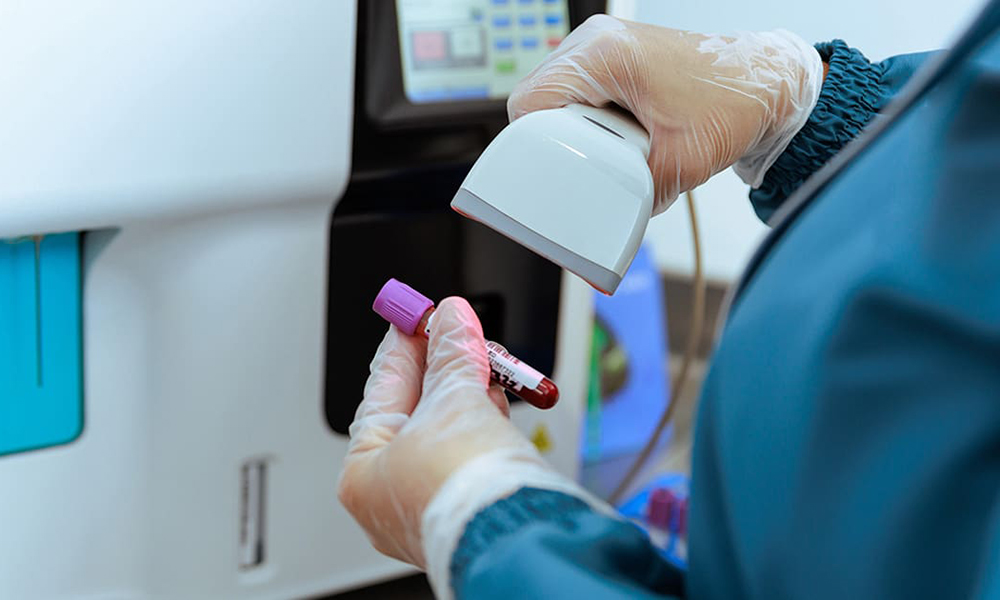
Most labs we talk to are tracking samples in spreadsheets and filing chain-of-custody on paper. That works until an assessor asks for the complete history of a sample and the answer is a scavenger hunt. This piece walks through five traceability failures we see repeatedly and what changes when the lab has a system of record.
[Read More]
CSols guided a state public health laboratory through a vendor-neutral LIMS selection across 20 departments and two facilities, tackling an aggressive funding deadline, a legacy system with critical gaps, and widespread stakeholder disengagement. The result was a formal RFP with custom demo scripts grounded in real workflows, not marketing claims.
[Read More]

A2LA publishes its Top 10 ISO/IEC 17025 deficiencies. ANAB reports 548 nonconformities across 543 forensic testing and calibration assessments in 2025. Both bodies point at the same pressure: continuous evidence of records, equipment, competence, and traceability. This whitepaper goes inside that data, with five failure modes, why they recur, and the fix.
[Read More]

AI investment in biopharma R&D keeps accelerating, but most ELN and LIMS platforms were built as transactional record-keepers, not foundations for production-scale AI. This Sapio post outlines the architectural choices that make informatics AI-ready: upstream data quality, semantic interoperability, scalability, and embedded governance across the model lifecycle.
[Read More]

Kalleid examines how integrating ontologies with ELNs can bridge the gap between fragmented scientific data and actionable insights. As life sciences organizations push further into digital transformation, ontology provides the semantic framework needed to make research data findable, accessible, interoperable, and reusable across systems and teams.
[Read More]

Astrix outlines technical, regulatory, and operational strategies for achieving 99.9% or higher informatics availability in life sciences environments. From cloud-native architectures to proactive monitoring and managed support, the guide presents a vendor-agnostic roadmap for reducing downtime risk across LIMS, ELN, and supporting systems.
[Read More]
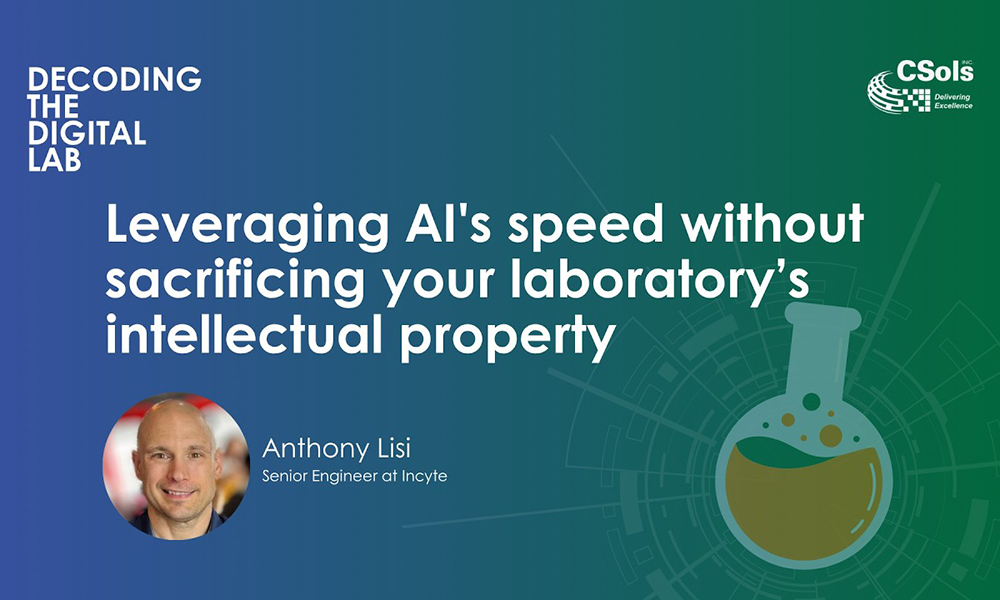
In this episode of Decoding the Digital Lab, Senior Engineer Anthony Lisi from Incyte joins CSols to discuss the risks of unconstrained AI in lab automation. Discover why building infrastructure without boundaries creates technical debt, security vulnerabilities, and scalability challenges that modern labs cannot afford to ignore.
[Read More]
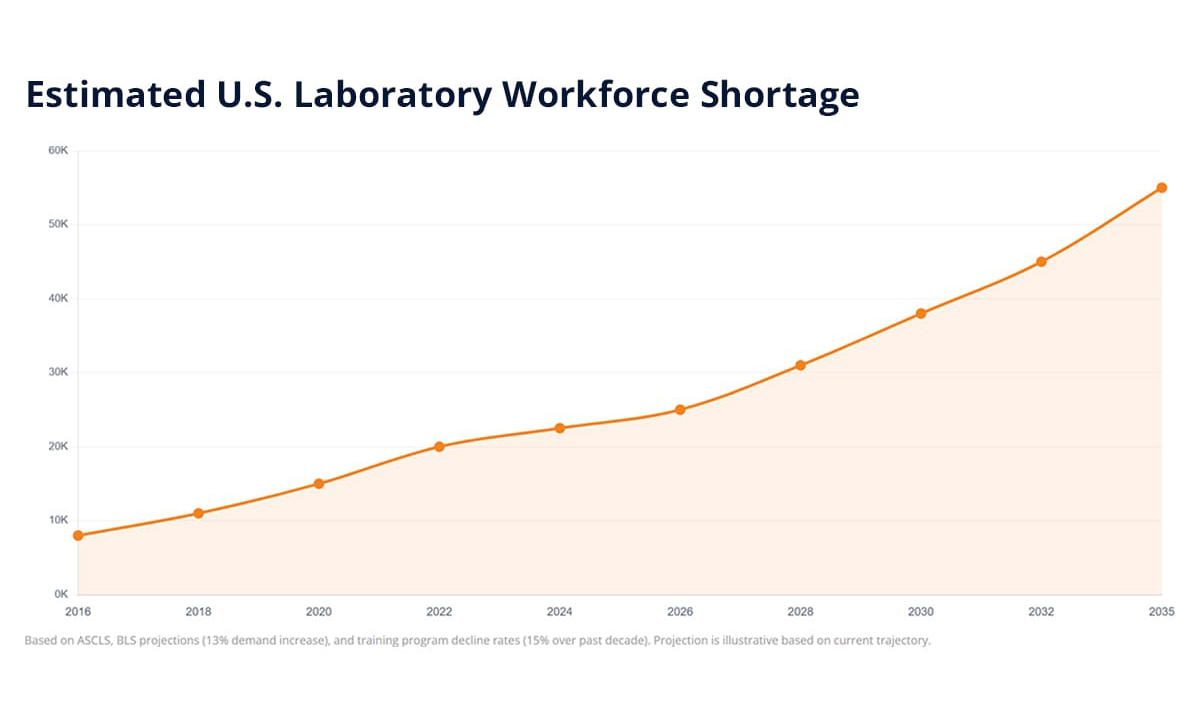
With an estimated 20,000 to 25,000 unfilled laboratory positions across the U.S. and Canada, the staffing crisis is structural, not temporary. The smartest labs in 2026 are shifting their strategy from hiring alone to automating manual workflows, digitizing institutional knowledge, and using LIMS and ELN tools to recover 20-30% of operational capacity.
[Read More]

Building a business case for LIMS implementation in 2026 takes more than a feature list. This Astrix article delivers a technical framework that connects quantifiable ROI to 21 CFR Part 11 compliance and AI-ready data foundations, with guidance on aligning C-suite priorities with lab operations and dismantling silos across the scientific lifecycle.
[Read More]

A global biopharma's R&D ecosystem was buckling under post-acquisition integration failures, legacy gaps, and SaaS migration risks that vendor support and internal IT could not resolve. This Kalleid case study shows how an embedded informatics consultant blending biology, chemistry, and software engineering restored data integrity and accelerated research.
[Read More]

Sapio Sciences has connected Anthropic's Claude Cowork to the Sapio Platform via Sapio Elain, its AI co-scientist, giving scientists and project leaders a single conversational interface to search, analyze and act on R&D data across ELN and LIMS. Built on Model Context Protocol, every action runs with full traceability to the requesting user.
[Read More]

Most LIMS selections fail not because the software is bad, but because the demo is a vendor performance and the lab never wrote the script. CSols offers an eight-step playbook for taking control with scenario-based workflows, standardized demo data, outcome-focused scoring, and implementation reality checks that produce defensible decisions faster.
[Read More]
In regulated labs, every system change risks triggering costly revalidation, so teams default to bundling updates into rare, high-stakes releases. This Labbit post borrows from software engineering and treats LIMS configuration as versioned changesets, giving teams clear system state, targeted validation, and faster iteration without losing control.
[Read More]

As AI drives renewed interest in historical lab data, pharma R&D teams face new challenges around long-term storage, retrieval, and version control. A robust Lab Data Management System provides the structure to preserve data integrity, traceability, and institutional knowledge across projects, teams, and decades of research.
[Read More]

When a global specialty chemicals manufacturer acquired two Canadian sites, the legacy SampleManager LIMS needed a full upgrade and integration with the parent ecosystem. CSols led the migration to v21.1, switched the backend from Oracle to SQL Server, moved the platform to Azure, and delivered a new SM-IDI/SAP interface on time and within budget.
[Read More]

The next generation of scientific discovery will be defined not by which labs adopted AI, but by which ones made it work inside the workflow. Success hinges on whether the underlying informatics platform embeds AI natively or bolts it on as a parallel process. A unified data model, not the AI model itself, is what determines practical value at scale.
[Read More]

Over 70% of scientists can't reproduce another researcher's results. The cost: $28 billion a year in wasted research. This whitepaper reveals why the crisis is fundamentally a documentation problem, what NIH and institutions are now mandating, and how an electronic lab notebook eliminates the root causes. Includes a free ELN option for academic labs.
[Read More]
If vendors already validate their platforms, and not every feature carries equal risk, why do labs still spend months retesting everything? The shift from Computer System Validation (CSV) to Computer Software Assurance (CSA) promises a smarter, risk-based approach, but only works when labs have the change visibility to define impact with confidence.
[Read More]
Semaphore is now Labbit. After more than a decade and 400,000 hours working inside complex regulated labs, the team has unified under one name and one mission: a modern LIMS designed around how labs actually operate. Learn why the rebrand reflects a platform built for flexible workflows, FAIR data, and the AI transformation reshaping lab informatics.
[Read More]

Lab AI adoption is moving through three stages: passive ELNs that record work without supporting it, shadow labs where scientists lean on public generative AI and fragment the record, and active labs where governed intelligence lives inside the notebook itself. See the full maturity model and a practical roadmap to get from one to the next.
[Read More]


