Posted on July 3, 2023
By LabLynx
Journal articles
In this 2023 article published in the
Journal of Pathology Informatics, Pablo
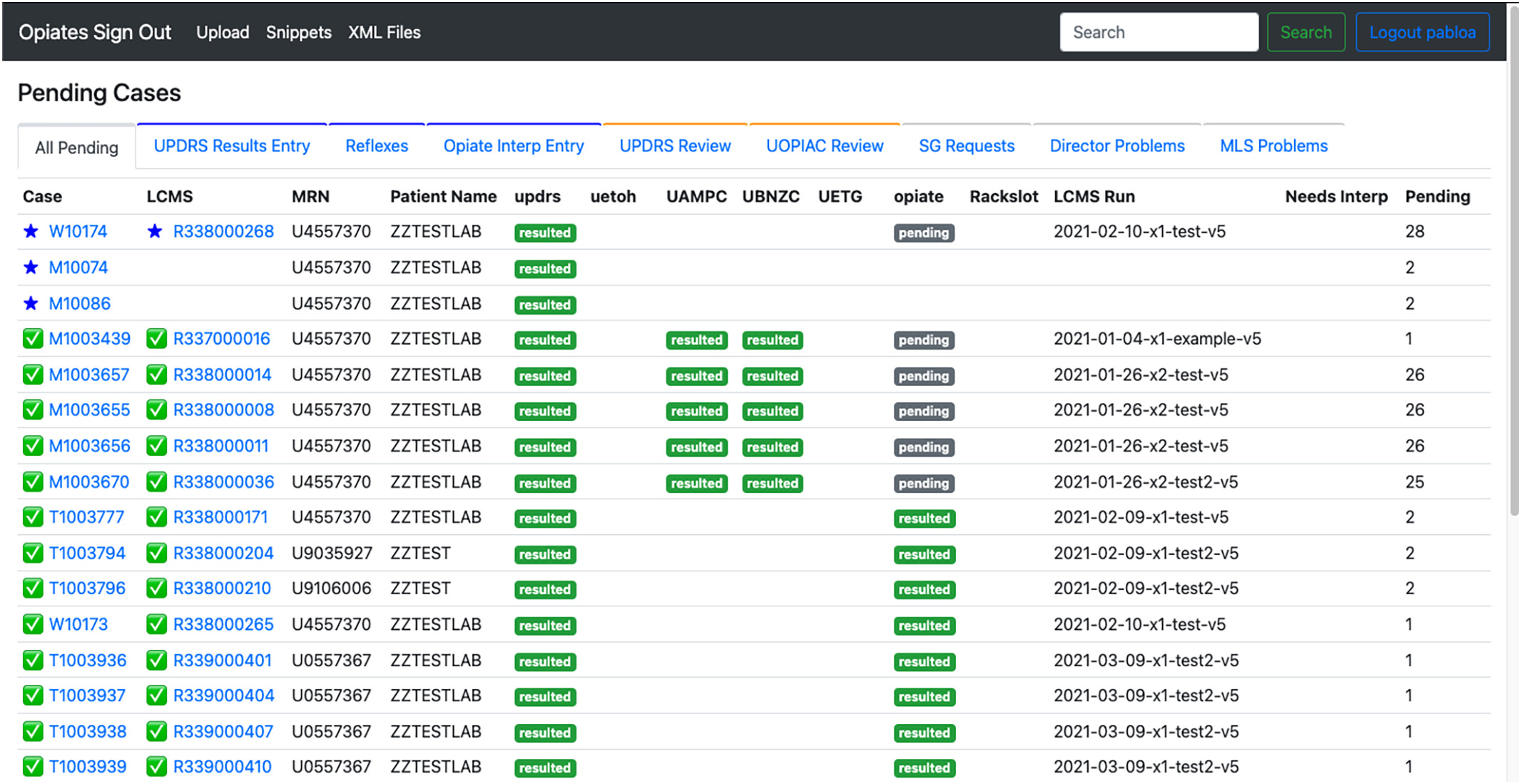
et al. of the University of Washington School of Medicine present their work on developing a web-based application for better supporting the complex workflows of labs conducting pain-management-related toxicology and pathology testing. Noting a lack of support of these workflows among traditional laboratory information systems (LISs), the authors describe their approach to developing a system to meet their needs. After providing background and discussing the development approach, the authors present the results of their system implementation and performance analysis. After some discussion, the authors conclude that the "implementation of a purpose-built application to support reflex and interpretation workflows in a clinical pathology practice has led to a significant improvement in laboratory efficiency," adding that their custom, purpose-built application is able to "reduce staff burnout, reduce transcription errors, and allow staff to focus on more critical issues around quality."
Posted on June 29, 2023
By Corinne Jones
Newsletter
June 29, 2023 Laboratory Informatics Weekly Update Volume 21, Issue 26 In This Issue Featured Books LIMSpec for Cannabis Testing Featured Content Integrated Laboratory Instrument ManagementModern laboratories are under enormous pressure to produce research and simultaneously minimize waste and regulatory risk. One area where labs often fail to maximize operational efficiency is laboratory instrument management. Proper management of laboratory equipment through every phase of its life cycle is an important key for labs to get the most out of their resources. Seasoned professionals at Kalleid have deep expertise in R&D research that helps maximize laboratory efficiency. [Read More] The…
Posted on June 28, 2023
By Kalleid
Blog

Modern laboratories are under enormous pressure to produce research and simultaneously minimize waste and regulatory risk. One area where labs often fail to maximize operational efficiency is laboratory instrument management. Proper management of laboratory equipment through every phase of its life cycle is an important key for labs to get the most out of their resources. Seasoned professionals at Kalleid have deep expertise in R&D research that helps maximize laboratory efficiency.
[Read More]
Posted on June 28, 2023
By LabLynx
Blog

Join the league of top-tier laboratories that have harnessed the power of LIMS for document control, sample tracking, instrument integration and calibration, quality control and assurance, results management and reporting, training and competence management, and audit trail capabilities to achieve and maintain ISO 17025 accreditation.
[Read More]
Posted on June 28, 2023
By Adurosys Inc.
Blog

Therapeutic antibody discovery and development labs assay hundreds to thousands of antibody candidates daily to hone in on the best candidates for clinical development. Accurate, complete plate maps are critical for sample traceability and experiment reproducibility. Using
LIMSense™, a modern LIMS from AduroSys, can ensure seamless integration between instruments and LIMS without sacrificing flexibility in plate map design.
[Read More]
Posted on June 28, 2023
By LIMS Wizards
Blog

Laboratories and their associated remote testing/sampling sites may like the numerous, multistep workflows that currently rule the organization’s daily operations. These laboratories should not buy SampleVision™. Many of your favorite workflows will be immediately streamlined if you do make SampleVision part of your lab. Conversely, if you’re looking for every possible competitive advantage in the age of digital transformation, read on for descriptions of how some of your sampling, testing, and reporting workflows would be simplified if you
did buy SampleVision.
[Read More]
Posted on June 28, 2023
By L7 Informatics
Blog

Following on from the
L7 MES app introduction, let us have a deeper dive into the features that set the L7 MES app as the right choice for pharmaceutical manufacturing. One of our guiding principles in designing the L7 MES app was to build the core regulatory compliance requirements all cGMP processes must adhere to, out of the box, and additionally, how to support the timely dispositioning of manufactured finished products.
[Read More]
Posted on June 28, 2023
By Clinisys
Blog

Machine learning (ML) and artificial intelligence (AI) may still seem futuristic. You might think your environmental laboratory can’t handle the technologies. Or maybe you don’t think your laboratory can or should be out on the bleeding edge of computing. You might be surprised then to learn that machine learning harkens back to the 1950s.
1 However, it might not surprise you to learn that environmental, water, and wastewater laboratories lag behind other scientific disciplines in ML/AI adoption.
[Read More]
Posted on June 28, 2023
By SCC Soft Computer
Blog

SCC’s Laboratory Information Systems Suite focuses on optimizing your laboratory operations, while providing consistent connectivity to laboratory instruments, robotics, and other information systems. These integrated solutions eliminate the need for costly add-ons while providing seamless interfaces linking all clinical laboratory departments throughout your provider’s network.
[Read More]
Posted on June 28, 2023
By LabLynx
Blog

Avid vitamin and supplement users may assert that increasing your intake of vitamin D reduces the risk of cancer and other diseases and prevents infection. And many scientists have supported those claims. However, new research casting doubt on the benefits of vitamin D supplementation is sparking a debate on whether healthy Americans should bother being tested for vitamin D deficiency or taking a supplement.
[Read More]
Posted on June 28, 2023
By onQ Software
Blog

The customer is both knowledgeable in their field and technically capable. Strong Python scripting skills and great ideas. The challenge is to collate data from multiple long files being generated by this instrument, perform calculations, validate the data, upload it to the sample and attach graphs generated on the fly without any manual intervention. How will we solve this?
[Read More]
Posted on June 26, 2023
By LabLynx
Journal articles
In this 2023 article published in the journal
Smart Agricultural Technology, Sutton
et al. propose an automated method for analyzing the trichomes of the
Cannabis inflorescences for their cultivation maturity. Noting "no scientifically based methods to predict maturation of inflorescences" in the literature, the authors sought out a computational method able to " extract trichome phenotype and morphology metrics during
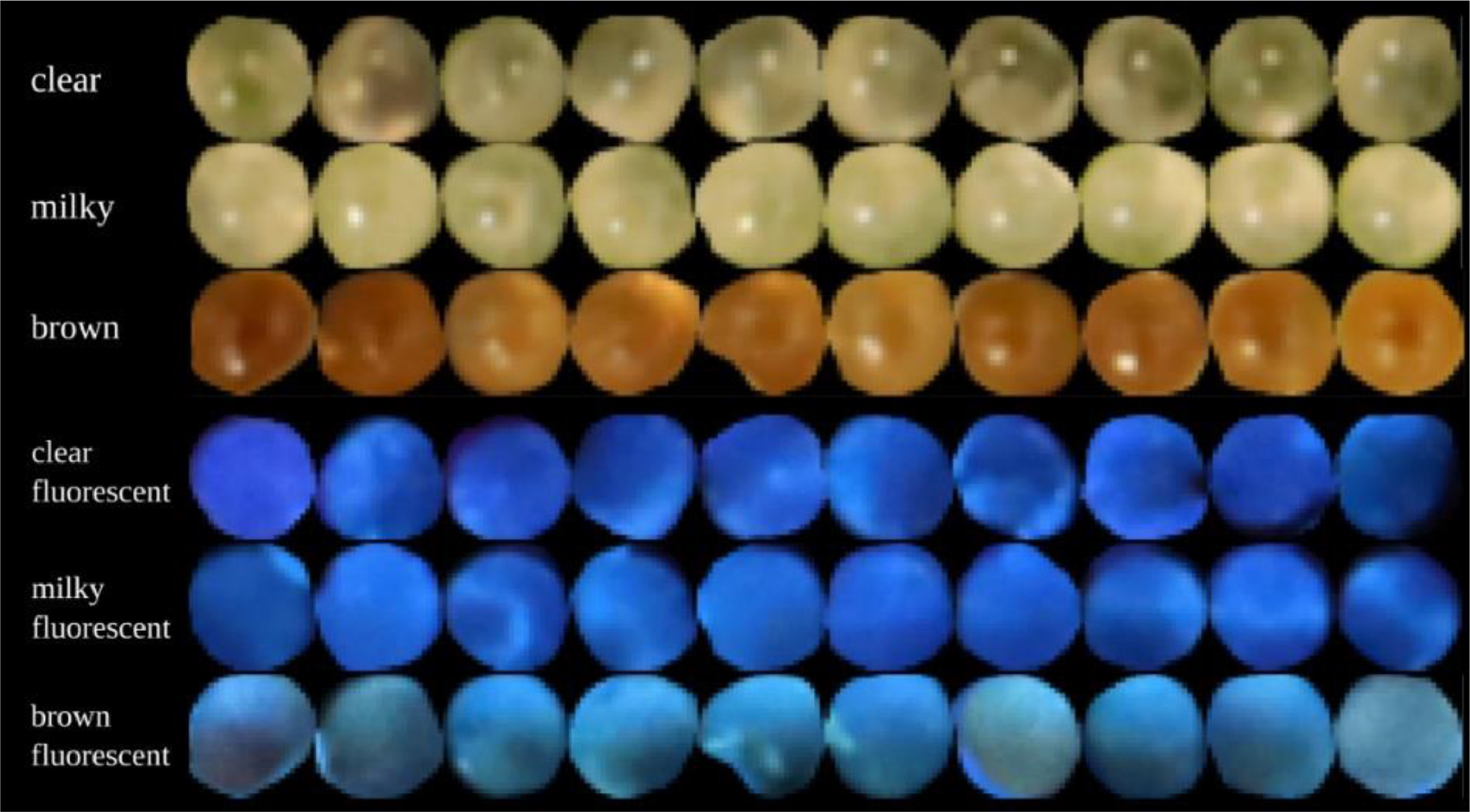
Cannabis flower development from macroscopic photographs." After providing a brief introduction and a discussion of related work, the researchers discuss their materials, analytical methods, and data collection approach, followed by a lengthy explanation of their experimental results. The authors conclude that through their methods, "the observed relationship between trichome gland head diameter and morphological metrics indicates the feasibility of automatic quality assurance software that can determine how flower maturation is proceeding and if strain-specific potential may be attained." They add that further expansion on their work may produce real practical solutions for cultivators gauging the harvest-readiness of their
Cannabis plants.