Posted on June 14, 2023
By Clinisys
Blog

Laboratories should have a Cloud computing strategy. While security risks kept some laboratories from moving their IT infrastructure to the Cloud, it is clearer now that enterprise security protections in Cloud environments can greatly exceed a laboratory’s own on-premise security capabilities. Security experts would agree that the biggest security risk to your organisation’s information technology is in fact your employees and that computing in the Cloud can pose less risk than keeping IT on-premises.
[Read More]
Posted on June 14, 2023
By Labbit
Blog

Commercial off-the-shelf laboratory information management systems (LIMS) often come with pre-built protocols to help labs get up and running quickly. But if your lab solely relies on these pre-built protocols, you’re missing out on efficiencies that could give your business a competitive advantage.
[Read More]
Posted on June 14, 2023
By Adurosys Inc.
Blog

Therapeutic antibodies are a revolutionary drug class that can treat a wide range of diseases. Secondary screens characterize the functional properties of candidate antibodies, narrowing the pool to those most likely to succeed in clinical trials. The wide range of micro-plate based assays that can test hundreds of variables at once requires accurate and complex plate maps that capture a variety of plate re-array options. Using LIMSense™, a modern LIMS from AduroSys, can ensure you keep track of all of your samples and identify the best antibodies for further development.
[Read More]
Posted on June 14, 2023
By Kalleid
Blog

Technical writers use several authoring applications to create technical content. They write in Microsoft Word, Adobe FrameMaker, and many content management systems like Madcap Flare. Now, we have another tool to help our writing, the messaging-like app called the AI chatbot (“chatbot”). The chatbot is designed to communicate to end users like a person as it purportedly returns helpful information.
[Read More]
Posted on June 14, 2023
By SCC Soft Computer
Blog

The field of molecular diagnostics has grown exponentially in recent years, as advancements in DNA testing drive patient interest in understanding how their unique genetic code impacts their overall health and well-being. In this article, we explore the latest trends in the field and how SCC Soft Computer can help laboratories streamline their molecular diagnostics workflows.
[Read More]
Posted on June 14, 2023
By Astrix Technology Group
Blog

Thermo Scientific™ SampleManager™ LIMS 21.1 Barcode Navigation allows users to enter data and navigate through SampleManager with a barcode scanner. The following functions can be performed using Barcode navigation. Access this new Tech Brief from Astrix.
[Read More]
Posted on June 14, 2023
By LabLynx
Blog

Mines that have been abandoned pose a long-term threat to public safety, health, and the environment. The AMLER program provides funding for initiatives that use economic and community development to repurpose former coal mining areas. By converting these abandoned or polluted properties into recreation areas, training facilities, agricultural processing facilities, business parks, solar farms, and other uses, the AMLER program provides vital assistance in furthering community rehabilitation.
[Read More]
Posted on June 12, 2023
By LabLynx
Journal articles
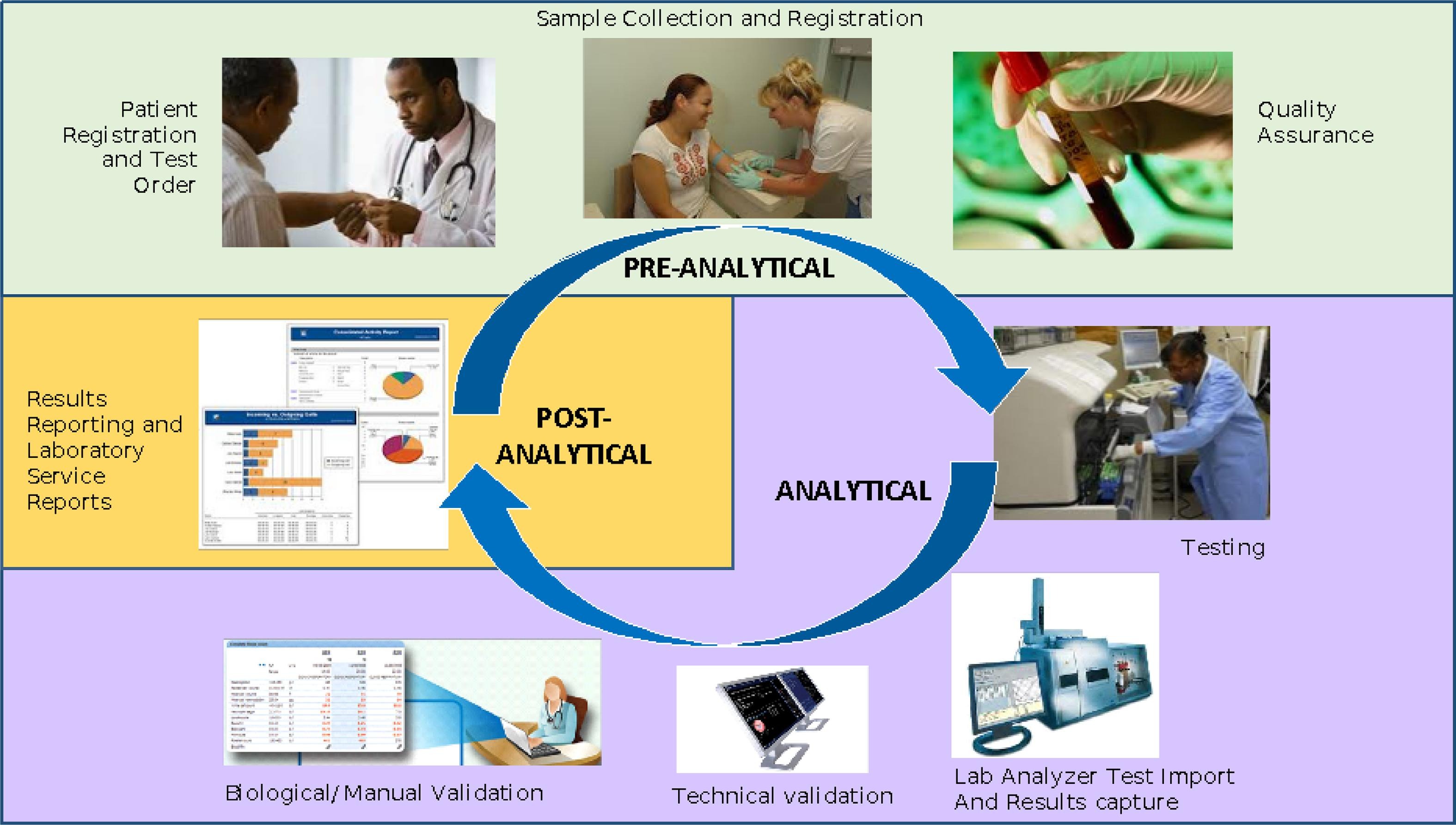
OpenELIS, a free open-source laboratory information system (LIS) for public health laboratories, has been around since 2012 and continue to garner new adopters. But what of the software more than a decade later? Is it still relevant and updated, and has the software demonstrated elements of sustainability for those who have installed it? In this 2023 paper published in the
International Journal of Medical Informatics, He
et al. examine these questions and others in a descriptive case study concerning the software's development, adoption, and use in Côte d'Ivoire. After a full introduction, the authors briefly describe their qualitative methods "to describe the implementation and collaboration around OpenELIS and its supporting activities," followed by discussion of the study results and their implications. The authors conclude that through many different efforts, OpenELIS remains relevant more than a decade later. However, those "planning to adapt and nationally scale [such a] LIS may [need to] consider the importance of HIS workforce development, financial sustainability, and institutionalization of government ownership and technical leadership" through their implementation.
Posted on June 8, 2023
By Corinne Jones
Newsletter
June 8, 2023 Laboratory Informatics Weekly Update Volume 21, Issue 23 In This Issue Featured Books LIMS Selection Guide for Manufacturing Quality Control Featured Content Expanding Your Lab? Your LIMS Makes a Difference Everything changes. Your customer’s expectations will change, testing standards will evolve, and growth opportunities will appear, but your lab must be ready to seize them. Your LIMS can’t hold you back. Whether you run an internal department or an independent business, your lab must adapt to those changes. How well you adapt depends on the agility of your lab’s systems. Deep configurability and customization options make…
Posted on June 7, 2023
By LabLynx
Blog

Everything changes. Your customer’s expectations will change, testing standards will evolve, and growth opportunities will appear, but your lab must be ready to seize them. Your LIMS can’t hold you back. Whether you run an internal department or an independent business, your lab must adapt to those changes. How well you adapt depends on the agility of your lab’s systems. Deep configurability and customization options make the LabLynx ELab LIMS software a powerful engine for growth.
[Read More]
Posted on June 7, 2023
By Clinisys
Blog
The difference between LIS and LIMS has been clear, until now. Where clinical laboratories use a LIS, environmental laboratories use a LIMS. Simple, right? Not exactly, because the lines between LIS and LIMS have blurred, and with good reason.
[Read More]
Posted on June 7, 2023
By Agilent
Blog
This video highlights the changes in the 6.9 version of Agilent SLIMS. Integration with R was added so QC results can be displayed on cards with graphs designed using R scripts. Simplified protocols were updated even further so you can define metadata for samplesheets and import results. This demo was built upon the same MassHunter packages you can install from the SLIMS Store for 6.9.
[Read More]





