Posted on May 31, 2023
By Astrix Technology Group
Blog

The scientific workplace is evolving with an increasing focus on collaboration, inclusivity, and interdisciplinary research. Scientists from different fields and specialties are coming together to solve complex problems, necessitating a new type of lab that promotes teamwork and idea-sharing. This has led to the rise of open lab spaces with flexible, modular designs that can quickly be adjusted to meet the constantly changing needs of science.
[Read More]
Posted on May 31, 2023
By CSols Inc.
Blog

Digital twins. This concept might sound like science fiction, but it’s actually a powerful scientific tool that could transform Research and Development (R&D) in the pharmaceutical and biotechnology industries. This cutting-edge technology can change the way researchers work and open up new possibilities for groundbreaking discoveries in the future of R&D labs.
[Read More]
Posted on May 31, 2023
By Astrix Technology Group
Blog

The US Food and Drug Administration (FDA) has released a draft guidance document on decentralized clinical trials (DCTs) for drugs, biological products, and medical devices. This guidance outlines the FDA’s recommendations for designing, executing, and evaluating these trials and provides guidance on ensuring patient safety and the accuracy of the data generated.
[Read More]
Posted on May 31, 2023
By LabLynx
Blog

Laboratory information management systems (LIMS) can contribute to a laboratory's successful quality system by allowing for a lab to ultimately remain organized. LabLynx offers a customized LIMS that can be configured depending on the industry while remaining in accordance with reporting and operating guidelines. The built-in capabilities of LabLynx ELab LIMS will help you stay in compliance with CLIA, HIPAA, 21 CFR Part 11, ISO/IEC 17025, FDA, EPA, and more.
[Read More]
Posted on May 30, 2023
By LabLynx
Journal articles
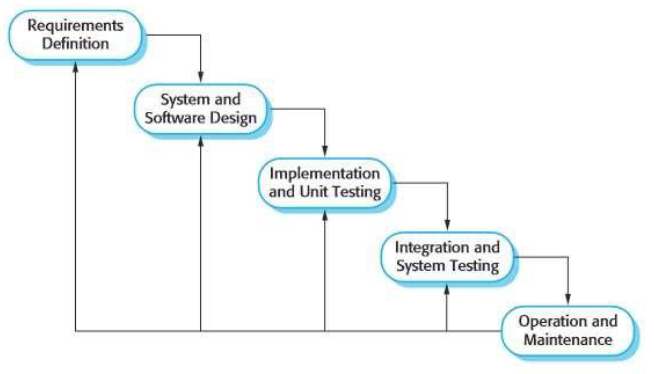
In this 2023 article published in the Indonesian journal
Matrix: Jurnal Manajemen Teknologi Dan Informatika, Ifriza
et al. present their approach to developing a laboratory-based information system for monitoring the condition and maintenance of instruments at the laboratories of the Faculty of Mathematics and Natural Sciences, State University of Semarang (FMIPA UNNES). After providing a brief introduction, the authors discuss their methodology to developing such a software system, as well as the results, which are explained in terms of the five enterprise architecture planning (EAP) steps used to develop it. The authors conclude that "[b]ased on the results of the study, it can be concluded that the use of laboratory systems for monitoring and maintenance in laboratory management has proven to be very valid."
Posted on May 25, 2023
By Corinne Jones
Newsletter
May 25, 2023 Laboratory Informatics Weekly Update Volume 21, Issue 21 In This Issue Featured Books LIMS Selection Guide for Manufacturing Quality Control Featured Content How to Develop an Effective Data Governance Strategy in the Pharma and Biotech Industry – Part 1More so than with other industries, developing an effective data governance strategy is critical for Pharma and biotech companies. It’s imperative that data is accurate, complete, reusable, and secure. Without proper governance, compliance could be at risk with agency regulations and data quality, accuracy, user access, reuse, and reliability may be jeopardized, and this could impact the organization’s…
Posted on May 24, 2023
By Astrix Technology Group
Blog

More so than with other industries, developing an effective data governance strategy is critical for Pharma and biotech companies. It’s imperative that data is accurate, complete, reusable, and secure. Without proper governance, compliance could be at risk with agency regulations and data quality, accuracy, user access, reuse, and reliability may be jeopardized, and this could impact the organization’s data-driven decisions across drug development, clinical operations, and commercial.
[Read More]
Posted on May 24, 2023
By LabLynx
Blog

While data entry is a normal part of laboratory work, how you do it matters in terms of overall operational performance. Labs may begin with manual data entry, but they will quickly discover that the cost of that process is going to be excessive in the long run. This is another example where automation using systems like an electronic laboratory notebook (ELN) or a LIMS, like LabLynx’s ELab LIMS, can streamline lab operations, reduce overall operating costs, and better use people's skills and capabilities.
[Read More]
Posted on May 24, 2023
By Agaram Technologies
Blog

In today’s dynamic world of scientific research and laboratory processes, staying ahead of the curve is crucial. As technology continues to advance, so does the need for efficient & effective management of laboratory operations. Today, most laboratories have shifted from using traditional paper-based systems to lab informatics solutions to manage day to day lab processes while maintaining data integrity & compliances with a multitude of regulatory requirements.
[Read More]
Posted on May 24, 2023
By onQ Software
Blog

The real power of LIMS can be unlocked when it is integrated with other software systems used by laboratories. This is where
APIs (Application Programming Interfaces) come in – they allow
LIMS applications to communicate with other software systems and devices, enabling a seamless flow of data and workflows across the laboratory ecosystem.
[Read More]
Posted on May 24, 2023
By SCC Soft Computer
Blog

A Laboratory Information Management System, otherwise known as LIMS, is a comprehensive, software-based solution to maximize a laboratory’s efficiencies through centralized workflow. From specimen preparation to final report release, a LIMS is designed to simplify a lab’s day-to-day operations while reducing the risk of mistakes through paperless operations.
[Read More]
Posted on May 24, 2023
By L7 Informatics
Blog
 At L7 Informatics, Vasu Rangadass aims to reduce drug manufacturing costs, streamline operations, and, above all, help patients and providers alike. [Read More]





