Posted on May 10, 2023
By L7 Informatics
Blog

Precision therapeutics refers to the new classes of treatments that have been developed to treat diseases with specific characteristics, whether it be genetic defects, immunological deficiencies, or molecular profiles.
MES as part of a manufacturing operations management application suite can intensely improve problems in manufacturing precision therapeutics. [Read More]
Posted on May 10, 2023
By LabLynx
Blog

Good laboratory practice, or GLP, is a quality system of management concerned with the organizational process and conditions of non-clinical laboratory testing. The most central elements of GLP are record-keeping and the maintenance of attributable, original, accurate, and traceable reports and critical documents. Adding a laboratory information management system (LIMS) to any lab can help easily meet the requirements to ensure GLP adherence.
[Read More]
Posted on May 10, 2023
By Astrix Technology Group
Blog

Clinical research involving human subjects is crucial for the development of new treatments, drugs, and therapies, but it must be conducted in an ethical manner that protects the rights and well-being of the participants. Informed consent is the cornerstone of ethical research, requiring that participants or donors are provided with sufficient information about the study to make an informed decision about whether to participate or not.
[Read More]
Posted on May 10, 2023
By onQ Software
Blog

Data has become an invaluable asset for organisations, including laboratory data. However, accessing laboratory data has been a challenge, as many LIMS applications rely on outdated technologies and systems. But with the advent of modern data analysis tools like Business Intelligence (BI) and Artificial Intelligence (AI), the field of data science has become more accessible. In this blog article, we will explore
QLIMS Business Intelligence which helps organisations to visualise the data and convert it into knowledge. This is
the first part of our series on QLIMS BI. Stay tuned for the second part.
[Read More]
Posted on May 10, 2023
By Astrix Technology Group
Blog

Data migration with ETL Tools can be a deceptively complex process and challenges can appear suddenly without a comprehensive plan. This is not uncommon when project teams focus on system configuration and software customization and delay the data migration. This is a mistake that can cause major delays and threaten business continuity. This checklist summarizes best practices for migration planning with the support of automated
Extract-Transfer-Load (ETL) tools.
[Read More]
Posted on May 10, 2023
By LabLynx
Blog

Since the launch of the program over a decade ago, Feed the Future has developed a network of top US universities and global research and educational institutions to create Feed the Future Innovation Labs. These specialized labs are tackling some of the world's greatest challenges in agriculture and food security, from developing aquaculture and climate-resistant crops to improving pest management methods and animal health.
[Read More]
Posted on May 9, 2023
By LabLynx
Journal articles
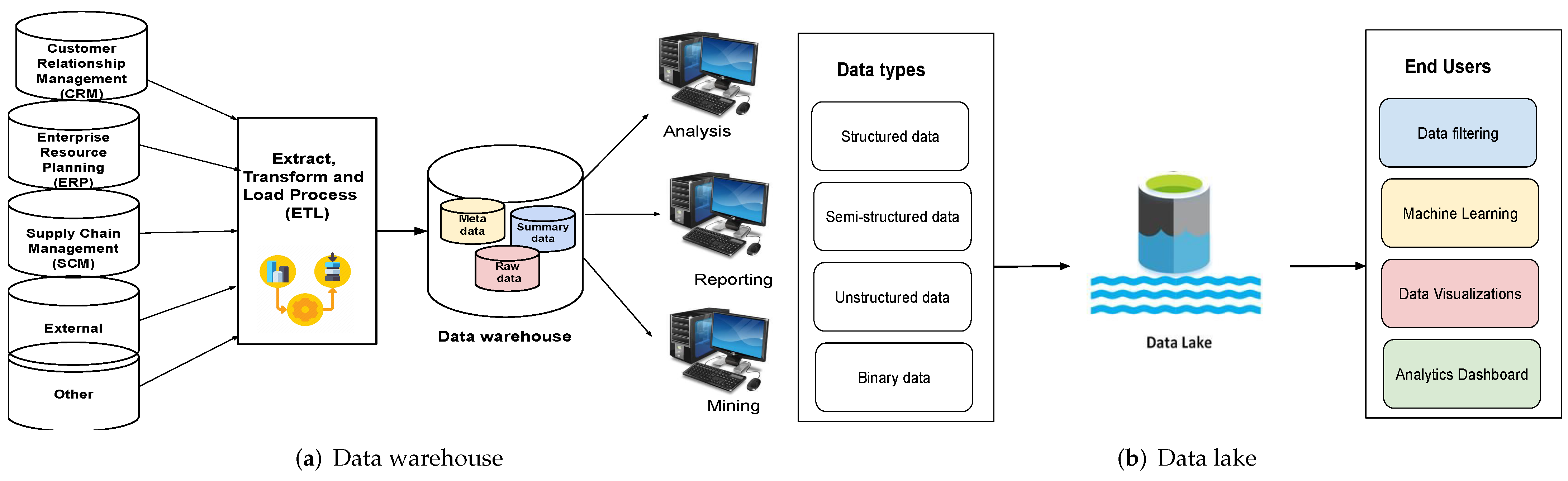
Noting only one known work comparing data warehouses (DWs) with data lakes (DLs), with that article failing to fully address "a comprehensive analysis of both data management schemes by addressing various aspects" in detail, Nambiar and Mundra take to that task in this 2022 article published in
Big Data and Cognitive Computing. After an introduction to the state of DWs and DLs, the authors then discuss the finer points of both data management schemes, while also conducting a literature review on the topic. They then discuss the specifics of architecture regarding DWs and DLs, as well as the data management aspects and useful tools that enhance them. After discussing various challenges and opportunities for the two schemes, the authors conclude that "[d]espite being used interchangeably, they are two distinct storage forms with unique characteristics that serve different purposes."
Posted on May 4, 2023
By LabLynx
Blog

Testing for safety and quality is central to the creation of reliable data. Businesses across multiple industries choose to work with a contract lab instead of bringing the laboratory testing in-house. Utilizing the services of contract testing laboratories can supply a host of benefits, especially to startups or small companies, but also larger enterprise operations that may not have the core competency to conduct certain tests.
[Read More]
Posted on May 4, 2023
By CSols Inc.
Blog

Your manufacturing execution system (MES) can be a valuable part of your organization’s data management plan—if you are using it to its full potential. Is your MES integrated with your laboratory information management system (LIMS) or your enterprise resource planning (ERP) software? If you are operating in the life sciences industry, has your MES been validated for its intended use? If you haven’t thought about your MES as a vital part of your broader organization, you’re not alone. In this blog post, we’ll share why you should consider bringing your MES more fully into your informatics strategy. But first, a little history.
[Read More]
Posted on May 4, 2023
By Astrix Technology Group
Blog

Download this new white paper from Astrix that explores the emerging tech that’s driving life sciences forward. Underlying successful digital transformations, is the critical need for R&D organizations to leverage information assets to enable enhanced insights, decision making, and process automation. While companies are at different starting points, there are several in common approaches to a digital transformation.
[Read More]
Posted on May 4, 2023
By L7 Informatics
Blog
 Lab research, which is crucial for scientific advancement and innovation, has always relied on note-taking to keep track of experiments, observations, and results. Unfortunately, traditional paper notebooks pose several problems for researchers, including the risk of loss or damage, logistical issues, and difficulty in structuring the data for analysis. Some organizations use an Electronic Lab Notebook (ELN) point solution, however, these also have their own limitations, such as a lack of integration with other lab systems, challenges in data sharing and management, and the need for manual data entry. [Read More]
Posted on May 4, 2023
By SCC Soft Computer
Blog

Most American consumers are unaware of the rigorous testing processes that take place before a new drug hits the market. Highly effective and reliable testing is essential for new pharmaceutical products that can help improve health conditions and life quality to reach the end patient. The right Laboratory Information Management System (LIMS) can help a laboratory improve all of its operations and efficiencies, including the highly-detailed process of pharmaceutical testing.
[Read More]