Posted on May 4, 2023
By onQ Software
Blog

The food and beverage industry is a highly regulated industry that requires strict quality control measures to ensure the safety and quality of products. This is where Laboratory Information Management Systems (LIMS) come into play. LIMS is a software-based solution that helps food and beverage companies manage their laboratory data, automate their workflows, and ensure compliance with industry regulations. In this blog post, we will discuss the importance of LIMS in the food and beverage industry and how it can help companies streamline their operations and improve their overall product quality.
[Read More]
Posted on May 4, 2023
By Corinne Jones
Newsletter
May 4, 2023 Laboratory Informatics Weekly Update Volume 21, Issue 18 In This Issue Featured Books LIMSjournal - Spring 2023 Featured Content Advantages of a Contract Testing LaboratoryTesting for safety and quality is central to the creation of reliable data. Businesses across multiple industries choose to work with a contract lab instead of bringing the laboratory testing in-house. Utilizing the services of contract testing laboratories can supply a host of benefits, especially to startups or small companies, but also larger enterprise operations that may not have the core competency to conduct certain tests. [Read More] MES Integration and Validation…
Posted on May 3, 2023
By LabLynx
Blog

Introducing a laboratory information management system (LIMS) can positively impact multiple aspects of operations for food and beverage laboratories. A well-designed LIMS, like the ELab LIMS from LabLynx, allows labs to streamline processes, boost productivity, ensure traceability, and generate accurate reports, all while complying with strict industry regulations.
[Read More]
Posted on May 3, 2023
By Astrix Technology Group
Blog

Defining, collecting, and connecting business and technical metadata is a multifaceted and tedious process. Astrix recently hosted a roundtable discussion for senior executives of several leading pharmaceutical and biotech companies. In this first of two articles, we share their perspectives and practices for enhancing their organizations’ use of critical information via the production of data fabric.
[Read More]
Posted on May 1, 2023
By LabLynx
Journal articles
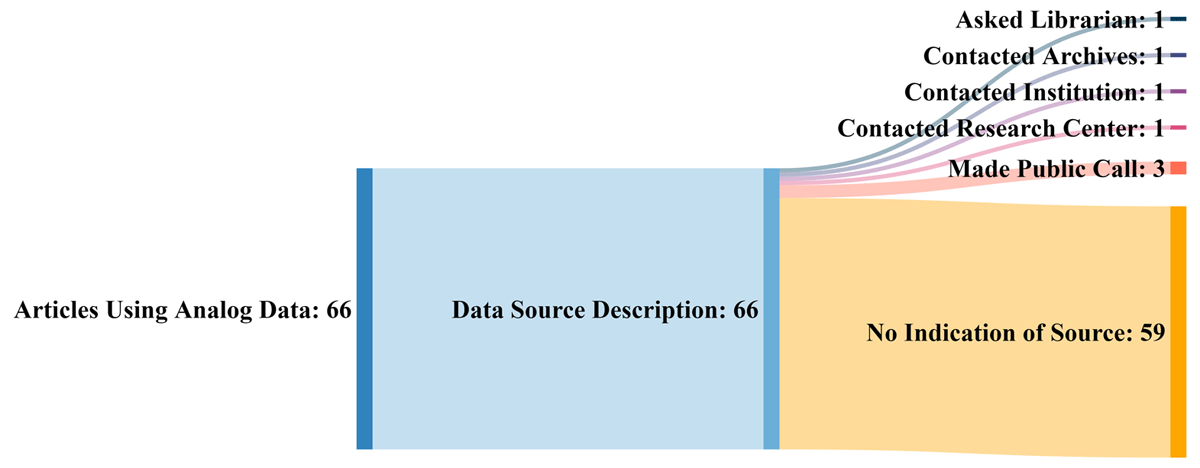
While the management of digitally created data and information is largely in the scope of regulators, standards organizations, and company management these days, the non-trivial surplus of analog data and information (e.g., printed tables, field notebooks, photographs, drawings, maps, etc.) and what to do with it still weighs upon on the research community. Older data has long had uses in retrospective and current research, yet few large-scale solutions for making this analog data and information more FAIR (findable, accessible, interoperable, and reusable) have been developed. Kelly
et al. emphasize this in their 2022 research published in the
Data Science Journal and address what they consider should be a set of best practices to managing historic analog data and information. After proving background history on the concerns surrounding older analog data, the authors discuss ways that older analog data is currently and can be used, and they highlight the challenges that come with attempting to reuse such data. They then provide some possible paths forward with a best practice approach, before concluding that "[b]est practices (including selection of metadata schema, developing a data dictionary, describing data collection methods) and policies developed to govern the preservation and dissemination of digital data could serve as an example for developments concerning analog data."
Posted on April 27, 2023
By Corinne Jones
Newsletter
April 27, 2023 Laboratory Informatics Weekly Update Volume 21, Issue 17 In This Issue Featured Books The Complete Guide to LIMS and Laboratory Informatics Featured Content LIMS for BiobankingWhile biobanking continues to advance personalized medicine through research, it’s essential that laboratories have software in place to streamline the day-to-day operations while maintaining the integrity of all samples. Here at SCC Soft Computer, we are dedicated to providing innovative laboratory solutions such as our SoftBiobank™, an advanced Laboratory Information Management System (LIMS) that supports the unique needs of biobanking. [Read More] Five Steps to a Successful LIMS Data MigrationTo put…
Posted on April 26, 2023
By SCC Soft Computer
Blog

While biobanking continues to advance personalized medicine through research, it’s essential that laboratories have software in place to streamline the day-to-day operations while maintaining the integrity of all samples. Here at SCC Soft Computer, we are dedicated to providing innovative laboratory solutions such as our SoftBiobank™, an advanced Laboratory Information Management System (LIMS) that supports the unique needs of biobanking.
[Read More]
Posted on April 26, 2023
By LabLynx
Blog

To put it simply, data migration is the act of moving data from one system to another. However, the data migration process takes a great deal of thought and planning. Whether you are moving data from a deprecating laboratory information management system (LIMS) to a new one or you’re a paper-based laboratory that has chosen to implement a LIMS for the first time, following these five essential steps will help facilitate a successful data migration.
[Read More]
Posted on April 26, 2023
By onQ Software
Blog

In this blog article, we will explore how QLIMS helped the laboratory in the food industry and overcame the challenges.
Baiada is the force behind familiar names like Lilydale Free Range Chicken and Steggles. Baiada has been around for more than a century, and its dedication to providing reliable poultry products has remained constant throughout the years.
[Read More]
Posted on April 26, 2023
By Agaram Technologies
Blog

Laboratories are characterized by their diversity, as they vary significantly in terms of their function, discipline, objectives, procedures, culture, & size. For instance, an R&D lab and a QC Regulated lab may share similar disciplines but have little else in common. The uniqueness of each laboratory environment implies that generic ‘one-size-fits-all’ solutions are seldom ideal, even though laboratory software is often expected to be a perfect fit for every type of lab.
[Read More]
Posted on April 26, 2023
By LabLynx
Blog

The agriculture industry and its affiliate laboratories cover a wide range of operations related to the cultivation of food crops. Global reliance on agriculture makes it essential to diligently test everything from fundamental soil and irrigation water to the pesticides used to cultivate much of our global food supply. Testing the effects of chemicals such as pesticides is crucial for policy formulation and creating pertinent regulations to ensure community health and safety.
[Read More]
Posted on April 26, 2023
By Astrix Technology Group
Blog

Behavioral Interviews are an effective way to assess the skills and qualifications of candidates for life sciences positions. By asking questions that focus on past behavior, you can better understand how they would handle certain situations in the workplace. When conducting a behavioral interview, it’s important to keep the conversation focused on specific examples from previous experiences rather than generalities or hypotheticals.
[Read More]





