Posted on April 11, 2023
By L7 Informatics
Blog
 As the two sides of the same coin, researchers in wet and dry labs (bioinformatics, AI/ML) work in unison to further scientific discovery. However, several challenges have been associated with connecting the wet and dry labs as well as integrating complex scientific instruments. Moreover, healthcare and pharmaceutical facilities face challenges related to data management – multiple disjointed and point IT systems have evolved over the past 20 years. L7 Informatics is taking a modern look at this architecture and building a scientific process and data platform with multiple apps on top of it. [Read More]
Posted on April 11, 2023
By SCC Soft Computer
Blog

With Laboratory Information Management Systems (LIMS) playing a critical role in the speed and efficiency of today’s molecular testing, it’s essential for laboratory managers and other stakeholders to understand the impact LIMS can have and how to choose the software that’s best for them. Here at SCC Soft Computer, we know it can be an overwhelming research process – but we are here to break it all down in this blog post.
[Read More]
Posted on April 11, 2023
By onQ Software
Blog

The pharmaceutical industry faces unique challenges as it is complex and challenging. Companies need to maintain a large amount of data on their products, including manufacturing, distribution information, and test results, while also ensuring the security of this information. Successful drug manufacturing in today’s competitive market requires navigating rigorous regulatory scrutiny, managing increased financial pressures, and executing complex testing methods. At this juncture, QLIMS comes to the forefront with its range of solutions. In this blog post, we will explore the advantages and applications of LIMS in the pharmaceutical industry.
[Read More]
Posted on April 11, 2023
By Agaram Technologies
Blog

Logilab ELN is a generic and dependable Laboratory Notebook application software, designed and developed by Agaram Technologies. It provides a fully configurable sheet template with a test-based workflow design to meet the needs of QA/QC and R&D operations for industries including pharmaceutical, life sciences, biopharmaceutical, chemical, petrochemical, environmental, food, feed, milling, and dairy.
[Read More]
Posted on April 11, 2023
By LabLynx
Journal articles
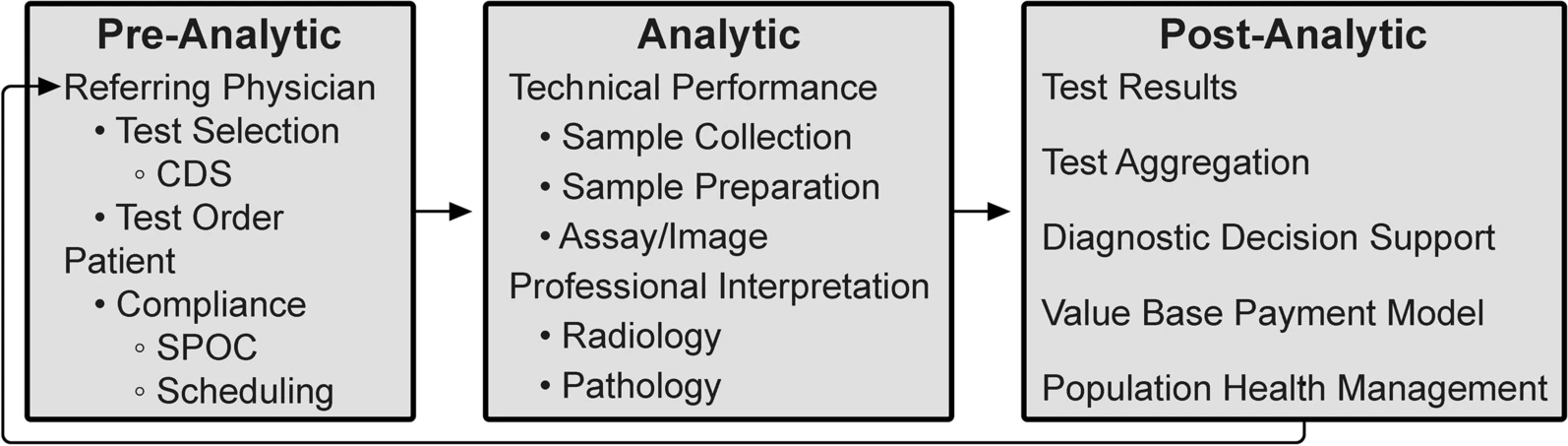
In this 2022 paper published in
Insights into Imaging, Beauchamp
et al. focus in on the promise of "integrative diagnostics" as a means towards aggregating diagnostic data for more meaningful interpretation and contextualization, by extension translating to directly relatable clinical action. Looking specifically at radiology and pathology workflows, the authors describe what integrative diagnostics looks like, how the process should work, and what promise it holds for
in vivo and
in vitro radiology and pathology workflows. The authors turn to 24 different sources in highlighting the clinical potential of integrative diagnostics for a wide variety of diseases, highlighting the added clinical value and improved discovery possible with integrative diagnostics' application. After examining the current state of the art, the authors conclude by making several recommendations towards implementing integrative diagnostics, while also noting that "[c]reating financial models that demonstrate the economic value proposition of [integrative diagnostics] will be a necessary catalyst for change" for the overall health care system.
Posted on April 11, 2023
By LabLynx
Blog

Environmental studies, such as wildfire research, are essential for a better understanding of the world in which we live. The study of wildfires' associated hazards can help us prepare for calamities, both present and in the years to come. The LabLynx ELab LIMS provides ample assistance to environmental labs by providing means for proper record tracking, documentation, sample tracking, and information sharing.
[Read More]
Posted on April 5, 2023
By LabLynx
Blog

Both paper-based systems and spreadsheets in the lab are labor-intensive to use, often requiring people to wait for access to the information they are looking for. A LIMS software solution provides simultaneous access to multiple users, makes it easy to search, and allows data entry to be either manual or electronic, allowing instrument data systems to enter results without human effort.
[Read More]
Posted on April 5, 2023
By L7 Informatics
Blog
 Integrated data platforms allow you to make better data-driven decisions for your lab.
A Q&A interview of L7 Informatics’ President & CEO, Vasu Rangadass, led by Zahraa Chorghay, PhD, Clinical Writer and Editor at Today's Clinical Lab.
[Read More]
Posted on April 5, 2023
By Agaram Technologies
Blog

Although some labs may opt to record their experiments on paper, or have personnel keep track of ordering information manually, these methods are outdated and have several limitations. The practice of using paper notebooks and records is still prevalent in labs, with some labs finding it more comfortable due to all their procedures being developed around legacy systems such as excel sheets, PDFs & paper based lab notebooks.
[Read More]
Posted on April 5, 2023
By LabLynx
Blog

Infectious diseases are still among the leading causes of death worldwide. Over 40 infectious diseases have been discovered in the past 50 years, including AIDS, SARS, MERS, Ebola, avian influenza, swine flu, Zika, and most recently COVID-19. While public health laboratories are vital, these labs aren’t always enough to handle the testing demands of today’s society, resulting in a need for clinical diagnostic laboratories.
[Read More]
Posted on April 5, 2023
By onQ Software
Blog

The Garvan Institute of Medical Research is a leading medical research institute in Australia, employing over 700 scientists and support staff. Garvan researchers have established a cancer tumour testing service that is designed to detect mutations to help oncologists determine treatment strategies. To handle the increasingly large volumes of samples it is anticipating, a new laboratory information management system (LIMS) was needed. This case study highlights how
QLIMS helped the laboratory overcome these challenges.
[Read More]
Posted on April 5, 2023
By Corinne Jones
Newsletter
April 5, 2023 Laboratory Informatics Weekly Update Volume 21, Issue 14 In This Issue Featured Books The Complete Guide to LIMS and Laboratory Informatics Featured Content Improving Lab Systems: From Paper to Spreadsheets to LIMSBoth paper-based systems and spreadsheets in the lab are labor-intensive to use, often requiring people to wait for access to the information they are looking for. A LIMS software solution provides simultaneous access to multiple users, makes it easy to search, and allows data entry to be either manual or electronic, allowing instrument data systems to enter results without human effort. [Read More] Digital-First Implementation…





