Posted on December 7, 2022
By Astrix Technology Group
Blog

High-performance computing is a fundamental enabler for Big Data, AI, and Advanced Simulations and non-classical computing architectures use parallelism, in-memory processing, and other mechanisms to dramatically increase computing throughput potential.
Non-Classical computing platforms, such as quantum computing or large-scale (i.e., exascale) computing platforms, are making it possible to run previously impossible algorithms to compute in a reasonable time.
[Read More]
Posted on December 7, 2022
By LabLynx
Blog

Laboratory work depends upon highly skilled people and sophisticated equipment to produce knowledge, information, and data. The cost, value, and ROI for those products are affected by the methods used to record and manage them. Producing knowledge, information, and data is one key aspect of laboratory work. Keeping it useable, accessible, and searchable over the long term is key to maintaining its value and realizing the return on your investment in laboratory space, equipment, and personnel.
[Read More]
Posted on December 7, 2022
By Strateos, Inc.
Blog
The Pistoia Alliance is a global, not-for-profit organization that strives to lower barriers and overcome obstacles to innovation to transform life sciences R&D with a focus on collaboration across all levels from academia, biotech companies big and small to technology providers.
The Alliance fosters pre-competitive collaboration with members working together as equals on projects that will benefit the industry as a whole—whether it is identifying the root causes of inefficiencies, working with regulators to adopt new standards, or helping researchers implement AI effectively—and more!
[Read More]
Posted on December 7, 2022
By Agaram Technologies
Blog

Nature of Logilab SDMS and its applicability for 21 CFR Part 11
Logilab SDMS is a closed system. Closed system means an environment in which system access is controlled by persons who are responsible for the content of electronic records that are on the system.
[Read More]
Posted on December 7, 2022
By Astrix Technology Group
Blog

You found your ideal candidate. Their resume and qualifications are what you are looking for, and they impressed you and your hiring managers during the initial or follow-up interviews. They seemed equally enthused about the opportunity, and you follow up with them for the next steps and wait for their response. Days go by, no email responses, and they are not answering your calls. What happened?
You have been ghosted. [Read More]
Posted on December 7, 2022
By Corinne Jones
Newsletter
December 7, 2022 Laboratory Informatics Weekly Update Volume 20, Issue 49 In This Issue Featured Content 12/07/2022 - LIMS Selection Workbook for All LaboratoriesWhen planning a project of any type, it makes perfect sense to initially research and detail the specifics of the project to lay a solid foundation to work from. This is particularly true with software development, where careful initial planning is vital to ensuring the project is legitimate in the eyes of critical stakeholders and will meet specified goals. This demands the creation of a software requirements specification. Many specification documents for laboratory informatic systems have…
Posted on December 6, 2022
By LabLynx
Journal articles
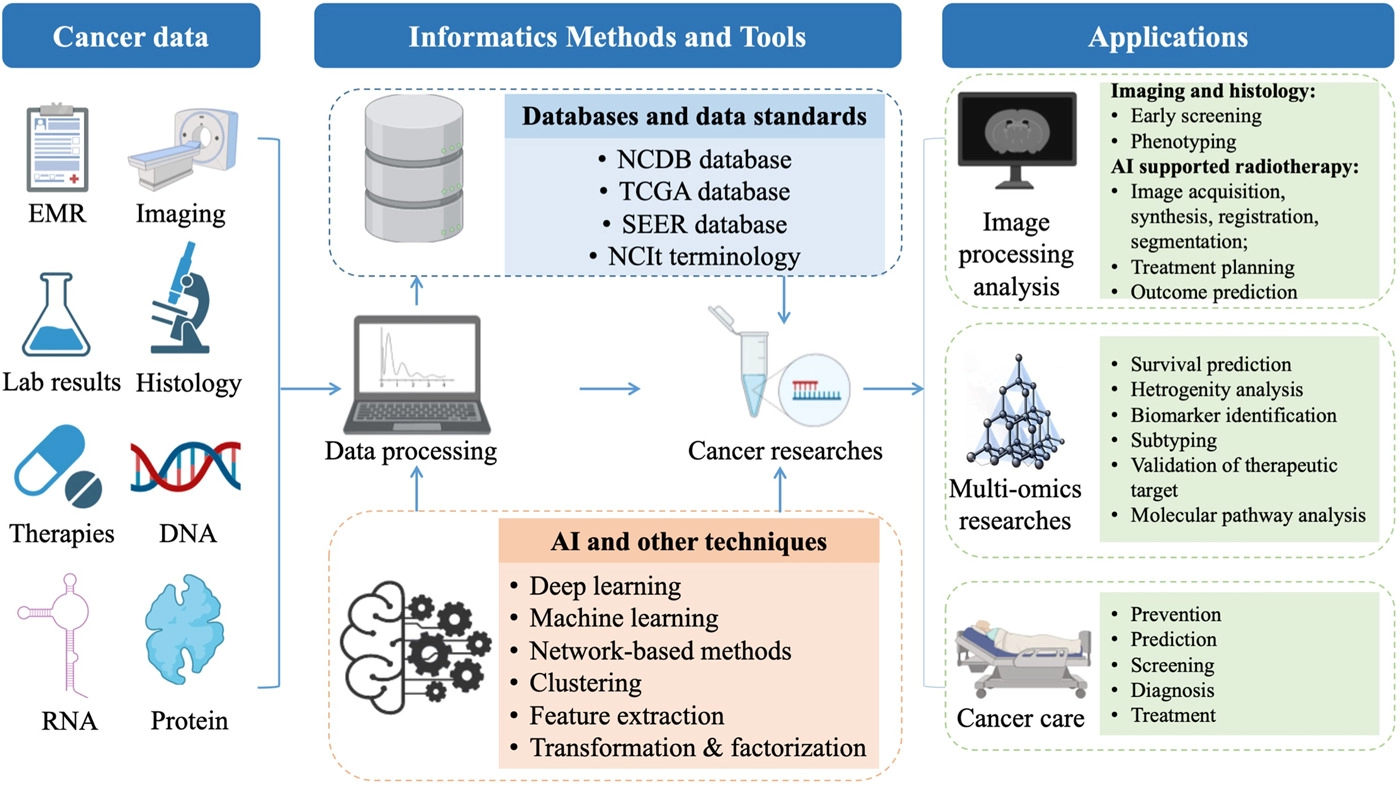
In the age of "big data," appropriately implemented informatics solutions have become more important than ever. This has become particularly important to the world of cancer research and the weighty analyses of "the genome, epigenome, transcriptome, proteome, metabolome, and microbiome" of individuals. In this 2022 journal article by Hong
et al., a review of the current state of cancer informatics is presented, addressing not only current informatics-supported applications but also challenges, opportunities, and future likelihoods. The authors conclude that not only "clinical oncology and research are reaping the benefits of informatics," but also that "with the further development of convenient and intelligent tools, informatics will enable earlier cancer detection, more precise cancer treatment, and better outcomes."
Posted on November 30, 2022
By LabLynx
Blog

As if the looming need to feed the world’s growing population were not enough, farmers are dealing with many other challenges in sustaining their business. Farm automation can help the agriculture industry meet the needed increase in production, while at the same time solving labor shortage problems and allowing for increased care of the environment. Farm-focused agriculture labs can assist with soil and seed analysis, among other things, and utilize the data captured by drones and crop sensors to provide recommendations for crop rotation, fertilizer adjustments, or new pesticide treatments.
[Read More]
Posted on November 30, 2022
By Agaram Technologies
Blog
Agaram Technologies’ Logilab SDMS is a generic software application designed to handle scientific instrument data from any analytical instrument and can facilitate data management with access control. Logilab SDMS will perform scheduled data capture, cataloguing, archival and facilitate restoring data and has capabilities to extract data of interest from instrument output to be pushed to external systems like Electronic Note Book (ELN), Laboratory Information Management System (LIMS) and Enterprise Resources Planning (ERP).
[Read More]
Posted on November 30, 2022
By Astrix Technology Group
Blog

Composable Architecture shifts the focus from
monolithic application suites and hosting to use of best of breed solutions as part of a unified platform-ecosystem. By leveraging business architecture, technologies, and agile thinking, organizations can speed discovery, gain greater agility, and enable flexibility to handle future changes. Many organizations find that the fundamental components to enable Composable Architecture are already in place.
[Read More]
Posted on November 30, 2022
By Corinne Jones
Newsletter
November 30, 2022 Laboratory Informatics Weekly Update Volume 20, Issue 48 In This Issue Featured Content 12/07/2022 - LIMS Selection Workbook for All LaboratoriesWhen planning a project of any type, it makes perfect sense to initially research and detail the specifics of the project to lay a solid foundation to work from. This is particularly true with software development, where careful initial planning is vital to ensuring the project is legitimate in the eyes of critical stakeholders and will meet specified goals. This demands the creation of a software requirements specification. Many specification documents for laboratory informatic systems have…
Posted on November 28, 2022
By LabLynx
Journal articles
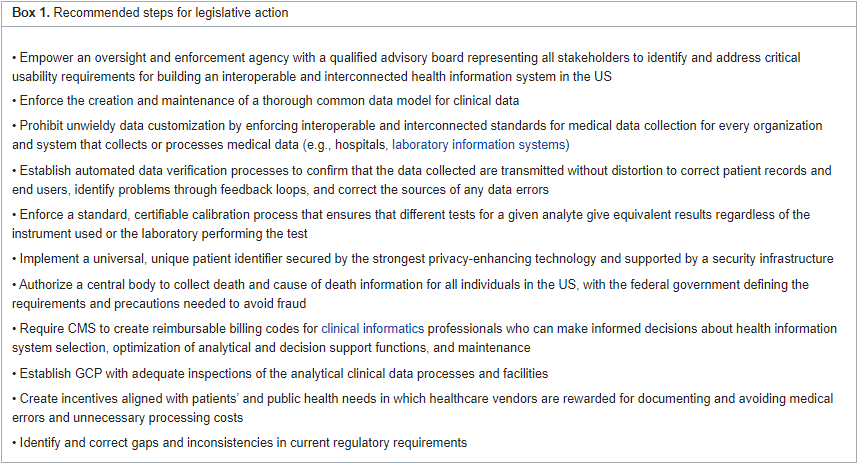
Interoperable health information systems in the United States has been a long-road effort that, according to Szarfman
et al., has a long way to go yet to reach its full potential. Noting the strain on the digital health systems of hospitals, physician offices, laboratories, and other entities during the COVID-19 pandemic, the authors—many of them from the U.S. FDA—"recommend the implementation of standardized data collection and transmission systems, universal identifiers for individual patients and end users, a reference standard infrastructure to support calibration and integration of laboratory results from equivalent tests, and modernized working practices" in this brief paper. After providing a contextual introduction, they discuss the lack of universal and harmonized data collection and transmission standards and highlight five major issues with modern health systems that need immediate action. After briefly discussing return on investment in adopting the authors' recommendations, they conclude by posting 11 recommendations for U.S. legislators and nine recommendations for public-private partnerships in addressing the issues of health systems interoperability in the United States. They close by noting that while "this problem will not be cheap to fix ... it will be much costlier to ignore."





