Posted on November 23, 2022
By Autoscribe Informatics Inc.
Blog

Pooling samples and testing the resulting single sample can help laboratories improve productivity, reduce reagent use, and cut costs. Pool-testing can be used to increase throughput if testing resources are limited or during times of increased demand.
Sample pooling is used in many industries.
[Read More]
Posted on November 23, 2022
By LabLynx
Blog

As automation continues to work its way into agriculture, large farms are using robotic farm equipment for much of the work that had been done by people. Computing and information technology have a significant role to play from guiding tractors around fields, advising farmers on what crops to plant given forecasted weather conditions and consumer demand, managing communications, and maintaining records and data. Our interests in this article are going to focus on computing and information technology in the realm of
agriculture research and laboratory testing.
[Read More]
Posted on November 23, 2022
By CSols Inc.
Blog

When technology changes, you must change with it. If not, your business could fall behind. Organizations can be easily swayed by new technology buzzwords such as digital transformation and AI/ML for the laboratory, without really understanding what will be required to enact that technology. As a consultancy to a wide range of companies, it is our business to stay at the forefront of laboratory innovation, learn all that we can about what the future may be, and share those learnings with our audience.
[Read More]
Posted on November 23, 2022
By Astrix Technology Group
Blog

Astrix participated as the Networking Reception Sponsor at the Pistoia Annual Conference in Boston, MA on Nov 1-2, 2022. This event had over 225 life sciences R&D representatives from many of the largest Pharma companies. Participants from Astrix included individuals from our Lab Information Systems group, Strategic Consulting Services group, and Marketing.
[Read More]
Posted on November 23, 2022
By Agaram Technologies
Blog

Title 21 CFR Part 11 is the part of Title 21 of the Code of Federal Regulations that establishes the United States Food & Drug Administration (FDA) regulations on electronic records & electronic signatures (ERES). Part 11 sets out how a company operating in the US can use electronic quality records & digital signatures in place of paper-based documentation & ‘wet signatures’ in such a way that complies with FDA regulations.
[Read More]
Posted on November 23, 2022
By Astrix Technology Group
Blog

When writing job descriptions, there are seemingly little-known techniques that can turn your job postings into irresistible magnets for the right candidates. If you’re seeking quality over quantity and prefer to hire for longevity, then these four insider tips can shorten the interval between getting the attention of – and obtaining —the talent who’ll happily choose your organization.
[Read More]
Posted on November 23, 2022
By Corinne Jones
Newsletter
November 23, 2022 Laboratory Informatics Weekly Update Volume 20, Issue 47 In This Issue Featured Content 11/23/2022 - LIMS Selection Workbook for All LaboratoriesWhen planning a project of any type, it makes perfect sense to initially research and detail the specifics of the project to lay a solid foundation to work from. This is particularly true with software development, where careful initial planning is vital to ensuring the project is legitimate in the eyes of critical stakeholders and will meet specified goals. This demands the creation of a software requirements specification. Many specification documents for laboratory informatic systems have…
Posted on November 22, 2022
By LabLynx
Journal articles
In this 2022 paper published in
Sensors, Henrichs
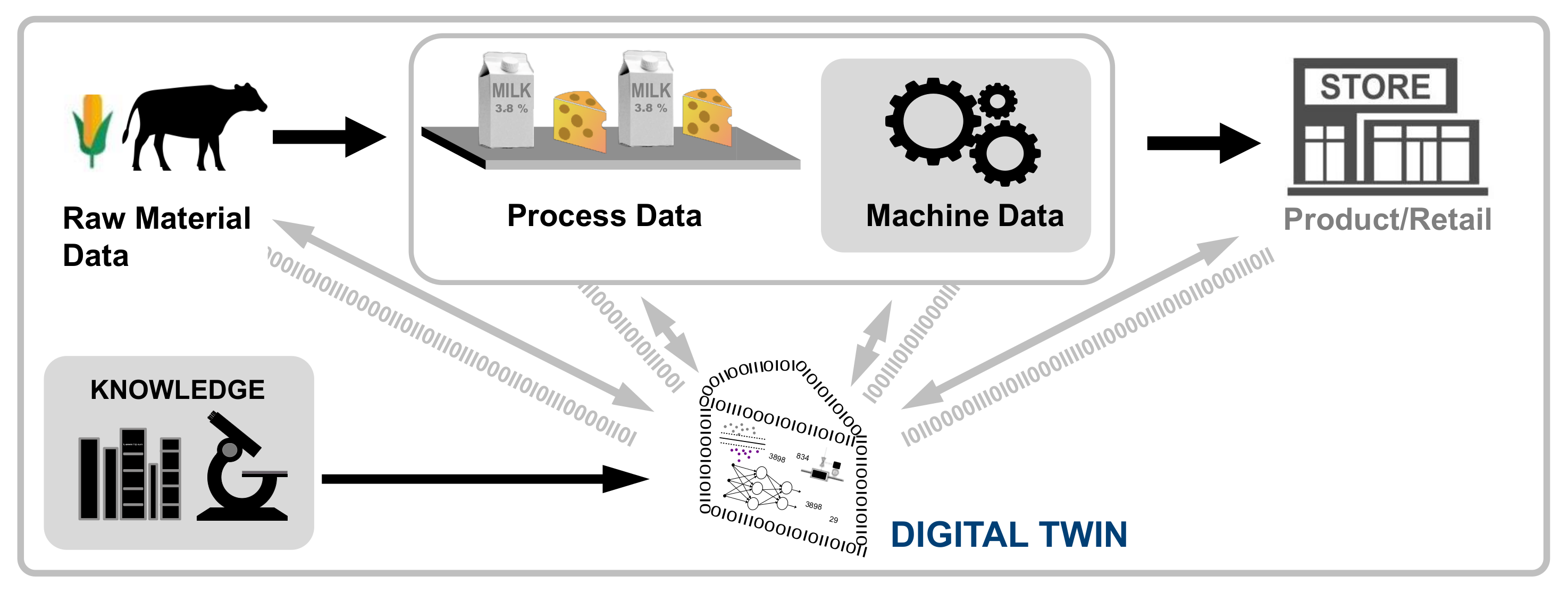
et al. of the University of Hohenheim present their literature review on the topic of digital twins in the food and beverage industry. The concept of the digital twin—a digital representation of a product, process, or system that as closely as possible represents the characteristics of the physical representation—is relatively new, and its use in the food and beverage industry holds much promise, according to the authors' research. After an introduction and extensive background, the authors provide the methodology for their review, focusing on six critical questions. They then present their results from a broad perspective, and then a more in-depth discussion focusing on answering those six questions. They close by emphasizing related work in the field, and then concluding that while a majority of the research conducted by others involves the production and processing stages of food and beverage activities, a dearth of cases appear to discuss supply, processing, retail, and consumption. They also note that "relatively few focus on the integration of digital twins in systems for developing autonomous control or providing recommendations to humans," which could be practically useful in the industry. "Nevertheless, digital twins provide huge potentials," they add, "e.g., in determining food quality, ensuring traceability, or designing personalized foods."
Posted on November 16, 2022
By LabLynx
Blog

In an earlier
article1, we looked at the role
laboratory information management systems (LIMS) played in manufacturing/production operations, as well as their relationship to other control/database systems. This article is going to shift the focus to the source of those manufactured/production operations: research and development.
[Read More]
Posted on November 16, 2022
By Autoscribe Informatics Inc.
Blog

One of the many benefits of a Laboratory Information Management System (LIMS) is that all laboratory data is captured in one place. This allows laboratories to easily extract Key Performance Indicators (KPIs) and detailed management statistics from the data, providing a rich source of information to optimize operations and eliminate wastage. Yet few laboratories take maximum advantage of this capability.
[Read More]
Posted on November 16, 2022
By Agaram Technologies
Blog
GLP lays down a very important principle that the data captured or entered in the system must be accurate. In order to ensure accuracy, GLP necessitates computerized system must have the capability to validate, verify and filter the data for accuracy. Logilab SDMS ensures that users can verify the data that is captured from the instruments can go through a workflow process.
[Read More]
Posted on November 16, 2022
By Corinne Jones
Newsletter
November 16, 2022 Laboratory Informatics Weekly Update Volume 20, Issue 46 In This Issue Featured Content 11/16/2022 - LIMS Selection Workbook for All LaboratoriesWhen planning a project of any type, it makes perfect sense to initially research and detail the specifics of the project to lay a solid foundation to work from. This is particularly true with software development, where careful initial planning is vital to ensuring the project is legitimate in the eyes of critical stakeholders and will meet specified goals. This demands the creation of a software requirements specification. Many specification documents for laboratory informatic systems have…