Posted on November 2, 2022
By Agaram Technologies
Blog

Agaram Technologies’ Logilab SDMS is a generic software application designed to handle scientific instrument data from any analytical instrument and can facilitate data management with access control. Logilab SDMS will perform scheduled data capture, cataloguing, archival and facilitate restoring data and has capabilities to extract data of interest from instrument output to be pushed to external systems like Electronic Note Book (ELN), Laboratory Information Management System (LIMS) and Enterprise Resources Planning (ERP).
[Read More]
Posted on November 2, 2022
By Strateos, Inc.
Blog

The collaborative spirit in the life sciences sector is at an all-time high. The Lab of the Future Congress examines the role of new and emerging technologies to unlock advancements in the scientific research lab through the digitalization of processes in the modern laboratory to better handle challenges now and in the future. Strateos had the opportunity to connect with industry peers at our booth during this year’s congress in Amsterdam.
[Read More]
Posted on November 2, 2022
By Corinne Jones
Newsletter
November 2, 2022 Laboratory Informatics Weekly Update Volume 20, Issue 44 In This Issue Featured Books Past, Present, and Future of Cannabis Laboratory Testing and Regulation in the United States Featured Content 11/02/2022 - Informatics in the Environmental LaboratoryCan a laboratory operate successfully without the use of laboratory informatics? To some, the answer is always “yes, informatics makes it easier, but it isn’t a requirement”, and that is true in a technical sense, but in reality, the practical answer is “not anymore”. The use of informatics in the environmental industry is an example we’ll be looking at in this…
Posted on October 31, 2022
By LabLynx
Journal articles
In this 2022 article published in the journal
iScience, Huang
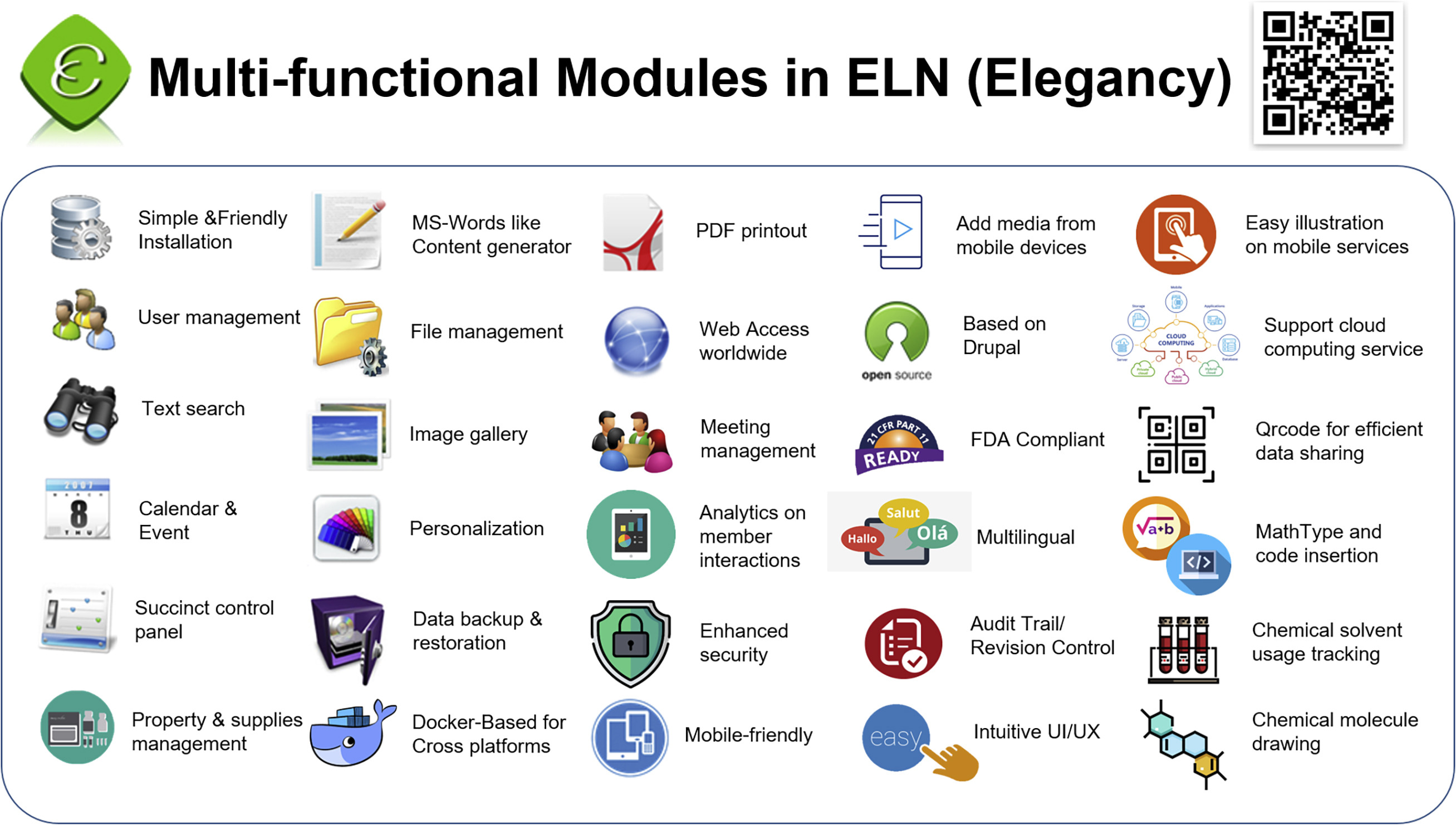
et al. present their custom-made open-source electronic laboratory notebook (ELN) Elegancy. Citing insufficient functionality and ease of installation in free commercial and open-source options, the authors developed Elegancy, in part, using Drupal, PHP, and Docker, adding ELN features useful to most any lab, but also some features specifically useful to biomedical research labs. They describe the software's advantages and compare it to other similar options, highlighting Elegancy's easy no-code installation, data security, and biomedical and chemistry features. The authors close with discussion of its strengths and limitations, as well as related development details and software availability. The conclude that "Elegancy could help the scientific research community gather evidence, share information, reorganize knowledge, and digitize laboratory works with greater ease and security."
Posted on October 26, 2022
By Corinne Jones
Newsletter
October 26, 2022 Laboratory Informatics Weekly Update Volume 20, Issue 43 In This Issue Featured Books LIMSjournal - Fall 2022 Featured Content 10/25/2022 - Voice Command and Natural Language Processing’s Impact on a Digital Transformation of Life SciencesVoice Command and Natural Language Processing is the computer’s understanding of spoken and written language. The ability of voice assistants like Google, Siri, and Alexa to detect human speech, react to it, and carry out voice-based requests is made possible through a process called natural language processing (NLP). NLP is the technology that makes it possible for machines to comprehend and communicate…
Posted on October 25, 2022
By Astrix Technology Group
Blog

Voice Command and Natural Language Processing is the computer’s understanding of spoken and written language. The ability of voice assistants like Google, Siri, and Alexa to detect human speech, react to it, and carry out voice-based requests is made possible through a process called natural language processing (NLP). NLP is the technology that makes it possible for machines to comprehend and communicate with human speech, however it is not just used for voice interactions.
[Read More]
Posted on October 25, 2022
By LabLynx
Blog

The COVID-19 pandemic has influenced every part of our personal and professional lives. Early in the pandemic, the number of laboratories able to perform COVID-19 testing was constrained in many locations due to staffing restrictions or a shortage of reagents. These problems still exist today, but as the pandemic continues to beleaguer the medical profession worldwide, supply chain problems have brought new difficulties that extend far beyond COVID-19 testing.
[Read More]
Posted on October 25, 2022
By Agaram Technologies
Blog

Good Laboratory Practices (GLP) is a quality system concerned with Laboratories’ organizational process and conditions under which non-clinical, health and environmental safety studies are planned, performed, monitored, recorded, archived and reported. This White Paper covers how Logilab Scientific Management System (SDMS) helps Laboratories to adhere and follow the Principles of GLP as applied to Computerized Systems in laboratories.
[Read More]
Posted on October 25, 2022
By CSols Inc.
Blog

Master Data is the foundation upon which most information systems are built and operated. It is the static data that is stored in the system and serves as the standard for business-critical information. The static (or master) data is the backbone of the Laboratory Information Management System (LIMS) because it defines the Products, Analyses, Batches, Instrumentation, Users, and many other operationally essential data objects. Therefore, the processes surrounding Master Data implementation will usually dictate how well (or not) a LIMS is maintained over its operational lifetime.
[Read More]
Posted on October 24, 2022
By LabLynx
Journal articles
In this short article published in the
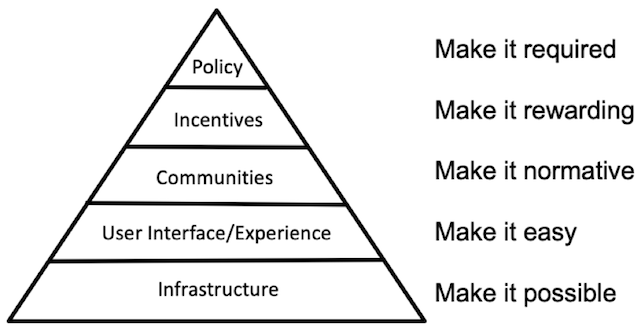
Journal of the Medical Library Association, Foster, Whipple, and Rios describe their experiences and learnings from implementing an electronic laboratory notebook (ELN) at the Indiana University School of Medicine (IUSM). Known as the largest medical school in the US, IUSM has seen adoption of its chosen LabArchives ELN solution grow since early implementation in September 2018. After providing extensive background on the nature of ELNs and what they represent, the authors present their use case at IUSM and discuss the results, as well as the limitations inherent to their findings, within the scope of supporting ELN implementation through its libraries. They conclude that their work with ELNs "demonstrates the integral role libraries can have in supporting, growing, and shaping the information and data management priorities to move research reproducibility forward."
Posted on October 19, 2022
By LabLynx
Blog

No matter where you stand on the impact of global warming, you can’t discount the shift in thoughts and actions to protecting the environment, addressing climate change and pursuing sustainability. On August 16, 2022, President Biden signed the Inflation Reduction Act which allocates more than $300B to be invested in energy and climate reform. Research laboratories have had some significant breakthroughs in 2022 that may one day lead to a greener and cleaner planet.
[Read More]
Posted on October 19, 2022
By Autoscribe Informatics Inc.
Blog

AQL (Acceptable Quality Limit) sampling is used to determine whether an entire batch (or order) has met a client’s specification, based on a statistical sample of that batch. Quality inspections usually rely on random sampling of a small percentage of product, rather than trying to test the whole batch. By integrating AQL into your LIMS pass/fail parameters, decisions can be made directly from the analytical results entered. Within the LIMS the sample size table can be defined.
[Read More]





