Posted on August 31, 2022
By LabLynx
Journal articles
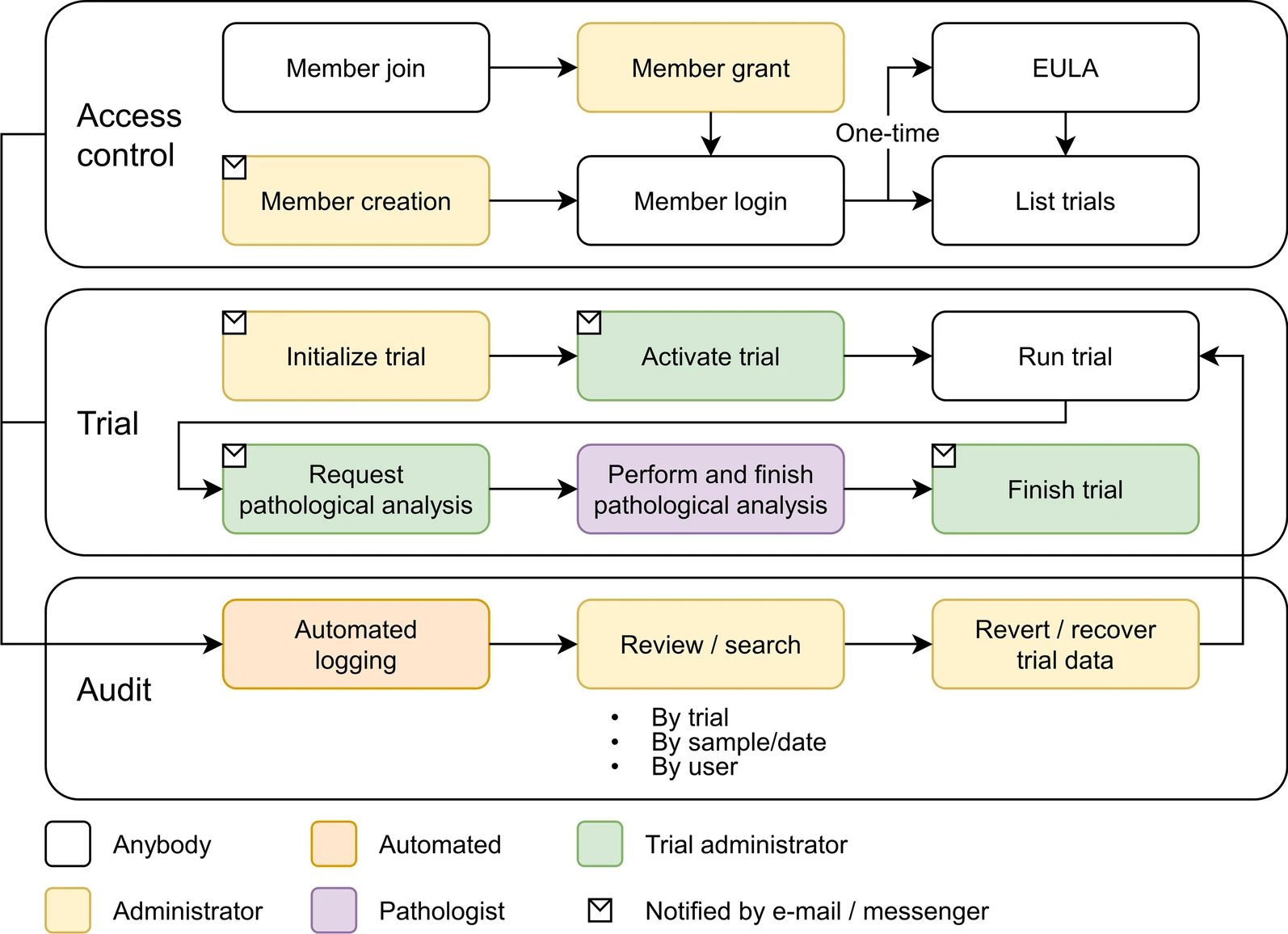
In this 2022 paper published in
Laboratory Animal Research, Yoon
et al., representing multiple healthcare entities in South Korea, present a study of their developed and implemented COVID-19 non-clinical trial LIMS. The LIMS, which was developed due to not finding systems "allowing multiple institutions to participate simultaneously in research related to COVID-19," was deployed at six animal Biosafety level 3 (BSL-3) institutions. After providing background on their impetus for developing the LIMS, the authors present the specifics of their solution and then discuss its applications at its participating BSL-3 institutions. They conclude that the system not only enables more "efficient and reliable documentation, management, and reporting of non-clinical COVID-19 test results," but it also "can be adapted to different research projects."
Posted on August 31, 2022
By Agaram Technologies
Blog

In the modern industrial era, data sharing provides a great stimulus to scientific advancement by enhancing transparency, improving collaboration, accelerating research and driving better decision-making. In areas such as public health, data sharing is very vital and critical during emergency situations such as outbreaks of infectious diseases.
[Read More]
Posted on August 31, 2022
By STARLIMS Corporation
Blog

The biopharmaceutical industry can become sustainable. Several leading drug developers are determined to achieve net zero carbon emissions within the next 25 years and are enhancing efficiency in all aspects of their operations to meet this goal. In the lab, using a lab information management system (LIMS) to track and manage assets, data and reports is one way to do that.
[Read More]
Posted on August 31, 2022
By Astrix Technology Group
Blog

In today’s job market, where candidates have more choices than ever before, companies must focus on creating a positive and fast hiring process.
How can you improve your hiring process? Below are questions that will help you identify areas where your process may need improvement.
[Read More]
Posted on August 31, 2022
By Corinne Jones
Newsletter
August 31, 2022 Laboratory Informatics Weekly Update Volume 20, Issue 35 In This Issue Featured Content 08/31/2022 - SampleVision™ v3.0—Access to Lab Results from Anywhere for FDA Regulated EnvironmentsLIMS Wizards, LLC, a global scientific software solutions provider, announces the launch of version 3.0 of SampleVision. The latest version offers full regulatory compliance for life sciences customers via audit trail and electronic signatures as well as cutting-edge features like geolocation services, dashboards, configurable reports, image capture and barcoding. [Read More] 08/31/2022 - LIMS in ManufacturingThe history of laboratory informatics began in earnest with the commercialization of instrument data systems and LIMS software,…
Posted on August 24, 2022
By LabLynx
Blog

Your laboratory’s total testing process begins and ends far beyond your laboratory’s walls. Sources of human error can creep into your test results at many points along the process chain. Yet, as our guide “
Improve Laboratory Accuracy and Reporting Quality with a LIMS” notes, people often forget the importance of the final step: your customers’ interpretation of the results. This article addresses how
LabLynx LIMS software can help you design better, more readable reports to, in turn, help your customers make better decisions.
[Read More]
Posted on August 24, 2022
By Apollo LIMS
Blog

Straight on the heels of a
COVID resurgence this summer, US laboratories are bracing for yet another swing in their seemingly ever-changing staffing and resource needs to address new clinical and wastewater testing for human monkeypox virus (hMPXV).
[Read More]
Posted on August 24, 2022
By Astrix Technology Group
Blog

Data Fabric is a hot topic buzzword today. We think of Data Fabric as the way of creating an abstraction from the underlying technology. Allowing the data to be exposed at the top level as business objects that are semantically related. This can be thought of as a weaving together of data from internal silos and external sources that creates a network of information to power the business’ applications, AI, and analytics.
[Read More]
Posted on August 24, 2022
By Agaram Technologies
Blog

Electronic Laboratory Notebook (ELN) plays a vital role in the laboratories in the areas of bench level analysis, and point of analysis by providing real-time automation and control of testing procedures. Cloud-based ELNs ensure that procedures are carried out in an automated manner by the way direct integration with instruments (i.e. data is collected directly from instruments), the computations are performed, and inventory is checked and updated.
[Read More]
Posted on August 24, 2022
By Astrix Technology Group
Blog

Develop Effective Training for your Pharmacovigilance System. Conduct it Early. Employee participation in training–prior to go-live of your Pharmacovigilance System–is critical to enhancing comfort key to realizing the full benefit of a new software system. Software training for your pharmacovigilance system is most effective when it is focused on the end-user position.
[Read More]
Posted on August 24, 2022
By Corinne Jones
Newsletter
August 24, 2022 Laboratory Informatics Weekly Update Volume 20, Issue 34 In This Issue Featured Content 08/24/2022 - Create Effective Reports with LabLynx LIMS Software SolutionsYour laboratory’s total testing process begins and ends far beyond your laboratory’s walls. Sources of human error can creep into your test results at many points along the process chain. Yet, as our guide “Improve Laboratory Accuracy and Reporting Quality with a LIMS” notes, people often forget the importance of the final step: your customers’ interpretation of the results. This article addresses how LabLynx LIMS software can help you design better, more readable reports to,…
Posted on August 22, 2022
By LabLynx
Journal articles
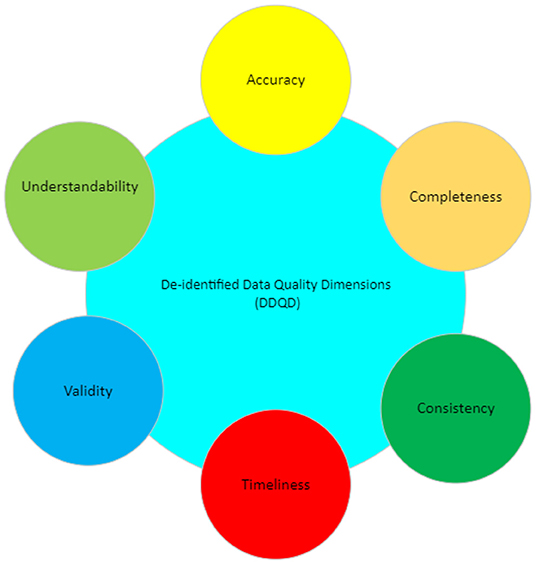
In this 2022 case study by AbuHalimeh, de-identified data quality dimensions (DDQD) in two real-life clinical systems are examined to better understand discrepancies and requirements for their correction in order to improve data quality for clinical researchers. After a brief introduction to the topic of clinical informatics and data quality, AbuHalimeh presents a case study using patient count data from a TranSMART Foundation i2b2 and Epic SlicerDicer system of "a healthcare organization that wanted to have the ability to ingest other sources of research-specific data." After discussing the methodology and results, the author proposes a series of eight steps to improve data quality generated from de-identified system." Those steps "together form guidelines for a methodology of manual and automated procedures and tools used to manage data quality and data governance in a multifaceted, diverse information environment such as healthcare organizations, as well as to enhance data quality among data housed in de-identified data systems," the author concludes.