Posted on August 17, 2022
By Labbit
Blog

Day-to-day lab operations rely on workflows to manage people, tasks, and systems so that work follows a consistent process every time. Defined workflows help ensure that all the steps are done in the correct order, are free from errors, and meet regulatory requirements.
But, representing lab workflows can be difficult.
[Read More]
Posted on August 17, 2022
By LabLynx
Blog

From a customer’s order to the final report, laboratory errors can appear at any time in the total testing process. As our in-depth guide “
Improve Laboratory Accuracy and Reporting Quality with a LIMS” explains, you can prevent these types of laboratory errors by digitizing laboratory processes. Many sources of error are human, and it’s only a matter of when, and how often, people make mistakes. Let’s look at how a
laboratory information management system (LIMS) from LabLynx reduces human error by automating manual activity throughout the total testing process.
[Read More]
Posted on August 17, 2022
By Agaram Technologies
Blog

GxP is a set of regulations and quality guidelines formulated to ensure the safety of life sciences products while maintaining the quality of processes throughout every stage of manufacturing, control, storage, and distribution. The GxP standards were established by the
Food and Drug Administration for a range of compliance related activities.
[Read More]
Posted on August 17, 2022
By Astrix Technology Group
Blog

An effective data migration plan ensures your data is accurate and thorough during the critical transfer phase from the source platform to the destination platform. Once your team is assembled, it is crucial that they focus first on mapping, selecting, preparing, extracting, transforming, and transferring to the new system data that’s of the proper form and quality.
[Read More]
Posted on August 17, 2022
By Apollo LIMS
Blog

Earlier this year, ApolloLIMS and
HORIZON Lab Systems were acquired by CliniSys Group to grow the organization’s community and public health diagnostics capability.
CliniSys is one of the largest providers of laboratory information systems (LIS), order entry and result consultation, and public health solutions in disease surveillance and outbreak management across the United Kingdom, Europe, and United States.
[Read More]
Posted on August 17, 2022
By CSols Inc.
Blog
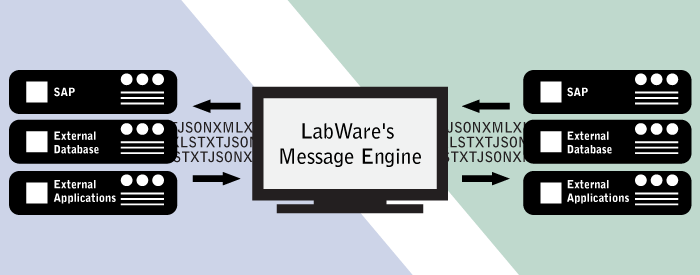
Does your LabWare implementation connect to external applications, such as SAP, another LIMS solution, or an external database? Are there multiple interfaces between LabWare and those external applications? If so, your
LabWare implementation will greatly benefit from the Message Engine Template, as it is LabWare’s standardized and validated way to connect with external systems. In this post, we’ll learn about how LabWare’s Message Engine works...
[Read More]
Posted on August 17, 2022
By Corinne Jones
Newsletter
August 17, 2022 Laboratory Informatics Weekly Update Volume 20, Issue 33 In This Issue Featured Books Past, Present, and Future of Cannabis Laboratory Testing and Regulation in the United States Featured Content 08/17/2022 - Iterating a Validated Assay? You Need Effective Change ManagementDay-to-day lab operations rely on workflows to manage people, tasks, and systems so that work follows a consistent process every time. Defined workflows help ensure that all the steps are done in the correct order, are free from errors, and meet regulatory requirements. But, representing lab workflows can be difficult. [Read More] 08/17/2022 - Reducing Human Error…
Posted on August 16, 2022
By LabLynx
Journal articles
Following up on
2021 research on heavy metal contaminants in the South African cannabis market, Viviers
et al. similarly describe solvent residue contaminant found in the same market in this 2022 paper published in
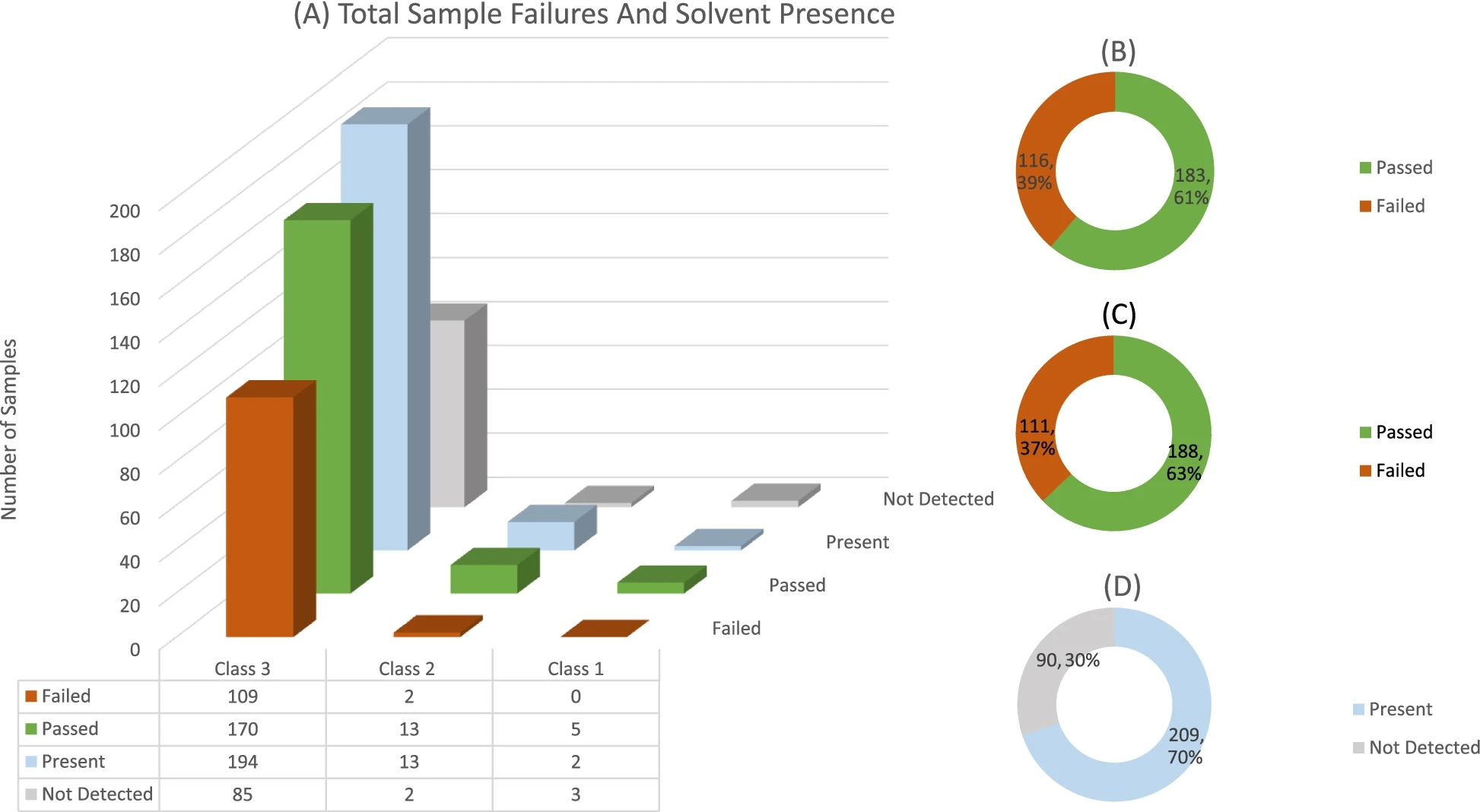
Journal of Cannabis Research. Noting a dearth of such research in the South African market, the authors acquired 279 samples and had them analyzed in duplicate for a specific set of Class 1–3 solvents. The authors turned to headspace gas chromatography–mass spectrometry (HS-GC-MS) analysis , the United States Pharmacopeia (USP) <467>, and the International Council for Harmonisation of Technical Requirements for Pharmaceuticals for Human Use (ICH) Q3C to guide their analyses. After a brief discussion of materials and methods, the authors present their results and conclusions. They found among its analyzed 279 samples, "a total of 111 samples had at least one solvent analyte that failed the
USP and ICH specification limit (37% failure rate)," with the failure rate increasing 2% for summed solvent concentrations. They conclude that "when assessing solvent residues present in samples against a set of pharmacopeial safety limits, it is evident that a large fraction of cannabis-based products in South Africa exceeds these limits."
Posted on August 10, 2022
By LabLynx
Blog

Errors may appear at any point in the laboratory workflow, from sample preparation and test setup to instrument calibration and report creation. Inaccuracies lengthen turnaround times, reduce efficiency, and potentially lead customers to poor decisions based on incorrect or missing data. Using a laboratory information management system (LIMS) to constrain sources of pre-analytical, analytical, and post-analytical errors offers benefits beyond just improving test accuracy.
[Read More]
Posted on August 10, 2022
By Kalleid
Blog

I love the work of change management because it is messy, unpredictable, and deeply personal. Humans, when taken individually, are complex and full of surprises. But aggregate the expected behavior of 10, 50, or even 10,000 humans and the possible outcomes are practically limitless. I have yet to experience a boring day on a change management project and I don’t expect to live through one any time soon.
[Read More]
Posted on August 10, 2022
By Agaram Technologies
Blog

Data integrity, an area of increasing priority in today’s laboratory world and “The focus area” when it comes to regulatory compliance such as 21 CFR Part 11 and Eudralex Annex 11. Considering the number of warning letters from US FDA and other such regulatory bodies issued to pharmaceutical and medical devices manufacturers across the globe, Data integrity is the “Buzz word” in today’s audit.
[Read More]
Posted on August 10, 2022
By Astrix Technology Group
Blog

Human resources have always been a critical function in any company. But with the digital age, the future or human resources is becoming an even more essential component of business success. To stay ahead of the curve, HR must undergo a digital transformation. This means deploying digital platforms for employee engagement, introducing personalized training and skilling programs, and using automation and analytics for insights and efficiency.
[Read More]





