Posted on June 8, 2022
By Astrix Technology Group
Blog

The manufacturing and delivery of cell therapies share similar attributes of processing which distinguishes them from pharmaceutical or biopharmaceutical products. They require end-to-end visibility that ensures chain of custody, identity, and condition.
This impacts various aspects of the process including the quality management, LIMS and MES solutions leveraged in these organizations. In this blog we discuss the unique requirements.
[Read More]
Posted on June 8, 2022
By Thermo Fisher Scientific
Blog
 What do ADMET studies provide to drug developers?
A critical piece in drug discovery and development is conducting DMPK (Drug Metabolism and Pharmacokinetics) studies, often referred to as ADMET (Absorption, Distribution, Metabolism, Elimination, Toxicity) studies. These studies help to determine the viability of a drug candidate by answering these key questions...
[Read More]
Posted on June 8, 2022
By Labbit
Blog

Sometimes, when you’re trying to come up with a better way to solve a challenge, it can help to step back and consider the situation from a new vantage point. We did this when we were building our new product — Labbit — an intelligent laboratory information management system (LIMS) designed with lab operations as the focus.
[Read More]
Posted on June 8, 2022
By Corinne Jones
Newsletter
June 8, 2022 Laboratory Informatics Weekly Update Volume 20, Issue 23 In This Issue Featured Books The Comprehensive Guide to Physician Office Laboratory Setup and Operation: Second Edition Featured Content 06/08/2022 - Harmful Algae Blooms are Rising: Could a Water Testing LIMS Help Your Lab Cope? “Life finds a way.” Okay, maybe Ian Malcolm didn’t have algae in mind when he uttered those infamous words. But with harmful algal blooms increasing worldwide every year, the microscopic organisms are making as dramatic an impact as a tyrannosaurus rex (or indo-raptor, for that matter). Humans are directly in the crosshairs of…
Posted on June 1, 2022
By STARLIMS Corporation
Blog

Labs and research facilities accumulate large amounts of data every day — a continuing problem is what to do with all that information while maintaining data integrity. A
Scientific Data Management System, or SDMS, is a type of document management system software that helps manage data generated by lab instruments, electronic laboratory notebooks (ELN), chromatography data systems (CMS), and laboratory information management systems (LIMS) using a single integrated platform.
[Read More]
Posted on June 1, 2022
By SCC Soft Computer
Blog

A Laboratory Information Management System, otherwise known as LIMS, is a comprehensive, software-based solution to maximize a laboratory’s efficiencies through centralized workflow. From specimen preparation to final report release, a LIMS is designed to simplify a lab’s day-to-day operations while reducing the risk of mistakes through paperless operations.
[Read More]
Posted on June 1, 2022
By Corinne Jones
Newsletter
June 1, 2022 Laboratory Informatics Weekly Update Volume 20, Issue 22 In This Issue Featured Books The Complete Guide to LIMS and Laboratory Informatics: 2022 Edition Featured Content 06/01/2022 - Practical Applications of a SDMS (Scientific Data Management System)Labs and research facilities accumulate large amounts of data every day — a continuing problem is what to do with all that information while maintaining data integrity. A Scientific Data Management System, or SDMS, is a type of document management system software that helps manage data generated by lab instruments, electronic laboratory notebooks (ELN), chromatography data systems (CMS), and laboratory information management…
Posted on May 31, 2022
By Thermo Fisher Scientific
Blog

Digital transformation is driven by the ability to better connect all aspects of the laboratory - devices, consumables, workflows, data & people - to accelerate science & drive laboratory productivity. Smart instruments & consumables are enabling laboratories to improve instrument & consumable usage reducing downtime & optimizing the use of laboratory supplies & capacity. To take advantage of these recent advancements & those yet to come, organizations need to connect the laboratory & make data accessible to those who need it. This talk will discuss these trends & how Thermo Fisher's innovative solutions are enabling the digital transformation of the laboratory.
[Read More]
Posted on May 31, 2022
By Astrix Technology Group
Blog

It can be tough looking for a job in the life sciences sector. The competition is fierce, and it seems like everyone has the same qualifications as you. How can you make yourself stand out from the crowd? One way to improve your chances of success is to work with a staffing agency that specializes in the life sciences industry. These companies can help you find jobs that are a good fit for your skills and experience. They can also give you valuable advice on how to improve your job prospects if you are looking for a new opportunity in the life sciences industry.
[Read More]
Posted on May 31, 2022
By LabLynx
Journal articles
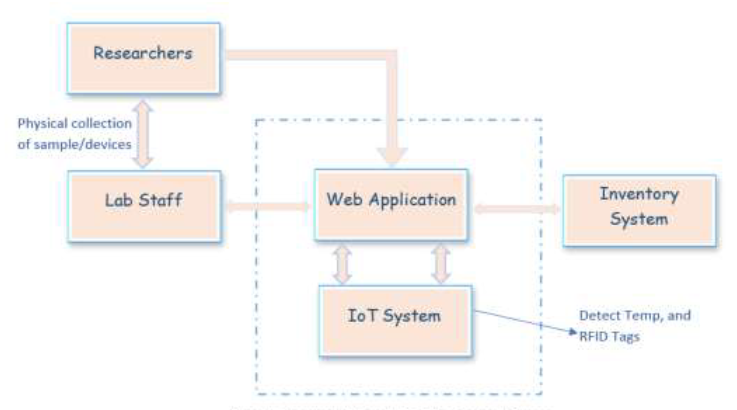
We hear case studies of laboratory automation implementations from time to time, usually in larger facilities that can afford the expense. But what of smaller labs in developing countries? With sensors and open-source technologies gaining ground—and application development becoming more commonplace—automating small labs in small ways isn't so distant a reality. This 2022 paper by Mwambe
et al. of the Nelson Mandela African Institution of Science and Technology demonstrates this, providing details of their smart laboratory information management system (LIMS) and hardware-based automation solutions in their labs. After introducing the concept behind their software+hardware solution, the authors go over the design and implementation of their smart LIMS. They conclude that their system of LIMS, RFIF, IoT, and sensor networks effectively "automate recurring tasks in laboratories, aid in monitoring, and eliminate paper-based record keeping. Using such a smart LIMS, researchers can better plan research activities."
Posted on May 25, 2022
By LabLynx
Blog

When it comes down to picking the products you’re going to use to help organize and streamline your lab’s operation, you can be faced with a bewildering array of options that range from well-known to little-known vendors, with investments that can be significant or “free”. Is one of those the
ideal choice for your lab? This article will help you move to the best decision for both your immediate and future needs.
[Read More]
Posted on May 25, 2022
By Autoscribe Informatics Inc.
Blog

The decision to purchase a LIMS should be triggered by a business case. The business case identifies the reasons for purchasing a LIMS and, at the end, allows the success of the project to be measured. Linked to creating a business case is understanding the LIMS requirements and in particular where the LIMS will bring practical benefits to the organization. However, all too often the initial requirements are ill-defined, imprecise, and incomplete. This can make selecting the correct LIMS and LIMS supplier difficult and does not set the project up for success.
[Read More]





