Computer Systems Assurance – Developing a Plan to Get There
 The new CSA approach focuses on critical thinking and objective analysis and evaluation versus the CSV’s approach which has a much larger emphasis on documentation. The CSA method leverages targeted testing to achieve results.
The Benefits of Choosing an Expert Informatics Consultant to Manage your LIMS Deployment
 Selecting and deploying a LIMS is a complex undertaking for today’s scientific organizations. The common failure point of a LIMS project is due to the lack of a dedicated, experienced LIMS program manager (PM) in place at the start of the project.
Laboratory Informatics Weekly Update – Volume 19, Issue 39
September 29, 2021 Laboratory Informatics Weekly Update Volume 19, Issue 39 In This Issue Featured Books COVID-19 Testing, Reporting, and Information Management in the Laboratory Featured Content 09/29/2021 - Part 2 Chemistry Webinar Series: Remote Access Robotic Controlled Compound Synthesis - Recap On September 15th, Strateos hosted Part 2 of its Chemistry Webinar Series: Remote Access Robotic Controlled Compound Synthesis. In continued efforts to provide scientists with end-to-end technologies to accelerate their workflows, Strateos has expanded its synthetic chemistry solutions... [Read More] 09/29/2021 - SCC Soft Computer's Blood Bank Product Receives 510(k) Clearance from the U.S. Food and Drug AdministrationThe…Design of generalized search interfaces for health informatics
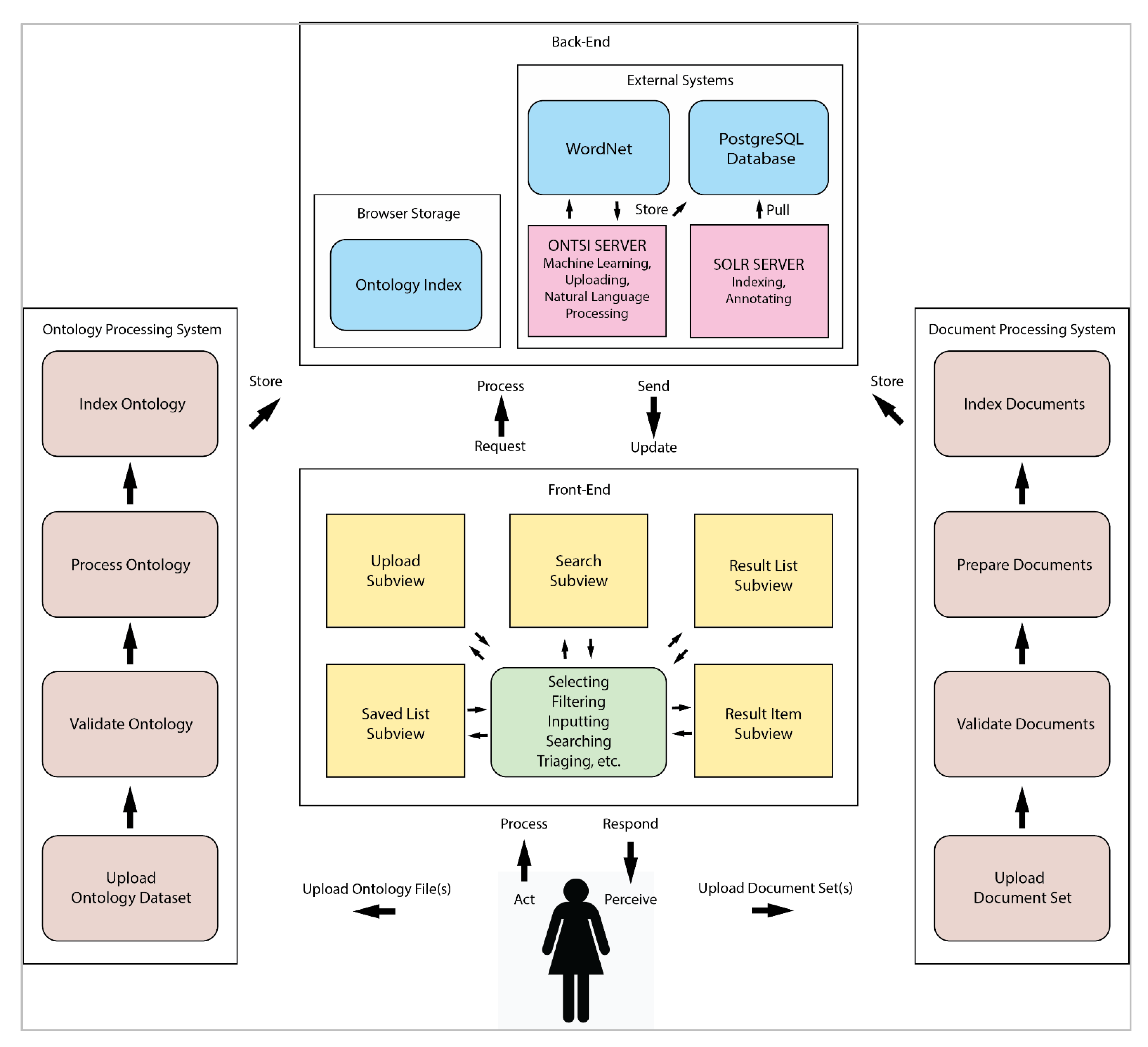 Using computer-based resources to find and retrieve healthcare information is increasingly common, whether it's the healthcare professional or a patient. But "search can be challenging, particularly for health informatics tasks that utilize large and complex document sets," notes Demelo and Sedig in their 2021 paper published in Information. This led the authors to examine the current state of healthcare informatics and develop an ontology-based search interface called ONTSI. Based on insights from previously published research on health informatics information retrieval, the authors discuss the criteria, design elements, and strategies they used to develop ONTSI. After explaining the results of their work, via a use case, the authors conclude that their tool "ONTSI supplies a generalized interface that supports users’ ability to plug-and-play their provided document sets and an ontology file as a mediating resource within the interface when performing their health informatics search tasks."
Comparative performance of SARS-CoV-2 lateral flow antigen tests and association with detection of infectious virus in clinical specimens: A single-centre laboratory evaluation study
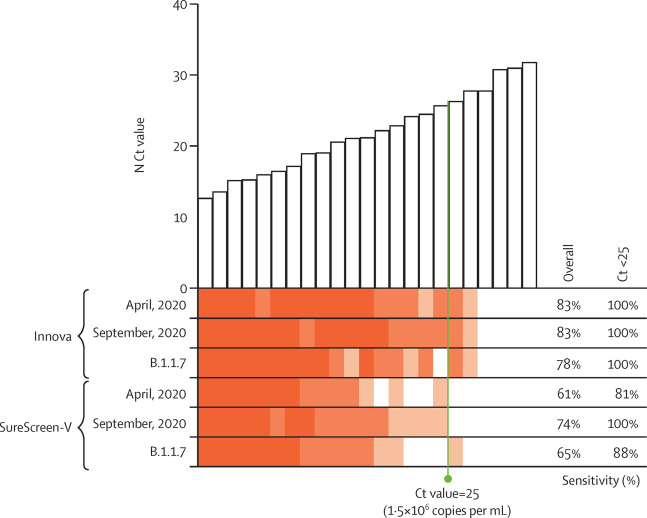 In this 2021 article published in the journal The Lancet Microbe, Pickering et al. present their findings concerning the comparison of antigen lateral flow devices (LFDs) for COVID-19 and virus infectivity, noting their study is "the largest to date assessing the correlation between [cycle threshold] values, quantitative culture of infectious virus, and antigen test positivity, alongside an unbiased head-to-head comparison of six commercial antigen tests." The authors thoroughly discuss their methods, including acquisition and use of study samples, use of qRT-PCR, choosing of rapid antigen tests, development of viral growth assays, and use of statistical analysis. After presenting their results and discussing them in detail, the authors conclude that their "data support the judicious use of LFDs for rapid antigen detection: not to replace PCR testing, but to supplement current testing capacity and rapidly identify infected individuals in situations in which they would otherwise go undetected," and that the benefits of careful LFD use "outweigh the risk of missing positive cases."
How Your SOPs and Lab Software Can Help You Reduce Errors
 In my previous post in this two-part series, I talked about how software can support your analysts as they follow your laboratory’s standard operating procedures (SOPs). This time, let’s take a closer look at how software that closely matches your SOPs can help your lab reduce errors, enhance morale, and improve patient safety.
[Read More]
Implementing Agile Methodology in Regulated Environments
 In February 2001, seventeen software developers gathered at the Snowbird ski resort in the Wasatch mountains of Utah to discuss an alternative to documentation-driven, heavyweight software development processes (i.e., Waterfall methodology). These developers were motivated by the understanding that traditional... [Read More]
Laboratory Informatics Weekly Update – Volume 19, Issue 38
September 22, 2021 Laboratory Informatics Weekly Update Volume 19, Issue 38 In This Issue Featured Books Laboratory Information Management for Cannabis Quality Assurance Featured Content 09/22/2021 - How Your SOPs and Lab Software Can Help You Reduce ErrorsIn my previous post in this two-part series, I talked about how software can support your analysts as they follow your laboratory’s standard operating procedures (SOPs). This time, let’s take a closer look at how software that closely matches your SOPs can help your lab reduce errors, enhance morale, and improve patient safety. [Read More] 09/22/2021 - Implementing Agile Methodology in Regulated…Tips from CSols LIMS Project Leaders
 A dedicated lab informatics project leader is an invaluable addition to your team. There are simply too many tasks to oversee for the role to be filled by ad-hoc lab personnel with day jobs. Even if you assign one of the lab staff to the project as their job for the duration...
Spotlight on ApolloLIMS: Answers to the Questions We Hear Most
 At ApolloLIMS, we know that a LIMS selection process is a significant undertaking for any laboratory (see our blog series about adopting a LIMS). Given our years of experience serving the needs of laboratory customers, we frequently hear the same questions from laboratories when considering a LIMS solution.
Quality Management in the Cloud The Technology Advantage and How it Impacts the Quality Function
 There are many technologies that are being incorporated at Life Science organizations today to help automate and improve process effectiveness and efficiency. Cloud and edge computing, IoT, robotic process automation (RPA), artificial intelligence (AI), and machine learning to name a few.