Posted on November 8, 2017
By Corinne Jones
Newsletter
November 08, 2017 Laboratory Informatics Weekly Update Volume 15, Issue 43 In This Issue Bid / RFP / RFI Opportunities DUE DECEMBER 15, 2017: Request for Proposal - Laboratory Information Management System Vermont Agriculture and Environmental Laboratory Information Management System DUE NOVEMBER 29, 2017: Request for Proposal: Medical Examiner's Office Case Management Solution The City of Jacksonville, Florida requesting proposals to replace the current Medical Examiner’s Office Access Database with a new Electronic Medical Examiner’s Case Management System. DUE: NOVEMBER 22, 2017: Request for Proposals - Laboratory Information Management System (LIMS) The City of San Diego (City), Public Utilities Department…
Posted on November 7, 2017
By Shawn Douglas
Journal articles
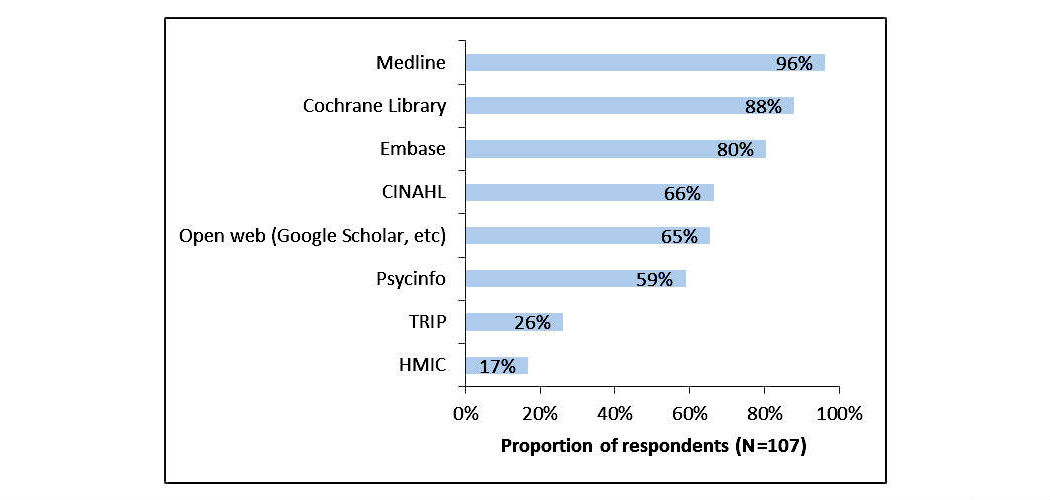
In this 2017 article published in
JMIR Medical Informatics, Russell-Rose and Chamberlain wished to take a closer look at the needs, goals, and requirements of healthcare information professionals performing complex searches of medical literature databases. Using a survey, they asked members of professional healthcare associations questions such as "how do you formulate search strategies?" and "what functionality do you value in a literature search system?". The researchers concluded that "current literature search systems offer only limited support for their requirements" and that "there is a need for improved functionality regarding the management of search strategies and the ability to search across multiple databases."
Posted on November 2, 2017
By Shawn Douglas
Journal articles
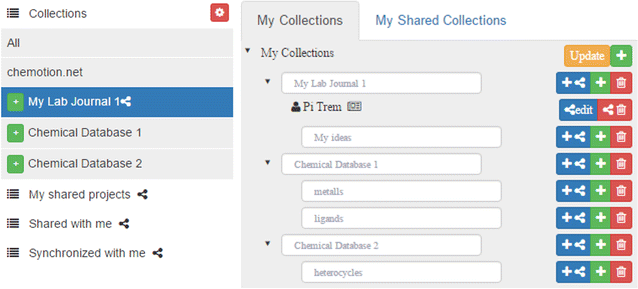
Unhappy with the electronic laboratory notebook (ELN) offerings for organic and inorganic chemists, a group of German researchers decided to take development of such an ELN into their own hands. This 2017 paper by Tremouilhac
et al. details the process of developing and implementing their own open-source solution, Chemotion ELN. After over a half year of use, the researchers state the ELN new serves "as a common infrastructure for chemistry research and [enables] chemistry researchers to build their own databases of digital information as a prerequisite for the detailed, systematic investigation and evaluation of chemical reactions and mechanisms." The group is hoping to add more functionality in time, including document generation and management, additional database query support, and an API for chemistry repositories.
Posted on November 1, 2017
By LabLynx
Blog
This tutorial is designed as a management level view of laboratory systems and is appropriate for anyone planning, reviewing, or approving the acquisition of laboratory informatics. A background in science is not necessary to follow the presented material. Its purpose is to provide you with an understanding of how these technologies (Laboratory Information Management Systems, Electronic Laboratory Notebooks, Scientific Data Management Systems, Laboratory Execution Systems, Instrument Data Systems, and supporting technologies ) can be used to support/improve your labs operations, and the considerations that need to be taken into account before they are purchased.
Posted on November 1, 2017
By Smith Walker
Blog
Protection of the environment and improving its quality are imperative for human beings, plants, aquatic organisms, and for a balanced ecosystem. An environmental laboratory serves as a fundamental cornerstone in assessing the quality of our environment. Environmental laboratories are under incessant pressure to produce high-quality data while working on a tight laboratory budget. A LIMS can play a pivotal role in enhancing data quality, maintaining data integrity, automating laboratory workflows, and in saving resources such as time, money, and manpower.
Posted on November 1, 2017
By Corinne Jones
Newsletter
November 01, 2017 Laboratory Informatics Weekly Update Volume 15, Issue 42 In This Issue Featured Journal Article A Guide for Management: Successfully Applying Laboratory Systems to Your Organization’s Work Part 1 This tutorial is designed as a management level view of laboratory systems and is appropriate for anyone planning, reviewing, or approving the acquisition of laboratory informatics. A background in science is not necessary to follow the presented material. Its purpose is to provide you with an understanding of how these technologies (Laboratory Information Management Systems, Electronic Laboratory Notebooks, Scientific Data Management Systems, Laboratory Execution Systems, Instrument Data Systems, and…
Posted on October 31, 2017
By CSols Inc.
Blog
Laboratory Informatics software is continually evolving to make use of new technology, which in turn has generated an increased need for a “bridge” between IT, lab informatics developers, and stakeholders (scientists, technicians, managers, etc.). The “bridge” in this environment is a Lab Informatics Business Analyst.
Posted on October 27, 2017
By Kev Miller
Blog
The SampleManager LIMS Version 11 provides a crucial capability for drug discovery in its Stability Module. Many people take it for granted that commercial products they use will perform their advertised function effectively. Medical patients, for example, assume that the pharmaceutical drug products they consume will perform the therapeutic activity for which they were designed.
Posted on October 25, 2017
By Corinne Jones
Newsletter
October 25, 2017 Laboratory Informatics Weekly Update Volume 15, Issue 41 In This Issue Webcast Focus OCTOBER 26, 2017, 1:30PM EDT / 5:30 UTC: Webinar “A Guide for Management: Successfully Applying Laboratory Systems to Your Organization’s Work Part 1” This webinar series is designed as a management level view of laboratory systems and is appropriate for anyone planning, reviewing, or approving the acquisition of laboratory informatics. A background in science is not necessary to follow the webinar material. Its purpose is to provide you with an understanding of how these technologies (Laboratory Information Management Systems, Electronic Laboratory Notebooks, Scientific Data…
Posted on October 24, 2017
By Shawn Douglas
Journal articles
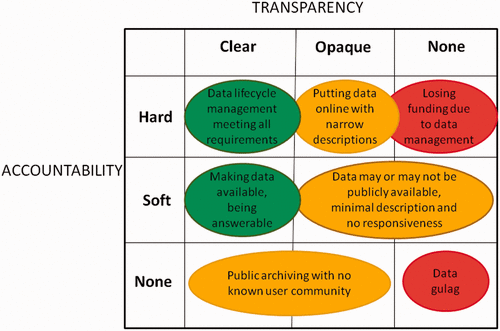
In this brief commentary article, University Corporation for Atmospheric Research's Matthew Mayernik discusses the concepts of "accountability" and "transparency" in regards to open data, conceptualizing open data "as the result of ongoing achievements, not one-time acts." In his conclusion, Mayernik notes that "good data management can happen even without sanctions," and that provision of access alone doesn't make something transparent, meaning that licenses and other complications make transparency difficult and require researchers "to account for changing expectations and requirements" of open data.
Posted on October 18, 2017
By Shawn Douglas
Journal articles
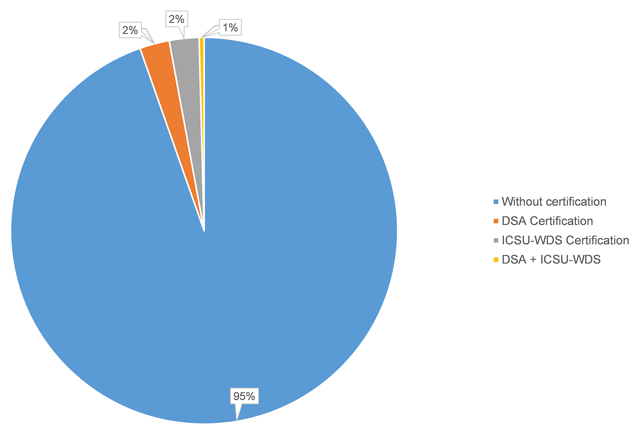
The use of publicly available data repositories is increasingly encouraged by organizations handling academic researchers' publications. Funding agencies, data organizations, and academic publishers alike are providing their researchers with lists of recommended repositories, though many aren't certified (as little as six percent of recommended are certified). Husen
et al. show that the landscape of recommended and certified data repositories is varied, and they conclude that "common ground for the standardization of data repository requirements" should be a common goal.
Posted on October 18, 2017
By Smith Walker
Blog
Biobanks play a pivotal role in biomedical research. To facilitate research for improving the health and welfare of individuals, communities and population, sharing of biospecimens along with health-related data among the collaborators is crucial.





