Posted on January 16, 2018
By Shawn Douglas
Journal articles
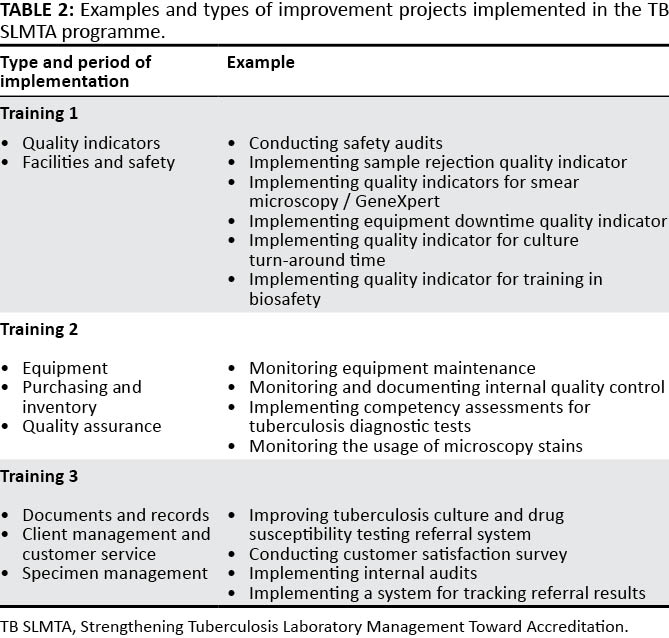
Published in early 2017, this paper by Albert
et al. discusses the development process of an accreditation program — the Strengthening Tuberculosis Laboratory Management Toward Accreditation or TB SLMTA — dedicated to better implementation of quality management systems (QMS) in tuberculosis laboratories around the world. The authors discuss the development of the curriculum, accreditation tools, and roll-out across 10 countries and 37 laboratories. They conclude that the training and mentoring program is increasingly vital for tuberculosis labs, "building a foundation toward further quality improvement toward achieving accreditation ... on the African continent and beyond."
Posted on January 10, 2018
By John Jones
Newsletter
January 10, 2018 Laboratory Informatics Weekly Update Volume 16, Issue 2 In This Issue Featured Discussions 01/06/2018 - Accrediation based on test or method01/05/2018 - What are the top cyber security threats to watch out for in 2018?01/03/2018 - Auld Lang Sigh: Medical Device Tax returns01/02/2018 - Medical Marijuana Training Event To Educate People Interested In Working In Industry12/24/2017 - Please help me to know the basic difference between ISO 17025 :2005 and ISO17025:2017 Blogs Does your lab use #Slack? Many folks say it is a game changer for them.Below is a discussion that I recently posted on Linkedin. …
Posted on January 8, 2018
By Shawn Douglas
Journal articles
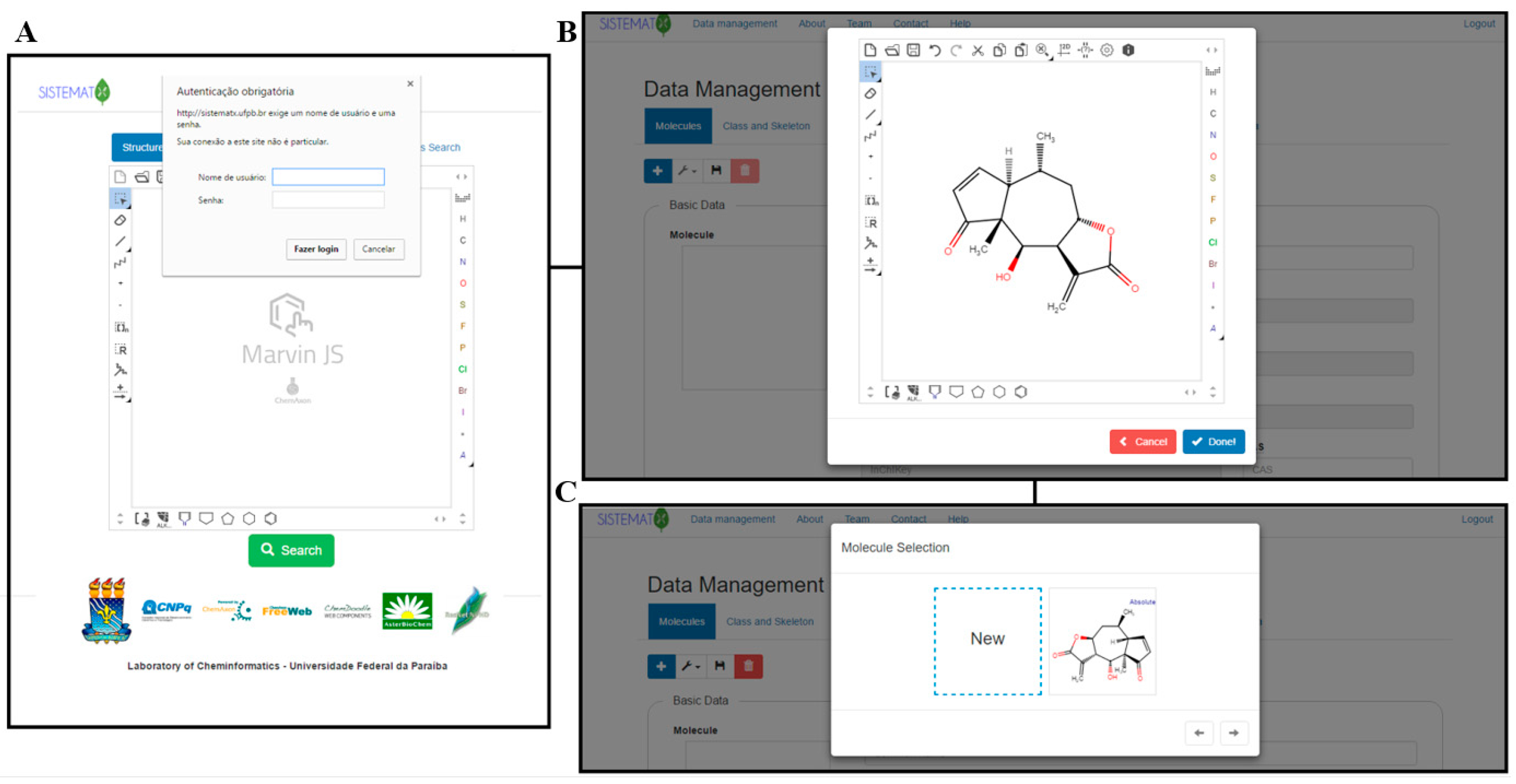
Dereplication is a chemical screening process of separation and purification that eliminates known and studied constituents, leaving other novel metabolites for future study. This is an important part of pharmaceutical and natural product development, requiring appropriate data management and retrieval for researchers around the world. However, Scotti
et al. found a lack of secondary metabolite databases that met their needs. Noting a need for complex searches, structure management, visualizations, and taxonomic rank in one package, they developed SistematX, "a modern and innovative web interface." They conclude the end result is a system that "provides a wealth of useful information for the scientific community about natural products, highlighting the location of species from which the compounds were isolated."
Posted on January 3, 2018
By John Jones
Newsletter
January 3, 2018 Laboratory Informatics Weekly Update Volume 16, Issue 1 In This Issue Featured Discussions 12/24/2017 - Please help me to know the basic difference between ISO 17025 :2005 and ISO17025:201712/18/2017 - Are Employees still at the root of most cyber breaches?12/16/2017 - certification of testing laboratories in compliance with ISO 9001 Journal Articles 12/28/2017 - Rethinking data sharing and human participant protection in social science research: Applications from the qualitative realmSocial science researchers, like any other researchers, produce data in their work, both quantitative and qualitative. Unlike other sciences, social science researchers have some added difficulties in…
Posted on December 28, 2017
By Shawn Douglas
Journal articles
Social science researchers, like any other researchers, produce data in their work, both quantitative and qualitative. Unlike other sciences, social science researchers have some added difficulties in meeting the data sharing initiatives promoted by funding agencies and journals when it comes to qualitative data and how to share it "both ethically and safely." In this 2017 paper, Kirilova and Karcher describe the efforts of the Qualitative Data Repository at Syracuse University, considering the variables that went into making qualitative data available while trying to reconcile "the tension between modifying data or restricting access to them, and retaining their analytic value." They conclude that such repositories' goals should be towards "educating researchers how to be 'safe people' and how to plan for 'safe projects' – when accessing such data and using them for secondary analysis – and providing long-term 'safe settings' for the data, including via de-identification and appropriate access controls."
Posted on December 22, 2017
By Shawn Douglas
Journal articles
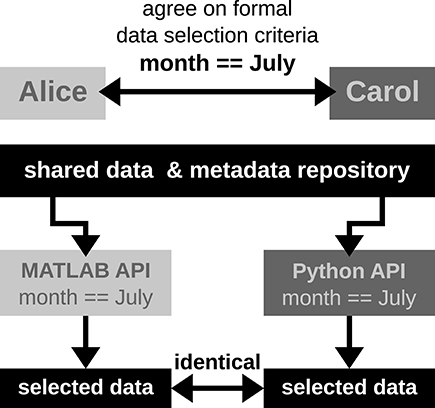
Metadata capture is important to scientific reproducibility argue Zehl
et al., particularly in regards to "the experiment, the data, and the applied preprocessing steps on the data." In this 2016 paper, however, the researchers demonstrate that metadata capture is not necessarily a simple task for an experimental laboratory; diverse datasets, specialized workflows, and lack of knowledge of supporting software tools all make the challenge of metadata capture more difficult. After demonstrating use cases representative of their neurophysiology lab and make a case for the open metadata Markup Language (odML), the researchers conclude that "[r]eadily available tools to support metadata management, such as odML, are a vital component in constructing [data and metadata management] workflows" in laboratories of all types.
Posted on December 20, 2017
By John Jones
Newsletter
December 20, 2017 Laboratory Informatics Weekly Update Volume 15, Issue 48 In This Issue Featured Discussions 12/08/2017 - How is CSV approach related to SDLC?12/07/2017 - CIO Laishy Williams-Carlson: “Get Out of IT & Understand the Business” Journal Articles 12/12/2017 - ISO 15189 accreditation: Navigation between quality management and patient safetyIn this 2017 paper by Plebani and Sciacovelli of the University Hospital of Padova, the duo offer their insights into the benefits and challenges of a clinical laboratory getting ISO 15189 accredited. Noting that in the European theater "major differences affect the approaches to accreditation promoted by the national…
Posted on December 19, 2017
By John Jones
Blog
Below is a discussion that I recently posted on Linkedin. If you use #Slack or are considering it within your work environment, you will want to check out this lively discussion:
Posted on December 19, 2017
By CSols Inc.
Blog
One of our past blogs entitled “Top 5 LIMS and LIMS Consulting Myths – Busted!” was met with great enthusiasm. Interestingly, several of the comments on this blog pointed out other LIMS myths and misconceptions. After reviewing these and taking stock with several of my fellow lab informatics aficionados, we have decided to revisit this topic and present here several more LIMS myths that deserve public busting.
Posted on December 12, 2017
By Shawn Douglas
Journal articles
In this 2017 paper by Plebani and Sciacovelli of the University Hospital of Padova, the duo offer their insights into the benefits and challenges of a clinical laboratory getting ISO 15189 accredited. Noting that in the European theater "major differences affect the approaches to accreditation promoted by the national bodies," the authors discuss the quality management approach that ISO 15189 prescribes and why its worth following. The conclude that while laboratories can realize "world-class quality and the need for a rigorous process of quality assurance," it still requires a high level of awareness among staff of the importance of ISO 15189 accreditation, an internal assessment plan, and well-defined, "suitable and user-friendly operating procedures."
Posted on December 12, 2017
By John Jones
Newsletter
December 13, 2017 Laboratory Informatics Weekly Update Volume 15, Issue 47 In This Issue Announcements 12/11/2017 - LIMfinder and LIMSforum have mergedBack in February 2017, LIMSfinder.com and LIMSforum.com announced that they would be merging. Today, that merger is complete. We have listened to our user community and are focusing on developments and new content to provide more educational material. Open Source applications in the cloud and Open Access Journal articles and courses and whole lot more. Please visit: https://www.limsforum.com to explore all of the many features and discussions and upcoming features. Featured Discussions 12/03/2017 - EU GMP Guideline Annex…
Posted on December 6, 2017
By Corinne Jones
Newsletter
December 06, 2017 Laboratory Informatics Weekly Update Volume 15, Issue 46 In This Issue Webcast Focus DECEMBER 6, 2017, 2:00 PM EST: CSols and LabVantage: Defining the Value of Integrating Instruments In one hour, learn how to realize the benefits of instrument integration with your LabVantage LIMS. Join our group of experts as we discuss LIMS instrument integration approaches and techniques. Understand how you can start on the path to improved quality and productivity in your laboratory now! Event Focus DECEMBER 4-6, 2017: 14th Laboratory Informatics Summit In the face of enormous R&D costs, it’s more important than ever to…





