Posted on February 21, 2018
By John Jones
Newsletter
February 21, 2018 Laboratory Informatics Weekly Update Volume 16, Issue 8 In This Issue Blogs Abbott Informatics STARLIMS Clinical Solution Helps Precision Diagnostics Achieve Compliance And Retain CustomersThe Hidden Power of Barcodes Upcoming Webinars 02/22/2018 - Practical Enterprise Architecture for the Laboratory03/01/2018 - Webinar: A Guide for Laboratory Systems Management, Part 4: LIMS/LIS, ELN, SDMS, IT & Education Journal Articles Evidence-based design and evaluation of a whole genome sequencing clinical report for the reference microbiology laboratoryReporting isn't as simple as casually placing key figures on a page; significant work should go into designing a report template, particularly those reporting…
Posted on February 20, 2018
By Shawn Douglas
Journal articles
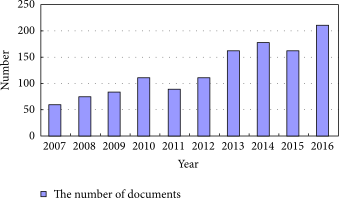
In this 2018 paper published in
Scientific Programming, Zhu
et al. review the state of big data in the geological sciences and provide context to the challenges associated with managing that data in the cloud using China's various databases and tools as examples. Using the term "cloud-enabled geological information services" or CEGIS, they also outline the existing and new technologies that will bring together and shape how geologic data is accessed and used in the cloud. They conclude that "[w]ith the continuous development of big data technologies in addressing those challenges related to geological big data, such as the difficulties of describing and modeling geological big data with some complex characteristics, CEGIS will move towards a more mature and more intelligent direction in the future."
Posted on February 15, 2018
By Shawn Douglas
Journal articles
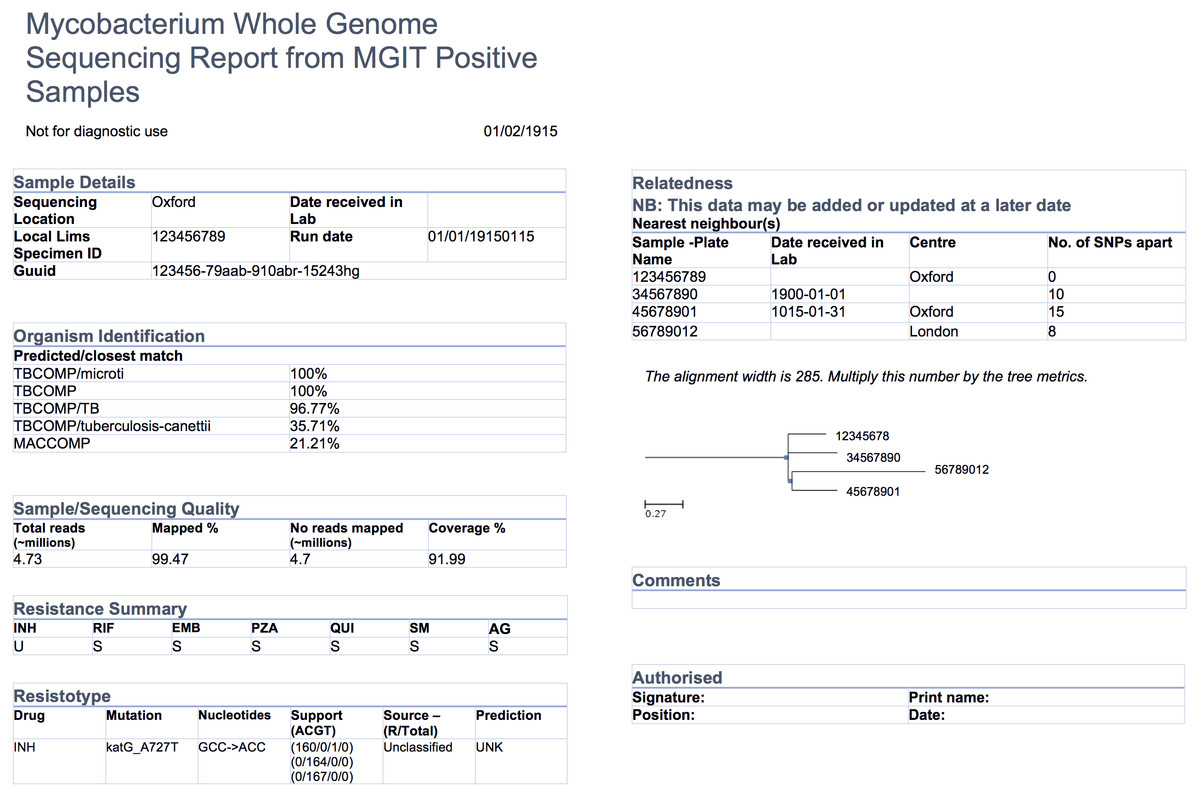
Reporting isn't as simple as casually placing key figures on a page; significant work should go into designing a report template, particularly those reporting specialized data , like that found in the world of pathogen genomics. Crisan
et al. of the University of British Columbia and the BC Centre for Disease Control looked for evidence-based guidelines on creating reports for such a specialty — specifically for tuberculosis genomic testing — and couldn't find any. So they researched and created their own. This 2018 paper details their journey towards a final report design, concluding "that the application of human-centered design methodologies allowed us to improve not only the visual aesthetics of the final report, but also its functionality, by carefully coupling stakeholder tasks, data, and constraints to techniques from information and graphic design."
Posted on February 14, 2018
By CSols Inc.
Blog

Perhaps one of the most overlooked and under-implemented interfaces is the simple but powerful barcode. Barcodes have been around for many years in consumer spaces – but what can they do for a laboratory? The answer largely depends on what kind of technology is used: traditional barcodes or Radio-Frequency Identification (RFID).
Posted on February 14, 2018
By CloudLIMS
Blog

With the increasing legalization of both adult recreational and medical cannabis, there is a need for robust and reliable cannabis analytical testing to ensure consumer safety and drug potency. Cannabis testing laboratories receive high volumes of test requests from cannabis cultivators for testing quantitative and qualitative aspects of the plant. As the volume of tests each lab performs increases, the need for laboratories to make effective use of time and resource management, such as ensuring accurate and quick results, reports, regulatory compliance, quality assurance and many other aspects of data management becomes vital in staying competitive. To achieve this, a Laboratory Information Management System (LIMS) can play a vital role in addressing the data management challenges, maximizing automation, and in complying with the regulatory requirements.
Posted on February 14, 2018
By John Jones
Newsletter
February 14, 2018 Laboratory Informatics Weekly Update Volume 16, Issue 7 In This Issue Upcoming Webinars 02/21/2018 - Software Validation: More Than Just the Vendor Documentation02/22/2018 - Practical Enterprise Architecture for the Laboratory03/01/2018 - Webinar: A Guide for Laboratory Systems Management, Part 4: LIMS/LIS, ELN, SDMS, IT & Education Blogs The Hidden Power of BarcodesManaging Cannabis Testing Lab Workflows using LIMSTips for SampleManager LIMS™ Instrument IntegrationSelecting an ELN to Maximize IP Protection Journal Articles Moving ERP systems to the cloud: Data security issuesThis 2017 paper by Saa et al. examines the existing research literature concerning the status of moving…
Posted on February 7, 2018
By Astrix Technology Group
Blog

The following blog will detail SampleManager LIMS Instrument integration best practices and procedures to ensure success.
Technological advances in laboratory instrumentation, along with higher throughput processes, have led to massive increases in the volume of analytical data. One of the main challenges faced by organizations today is turning this vast amount of data into useful information that fuels innovation and enables timely and effective business decisions. In order to manage and process these growing data volumes effectively, laboratories are looking to automate and integrate laboratory operations and processes as much as possible.
Posted on February 7, 2018
By Astrix Technology Group
Blog
In the race to patent or publish, time is critical. For any researcher, securing Intellectual Property (IP) is equally critical. In order to receive a patent on an invention, inventors must be able to document the work they did to prove that the invention substantially performs against the claim. Additionally, this proof must be corroborated by someone (e.g., custodian of records) not directly involved in the work. Effective documentation and corroboration of the work done on an invention is also necessary to protect IP against challenges to the U.S. Patent and Trademark Office (USPTO) and possible litigation from competing inventors.
Posted on February 7, 2018
By Astrix Technology Group
Blog
The failure rate of Lab Informatics Projects is notoriously high. A recent survey by cloud portfolio management provider Innotas found that over half of businesses surveyed had experienced a lab informatics project failure within the previous 12 months. For any business considering a laboratory informatics project, this is not an encouraging statistic. How does one determine that a lab informatics project has failed? There are, in fact, a number of key metrics that should be used to determine success or failure.
Posted on February 7, 2018
By Astrix Technology Group
Blog
Core Informatics provides a state of the art laboratory information management system (LIMS) built on the Platform for Science (PFS) – a Platform-as-a-Service (PaaS) solution that enables web-based informatics in the cloud. The web-based nature of Core LIMS allows for scalability, support for multiple sites, and 24-hour remote access without the need for any client-side installation. Core LIMS provides a wide array of highly configurable functionality to meet the needs of the customer.
Posted on February 7, 2018
By John Jones
Newsletter
February 7, 2018 Laboratory Informatics Weekly Update Volume 16, Issue 6 In This Issue Upcoming Webinars 02/22/2018 - Practical Enterprise Architecture for the Laboratory03/01/2018 - Webinar: A Guide for Laboratory Systems Management, Part 4: LIMS/LIS, ELN, SDMS, IT & Education Journal Articles Open source data logger for low-cost environmental monitoringThis 2014 paper by Ed Baker of London's Natural History Museum outlines a methodology for combining open-source software such as Drupal with open hardware like Arduino to create a real-time environmental monitoring station that is low-power and low-cost. Baker outlines step by step his approach (he calls it a "how…
Posted on February 6, 2018
By Shawn Douglas
Journal articles
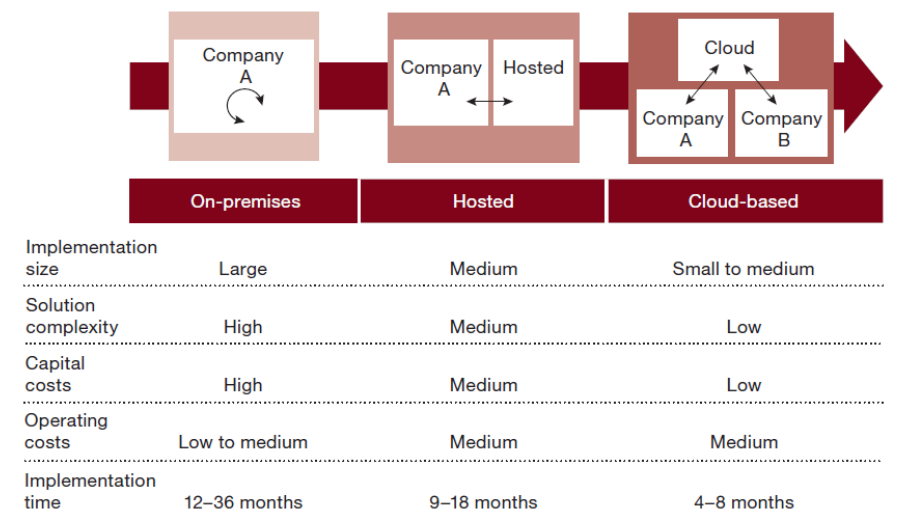
This 2017 paper by Saa
et al. examines the existing research literature concerning the status of moving an enterprise resource planning (ERP) system to the cloud. Noting both the many benefits of cloud for ERP and the data security drawbacks, the researchers discover the use of hybrid cloud-based ERPs by some organizations as a way to strike a balance, enabling them to "benefit from the agility and scalability of cloud-based ERP solutions while still keeping the security advantages from on-premise solutions for their mission-critical data."





