

LIMS Upgrade Project – Letter to Self
It has been a long road but the LIMS upgrade is finally complete, up and running, and validated. As I look back on this journey, I wish that I knew then what I know now.Laboratory Informatics Weekly Update – Volume 15, Issue 33
August 30, 2017 Laboratory Informatics Weekly Update Volume 15, Issue 33 In This Issue Webcast Focus SEPTEMBER 6, 2017, 1:30PM EDT/5:30PM UTC: Webinar - LIMS for the Cannabis QA Testing Laboratory The LiMSforum will be holding an hour long educational webinar on Wednesday, September 6, 2017 where we will be discussing the Cannabis laboratory business and the use and application of LIMS to the Cannabis lab. Here is the link to the webinar: https://www.limsforum.com/event/lims-for-cannabis-quality-assurance-testing-laboratories-webinar/If you are in the cannabis testing business or want to learn more about the application of LIMS to the cannabis lab, please join us for the…Clinical note creation, binning, and artificial intelligence
 This brief viewpoint article by Deliberato et al. looks at the state of note taking in electronic health records (EHRs) and proposes that EHR developers look to artificial intelligence (AI) components to improve note taking and other tasks in their software. Not only would AI improve note taking, they argue, but "AI would provide helpful suggestions to the user about what information is available and how it might influence the next course of action. AI could also function to emphasize or deemphasize certain elements of the record, based on previous results, external databases, and knowledge networks."
Predicting biomedical metadata in CEDAR: A study of Gene Expression Omnibus (GEO)
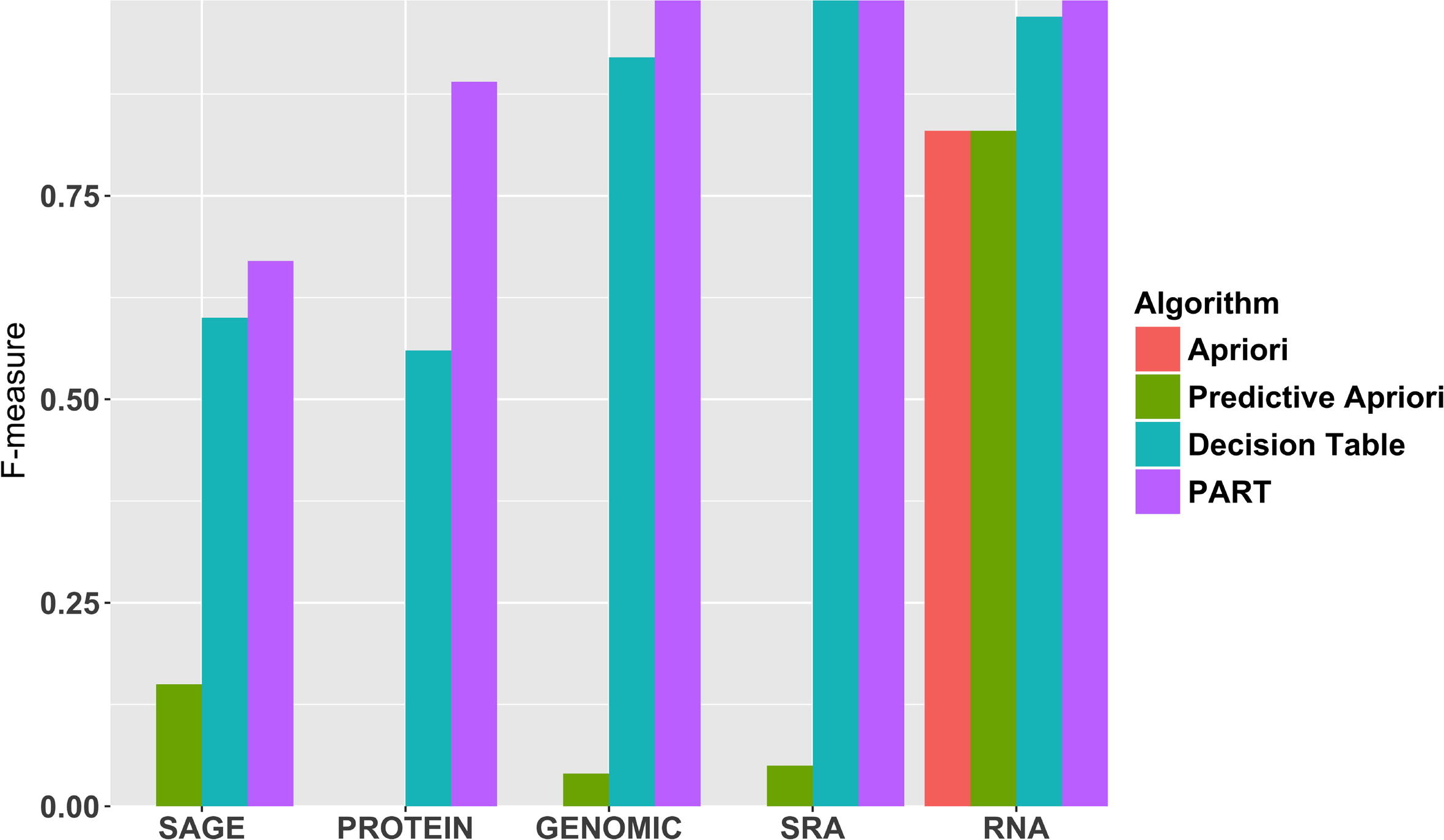 In this 2017 paper published in the Journal of Biomedical Informatics, Panahiazar et al. "propose a novel metadata prediction framework to learn associations from existing metadata that can be used to predict metadata values." They tested their framework using experimental metadata contained in the Gene Expression Omnibus (GEO), an international public repository for community-contributed genomic datasets. The framework itself uses association rule mining (ARM) algorithms to predict structured metadata, and they found that indeed ARM is a strong tool towards that goal, though with several limitations. They conclude that with tools like theirs, the discovered "[p]redictive metadata can be used both prospectively to facilitate metadata authoring, and retrospectively to improve, correct and augment existing metadata in biomedical databases."
Laboratory Informatics Weekly Update – Volume 15, Issue 32
August 23, 2017 Laboratory Informatics Weekly Update Volume 15, Issue 32 In This Issue Webcast Focus SEPTEMBER 6, 2017, 1:30PM EDT/5:30PM UTC: Webinar - LIMS for the Cannabis QA Testing Laboratory The LiMSforum will be holding an hour long educational webinar on Wednesday, September 6, 2017 where we will be discussing the Cannabis laboratory business and the use and application of LIMS to the Cannabis lab. Here is the link to the webinar: https://www.limsforum.com/event/lims-for-cannabis-quality-assurance-testing-laboratories-webinar/If you are in the cannabis testing business or want to learn more about the application of LIMS to the cannabis lab, please join us for the…3 Areas a LES Can Drive Cost Savings
A Laboratory Execution System (LES) can minimize costs while maximizing quality.Rapid development of entity-based data models for bioinformatics with persistence object-oriented design and structured interfaces
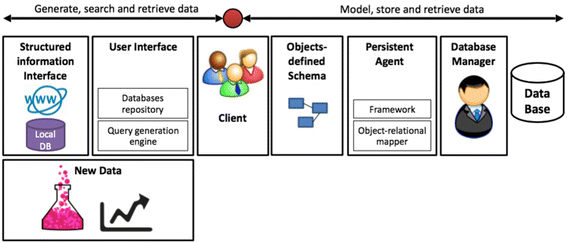 When it comes to bioinformatics data, databases are one of the more important the behind-the-scenes work horses. Yet inherent challenges of data heterogeneity and context-dependent interconnection in database design have driven the creation of specialized databases, which has, as a byproduct, caused additional problems in their creation. In this paper, Jerusalem College of Technology's Ezra Tsur proposes "an open-source framework for the curation of specialized databases," one that demonstrates "integration of the most relevant technologies to OO-based database design in a single framework" as well as extensibility to function with many other bioinformatics tools.
Laboratory Informatics Weekly Update – Volume 15, Issue 31
August 16, 2017 Laboratory Informatics Weekly Update Volume 15, Issue 31 In This Issue Webcast Focus SEPTEMBER 6, 2017, 1:30PM EDT/5:30PM UTC: Webinar - LIMS for the Cannabis QA Testing Laboratory The LiMSforum will be holding an hour long educational webinar on Wednesday, September 6, 2017 where we will be discussing the Cannabis laboratory business and the use and application of LIMS to the Cannabis lab. Here is the link to the webinar: https://www.limsforum.com/event/lims-for-cannabis-quality-assurance-testing-laboratories-webinar/If you are in the cannabis testing business or want to learn more about the application of LIMS to the cannabis lab, please join us for the…Bioinformatics education in pathology training: Current scope and future direction
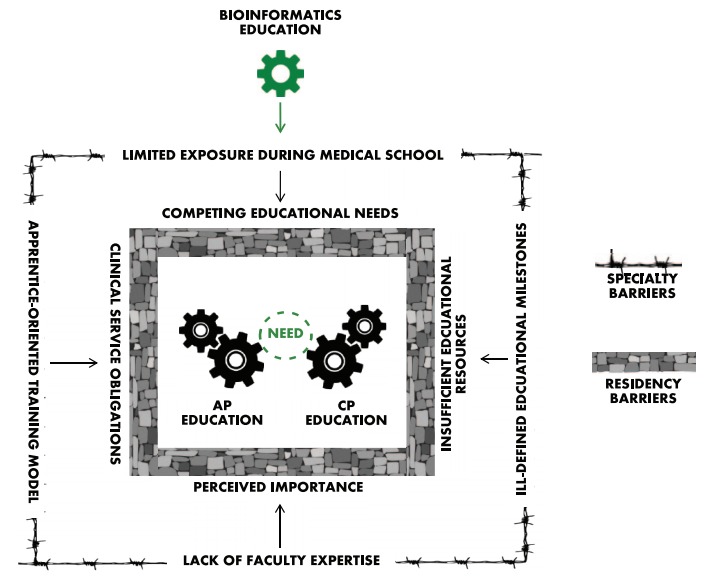 What are the links between pathology in the clinical setting and bioinformatics? Are residents in pathology gaining enough training in bioinformatics? And why should they learn about it in the first place? Clay and Fisher provide their take on these questions in this 2017 review paper published in Cancer Informatics. From their point-of-view, bioinformatics training is vital to practicing pathology "in the 'information age' of diagnostic medicine," and training should be taken more seriously at the residency and fellowship levels. They conclude that "in order for bioinformatics education to firmly integrate into the fabric of resident education, its importance and broad application to the practice of pathology must be recognized and given a prominent seat at the education table."
Electronic lab notebooks: Can they replace paper?
Despite the increasingly digital nature of society, there are some areas of research that remain firmly rooted in the past; in this case the laboratory notebook, the last remaining paper component of an experiment. Countless electronic laboratory notebooks (ELNs) have been created in an attempt to digitize record keeping processes in the lab, but none of them have become a "key player" in the ELN market, due to the many adoption barriers that have been identified in previous research and further explored in the user studies presented here.Laboratory Informatics Weekly Update – Volume 15, Issue 30
August 09, 2017 Laboratory Informatics Weekly Update Volume 15, Issue 30 In This Issue Webcast Focus AUGUST 23, 2017, 2:00PM EST/6:00PM UTC: ELN Implementations - Why they Fail to Realize their Full Potential NEW DATE: Join us for this one hour, complimentary webinar in which we examine the reasons why ELNs fail to realize their full potential and what can be done to improve your chances of success. Wed, Aug 30, 2017 1:00 PM - 2:00 PM EDT/5:00 PM UTC: When to Upgrade SampleManager LIMS: The Critical Factors Join Astrix Technology Group for a live webinar on Wed, Aug 30,…Manage Testing and Laboratory Workflows with LIMS
CloudLIMS recenty hosted a live complimentary webinar on "Manage Testing and Laboratory Workflows with LIMS", presented by Mr. Rakhil Akkali, Product Analyst at CloudLIMS.com. The webinar provided insights on how a LIMS plays a pivotal role in automatic sample accessioning, sample tracking using barcodes, managing multi-analyte tests and test Chain of Custody (CoC), automated report generation, besides helping testing laboratories follow regulatory guidelines seamlessly.
To watch the video or to download the presentation slides, please visit the webinar section: https://cloudlims.com/resources/lims-webinar.jsp





