

Laboratory Informatics Weekly Update – Volume 15, Issue 26
July 12, 2017 Laboratory Informatics Weekly Update Volume 15, Issue 26 In This Issue Featured Books The Complete Guide to LIMS & Laboratory Informatics: Summer 2017 Edition LiMSwiki has just released the the latest LIMS and Lab Informatics Buyer's Guide. This guide originally started in 2011 with 15 LIMS/LI vendors that included pricing for those vendors. Today's edition has over 50 vendors including pricing and links to video demonstrations of their products. Also, there are comprehensive chapters to cover LIMS requirements and other educational information that is valuable for those seeking to learn more about LIMS in general. Download a…Earth science data analytics: Definitions, techniques and skills
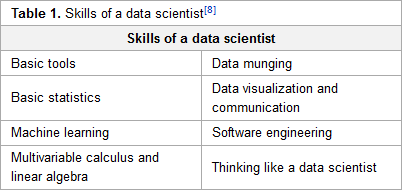 Like many other fields of science, earth science is increasingly swimming in data. Unlike other fields, the discussion of earth science data and its analysis hasn't been as vigorous, comparatively speaking. Kempler and Mathews of NASA speak of their efforts within the Earth Science Information Partners' (ESIP) earth science data analytics (ESDA) program in this 2017 paper published in Data Science Journal. The duo shares their experiences and provides a set of techniques and skills typical to ESDA "that is useful in articulating data management and research needs, as well as a working list of techniques and skills relevant to the different types of ESDA."
The Complete Guide to LIMS & Laboratory Informatics: Summer 2017 Edition
LiMSwiki has just released the the latest LIMS and Lab Informatics Buyer's Guide.
This guide originally started in 2011 with 15 LIMS/LI vendors that included pricing for those vendors. Today's edition has over 50 vendors including pricing and links to video demonstrations of their products. Also, there are comprehensive chapters to cover LIMS requirements and other educational information that is valuable for those seeking to learn more about LIMS in general.
Bioinformatics: Indispensable, yet hidden in plain sight?
This brief paper published in BMC Bioinformatics provides a sociological examination of the world of bioinformatics and how it's perceived institutionally. Bartlett et al. argue that institutionally while less focus is place on bioinformatics processes and more on the data input and output, putting the contributions of bioinformaticists into a "black box," losing scientific credit in the process. The researchers conclude that "[i]n the pursuit of relevance and impact, future scientific careers will increasingly involve playing the role of a fractional scientist ... combining a variety of expertise and epistemic aspirations..." to become "tomorrow's bioinformatic scientists."Laboratory Informatics Weekly Update – Volume 15, Issue 25
June 28, 2017 Laboratory Informatics Weekly Update Volume 15, Issue 25 In This Issue Articles LIMS for Testing Laboratories - An Overview of Features and Compliance for Testing Laboratories A laboratory that performs any type of test can be categorized as a testing laboratory. There are different types of testing laboratories such as food and beverage, environmental, cannabis, clinical, petrochemical, etc. Bid / RFP / RFI Opportunities DUE JULY 20, 2017: Request for Proposal - Water Resources Laboratory Information Management System Replacement of aged laboratory information management system to better manage laboratory operations and related data for Clermont County Wastewater…Global data quality assessment and the situated nature of “best” research practices in biology
In this 2017 journal article published in the Data Science Journal, data scientist Sabina Leonelli reflects on a paradigm shift in biology where "specific data production technologies [are used] as proxy for assessing data quality," creating problems along the way, particularly for the open data movement. Leonelli's major concern: "Ethnographic research carried out in such environments evidences a widespread fear among researchers that providing extensive information about their experimental set-up will affect the perceived quality of their data, making their findings vulnerable to criticisms by better-resourced peers," hindering data and provenance sharing. And the conclusion? Endorsing specific data production and management technologies as indicators of data quality can cloud the goals of open data initiatives.LIMS for Testing Laboratories – An Overview of Features and Compliance for Testing Laboratories
A laboratory that performs any type of test can be categorized as a testing laboratory. There are different types of testing laboratories such as food and beverage, environmental, cannabis, clinical, petrochemical, etc.Laboratory Informatics Weekly Update – Volume 15, Issue 24
June 21, 2017 Laboratory Informatics Weekly Update Volume 15, Issue 24 In This Issue Webcast Focus JUNE 21, 2017 2:00PM EDT/6:00PM USTC: ELN Implementations - Why they Fail to Realize their Full Potential Join us for this one hour, complimentary webinar in which we examine the reasons why ELNs fail to realize their full potential and what can be done to improve your chances of success. Articles LIMS for Testing Laboratories - An Overview of Features and Compliance for Testing Laboratories A laboratory that performs any type of test can be categorized as a testing laboratory. There are different types…Neuroimaging, genetics, and clinical data sharing in Python using the CubicWeb framework
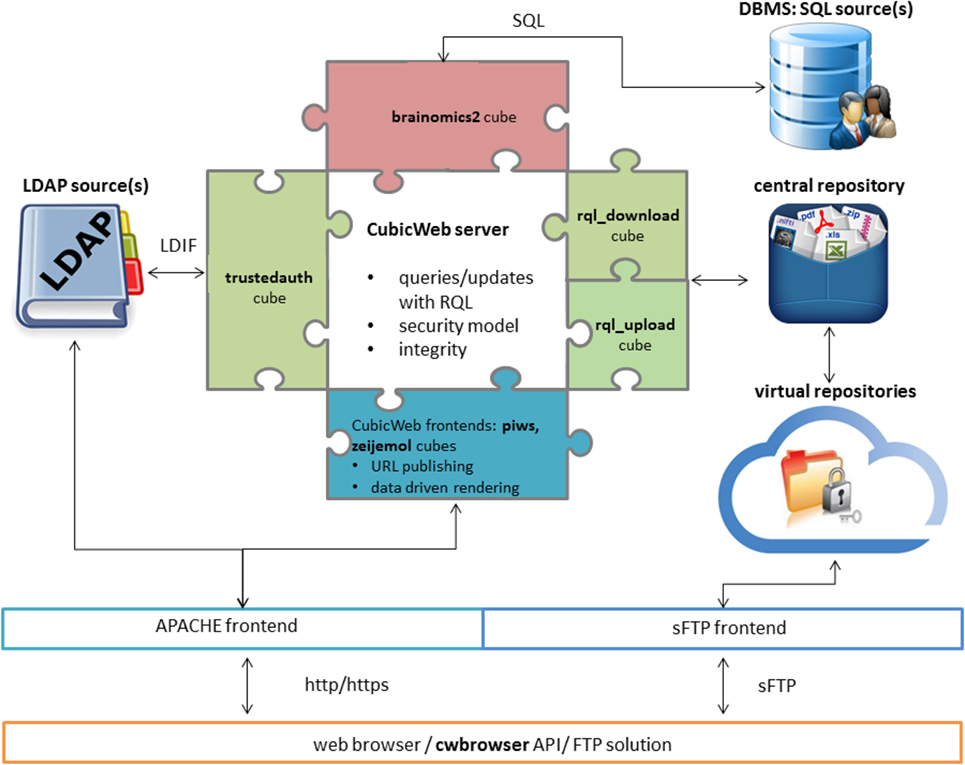 In this 2017 article published in Frontiers in Neuroinformatics, Grigis et al., like many before them, note that data in scientific areas of research such as genetics, imaging, and the social sciences has become "massive, heterogeneous, and complex." Their solution is a Python-based one that integrates the CubicWeb open-source semantic framework and other tools "to overcome the challenges associated with data sharing and collaborative requirements" found in population imaging studies. The resulting data sharing service (DSS) proves to be flexible, integratable, and expandable based on demand, they conclude.
Laboratory Informatics Weekly Update – Volume 15, Issue 23
June 14, 2017 Laboratory Informatics Weekly Update Volume 15, Issue 23 In This Issue Webcast Focus JUNE 21, 2017 2:00PM EDT/6:00PM USTC: ELN Implementations - Why they Fail to Realize their Full Potential Join us for this one hour, complimentary webinar in which we examine the reasons why ELNs fail to realize their full potential and what can be done to improve your chances of success. Articles LIMS Consulting - Big vs. Boutique While not always true, when it comes to LIMS consulting the size of the consulting company you elect to engage with does matter, but not necessarily in…Analyzing the field of bioinformatics with the multi-faceted topic modeling technique
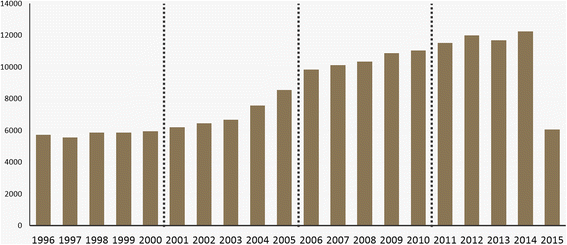 Wikipedia defines bibliometrics as a "statistical analysis of written publications, such as books or articles." Related to information and library science, bibliometrics has been helping researchers make better sense of the trends and impacts made across numerous fields. In this 2017 paper, Heo et al. use bibliometric methods new and old to examine the field of bioinformatics via related journals over a period of 20 years to better understand how the field has changed in that time. They conclude that "the characteristics of the bioinformatics field become more distinct and more specific, and the supporting role of peripheral fields of bioinformatics, such as conceptual, mathematical, and systems biology, gradually increases over time, though the core fields of proteomics, genomics, and genetics are still the major topics."





