Posted on June 7, 2017
By Corinne Jones
Newsletter
June 07, 2017 Laboratory Informatics Weekly Update Volume 15, Issue 22 In This Issue Webcast Focus JUNE 21, 2017 2:00PM EDT/6:00PM USTC: ELN Implementations - Why they Fail to Realize their Full Potential Join us for this one hour, complimentary webinar in which we examine the reasons why ELNs fail to realize their full potential and what can be done to improve your chances of success. Bid / RFP / RFI Opportunities DUE Jun 16, 2017: Sources Sought Notice - National Forensic Laboratory Information System The objective of this contract is to have the appropriate level of skilled contract personnel…
Posted on June 6, 2017
By John Jones
Journal articles
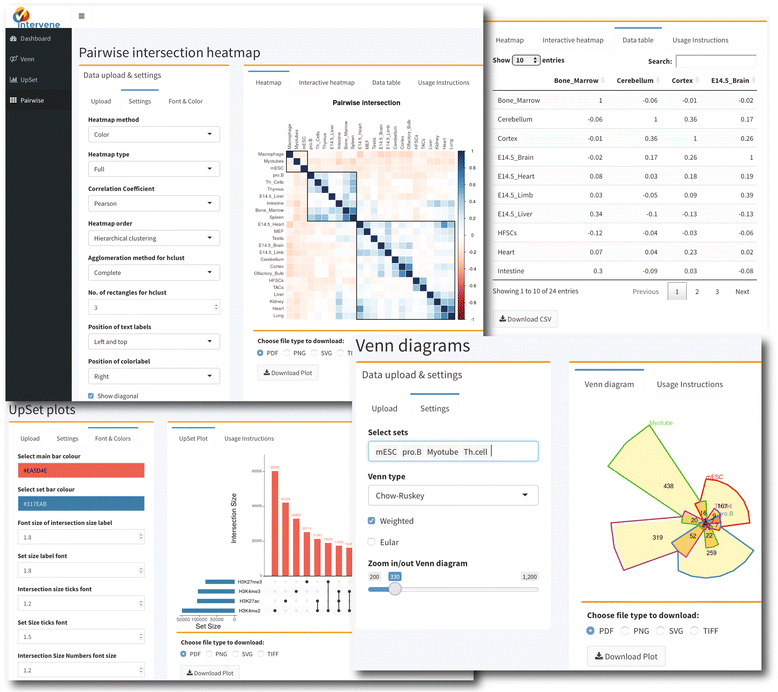
As Khan and Mathelier note in their abstract, one of the more common tasks of a bioinformatician is to take lists of genomes or genomic regions from high-throughput sequencing and compare them visually. Noting the lack of a comprehensive tool to visualize such complex datasets, the authors developed Intervene, a tool for computing intersections of multiple genomic and list sets. They conclude that "Intervene is the first tool to provide three types of visualization approaches for multiple sets of gene or genomic intervals," and they have made the the source code, web app, and documentation freely available to the public.
Posted on May 31, 2017
By John Jones
Journal articles
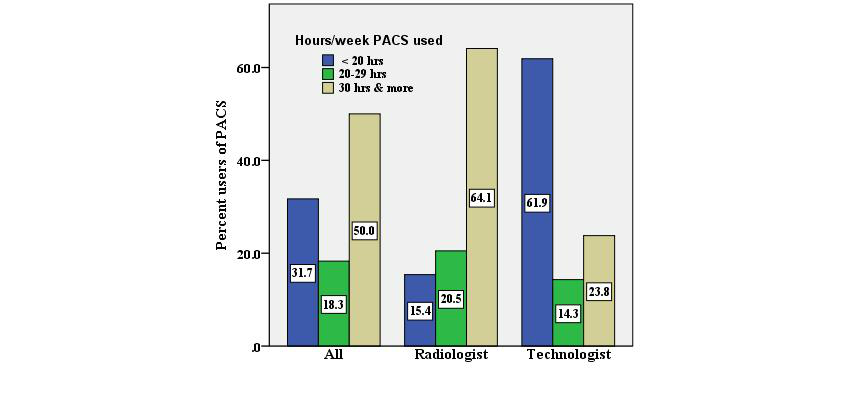
The picture archiving and communication system (PACS) is an increasingly important information management component of hospitals and medical centers, allowing for the digital acquisition, archiving, communication, retrieval, processing, distribution, and display of medical images. But do staff members using it find that a PACS makes their job easier and more effective? This journal article by Buabbas
et al. represents another attempt by medical researchers to quantify and qualify the impact of the PACS on radiologists and technologists using the system. In their case, the authors concluded that "[d]espite some of the technical limitations of the infrastructure, most of the respondents rated the system positively and as user-friendly" but, like any information system, there are still a few areas of improvement that need attention.
Posted on May 31, 2017
By CSols Inc.
Blog
While it can appear from a macro point of view that all LIMS are the same, real differences come to light once you start examining the inner workings of different LIMS solutions.
Posted on May 31, 2017
By Corinne Jones
Newsletter
May 31, 2017 Laboratory Informatics Weekly Update Volume 15, Issue 21 In This Issue Webcast Focus JUNE 21, 2017 2:00PM EDT/6:00PM USTC: ELN Implementations - Why they Fail to Realize their Full Potential! Join us for this one hour, complimentary webinar in which we examine the reasons why ELNs fail to realize their full potential and what can be done to improve your chances of success. Bid / RFP / RFI Opportunities DUE: JUNE 26, 2017 8:00 AM MST: Request for Proposal - Laboratory Information Management System University of Colorado: Colorado Center for Personalized Medicine (CCPM), a part of the…
Posted on May 24, 2017
By Khemia
Blog
Now that cell phone and internet coverage are virtually everywhere, it is extremely difficult to disconnect from work. Believe me, I know; I’ve been hiking up the side of a mountain in NC and still received phone calls and emails. Answering work related phone calls while out of breath and telling your five year old to be quiet at the same time can be quite a challenge. However, that kind of service, whether in sales or technical support, is expected these days. Professionally, you are expected to be connected.
Posted on May 24, 2017
By Corinne Jones
Newsletter
May 24, 2017 Laboratory Informatics Weekly Update Volume 15, Issue 20 In This Issue Webcast Focus JUNE 21, 2017 2:00PM EDT/6:00PM USTC: ELN Implementations - Why they Fail to Realize their Full Potential! Join us for this one hour, complimentary webinar in which we examine the reasons why ELNs fail to realize their full potential and what can be done to improve your chances of success. Event Focus MAY 22 - 24, 2017: Clinical Trial Supply Logistics & Temperature Management Forum Leading experts will discuss the future of clinical trials for 2017 and beyond! Don’t miss this key event to…
Posted on May 23, 2017
By John Jones
Journal articles
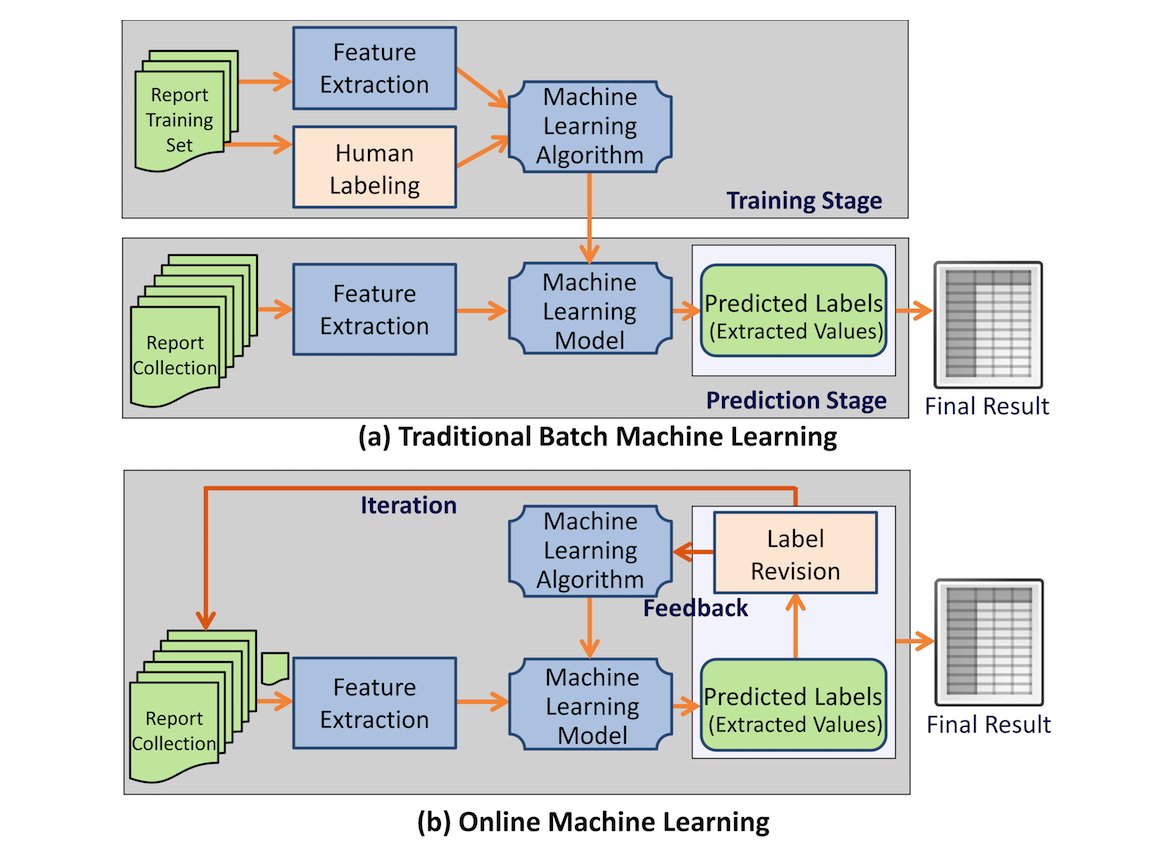
Even in the digital realm (think electronic medical records), extracting usable information from narrated medical reports can be a challenge given heterogeneous data structures and vocabularies. While many systems have been created over the years to tackle this task, researchers from Emory and Stony Brook University have taken a different approach: online learning. Here Zheng
et al. present their methodology and findings associated with their Information and Data Extraction using Adaptive Online Learning (IDEAL-X) system, concluding that "the online learning–based method combined with controlled vocabularies for data extraction from reports with various structural patterns ... is highly effective."
Posted on May 17, 2017
By Corinne Jones
Newsletter
May 24, 2017 Laboratory Informatics Weekly Update Volume 15, Issue 20 In This Issue Webcast Focus JUNE 21, 2017 2:00PM EDT/6:00PM USTC: ELN Implementations - Why they Fail to Realize their Full Potential! Join us for this one hour, complimentary webinar in which we examine the reasons why ELNs fail to realize their full potential and what can be done to improve your chances of success. Event Focus MAY 22 - 24, 2017: Clinical Trial Supply Logistics & Temperature Management Forum Leading experts will discuss the future of clinical trials for 2017 and beyond! Don’t miss this key event to…
Posted on May 15, 2017
By John Jones
Journal articles
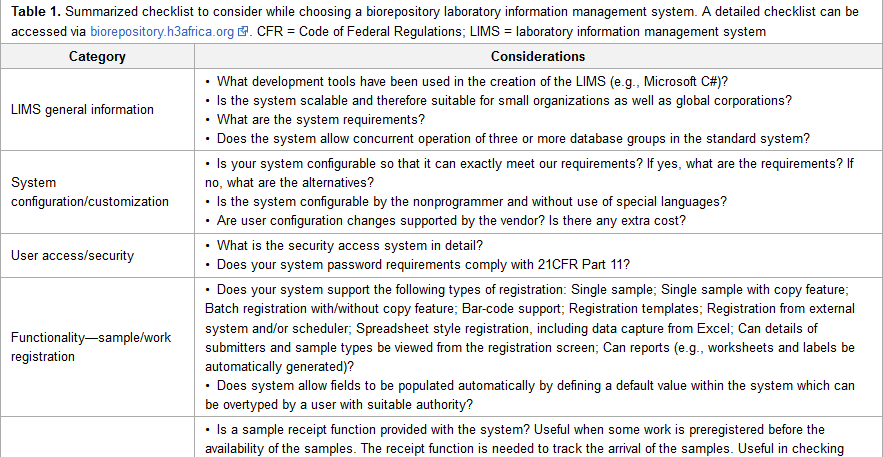
What's important for a biorepository laboratory information management system (LIMS), and what options are out there? What unique constraints in Africa make that selection more difficult? This brief 2017 paper from the Human Heredity and Health in Africa (H3Africa) Consortium outlines their take on finding the right LIMS solution for three of their regional biorepositories in Africa. The group emphasizes in the end that "[c]hoosing a LIMS in low- and middle-income countries requires careful consideration of the various factors that could affect its successful and sustainable deployment and use."
Posted on May 12, 2017
By CSols Inc.
Blog
IT projects have a 70% failure rate and though LIMS projects fare a little better there are still several techniques and best practices that, when properly applied, will drive your LIMS implementation success.
Posted on May 10, 2017
By John Jones
Journal articles
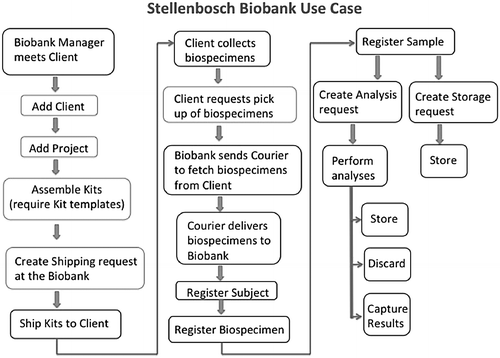
This journal article, published in
Biopreservation and Biobanking in early 2017, presents the development philosophy and implementation of a custom-modified version of Bika LIMS called Baobab LIMS, designed for biobank clients and researchers. Bendou
et al., who enlisted customization help directly from Bika Lab System, describe how "[t]he need to implement biobank standard operation procedures as well as stimulate the use of standards for biobank data representation motivated the implementation of Baobab LIMS, an open-source LIMS for biobanking." The group concludes that while the open-source LIMS is quite usable as is, it will require further development of more "generic and configurable workflows." Despite this, the authors anticipate the software to be useful to the biobanking community.





