Posted on April 19, 2017
By Smith Walker
Blog
In this era of precision medicine, biobanks play a very crucial role in accelerating the discovery and development of new drugs. The primary goal of a biobank is to store and manage massive volume of clinical, molecular and patient data generated from high-throughput methods such as microarray and next-generation sequencing.
Posted on April 19, 2017
By Corinne Jones
Newsletter
April 19, 2017 Laboratory Informatics Weekly Update Volume 15, Issue 16 In This Issue Webcast Focus APRIL 19, 2017 2:00PM EST/6:00 UST: LIMS Myths and Legends - Busted! Learn the truth about the most common misconceptions surrounding LIMS and LIMS implementations. Let's set the record straight. Event Focus MAY 22 - 24, 2017: Clinical Trial Supply Logistics & Temperature Management Forum Leading experts will discuss the future of clinical trials for 2017 and beyond! Don’t miss this key event to best utilize partnerships to increase vaccine distribution efforts, improve convenience and increase satisfaction for patients by including broader delivery methods…
Posted on April 17, 2017
By John Jones
Journal articles
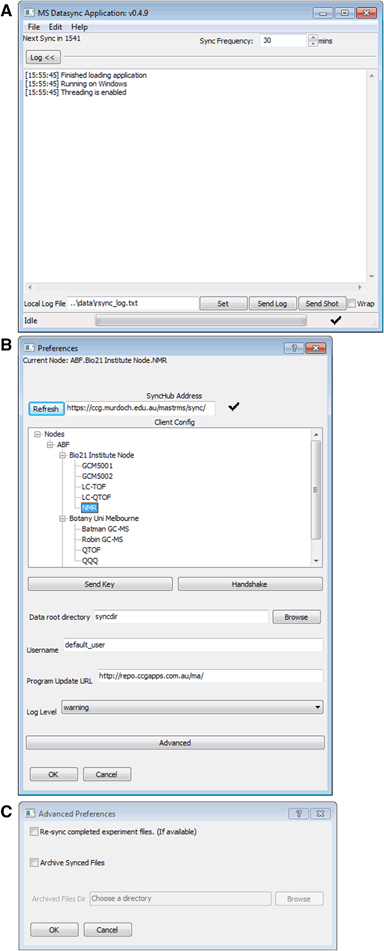
In development since at least the summer of 2009, the open-source MASTR-MS laboratory information management system (LIMS) was designed to better handle the data and metadata of metabolomics, the study of an entity's metabolites. In this 2017 paper published in
Metabolomics, the development team of MASTR-MS discuss the current state of their LIMS, how it's being used, and what the future holds for it. They conclude by stating the software's "comprehensive functions and features enable researchers and facilities to effectively manage a wide range of different project and experimental data types, and it facilitate the mining of new and existing [metabolomic] datasets."
Posted on April 17, 2017
By CSols Inc.
Blog
This classic battle between IT and "The Lab" is usually fought on several fronts, and if not brought under control, can easily cause your LIMS project to falter.
Posted on April 12, 2017
By CloudLIMS
Blog
With the aim of helping individuals overcome health issues, clinical research is an important field where doctors, drug experts and biologists work together to unravel the causative factors and suitable treatment plans for the most critical health problems. The major pitfall to clinical research is that it is both time consuming and costly.
Posted on April 12, 2017
By Corinne Jones
Newsletter
April 12, 2017 Laboratory Informatics Weekly Update Volume 15, Issue 15 In This Issue Webcast Focus APRIL 19, 2017 2:00PM EST/6:00 UST: LIMS Myths and Legends - Busted! Learn the truth about the most common misconceptions surrounding LIMS and LIMS implementations. Let's set the record straight. Articles Accelerating Clinical Research Using Cloud Technology With the aim of helping individuals overcome health issues, clinical research is an important field where doctors, drug experts and biologists work together to unravel the causative factors and suitable treatment plans for the most critical health problems. The major pitfall to clinical research is that it…
Posted on April 10, 2017
By John Jones
Journal articles
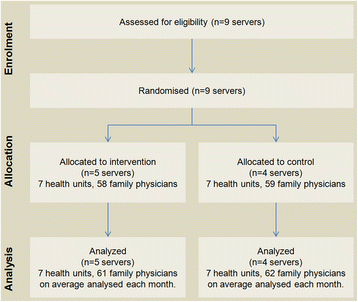
When designing something as simple as a menu of laboratory tests into a piece of clinical software, it's relatively easy to not think of the ramifications of the contents of such a menu. In this 2017 article published in
BMC Medical Informatics and Decision Making, Martins
et al. argue that there are consequences to what's included in a laboratory test drop-down menu, primarily that the presence — or lack thereof — of a test type may influence how frequently that test is prescribed. The group concludes that "[r]emoving unnecessary tests from a quick shortcut menu of the diagnosis and laboratory tests ordering system had a significant impact and reduced unnecessary prescription of tests," which in turn led "to the reduction of negative patient effects and to the reduction of unnecessary costs."
Posted on April 5, 2017
By John Jones
Journal articles
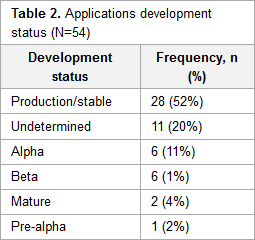
In this journal article published in
JMIR Medical Informatics in 2017, Alsaffar
et al. review research from mid-2014 that looked at the state of open-source electronic health record (EHR) systems, primarily via SourceForge. The authors, noting a lack of research concerning the demographics and motivation of open-source EHR projects, present their finding, concluding that "lack of a corporate entity in most F/OSS EHR projects translates to a marginal capacity to market the respective F/OSS system and to navigate [HITECH] certification."
Posted on April 5, 2017
By Corinne Jones
Newsletter
April 05, 2017 Laboratory Informatics Weekly Update Volume 15, Issue 14 In This Issue Articles Pittcon 2017 - Where Did Everybody Go? The time of the massive conference/tradeshow is gone and it will not likely return. And even though we realize this intellectually, it is always jarring to go to Pittcon and see its diminished state. Bid / RFP / RFI Opportunities DUE APRIL 21, 2017: Request for Proposal - Lab Information System (LIS) and Data Migration The University of Texas Health Science Center at Houston on behalf of its Department of Pathology and Laboratory Medicine for Selection of a…
Posted on March 30, 2017
By Corinne Jones
Newsletter
March 30, 2017 Laboratory Informatics Weekly Update Volume 15, Issue 13 In This Issue Event Focus APRIL 4 - 5, 2017: Paperless Lab Academy 2017 2020 ROADMAP for DIGITAL CONVERGENCE: Transforming scientific information into actionable insight. The Paperless Lab Academy is the ideal learning platform, for those considering consolidating, integrating and simplifying laboratory data management systems. The PLA is recognized by Gartner as one of the best European Lab Automation events! Articles Pittcon 2017 - Where Did Everybody Go? The time of the massive conference/tradeshow is gone and it will not likely return. And even though we realize this intellectually,…
Posted on March 28, 2017
By CSols Inc.
Blog
The time of the massive conference/tradeshow is gone and it will not likely return. And even though we realize this intellectually, it is always jarring to go to Pittcon and see its diminished state.
Posted on March 27, 2017
By John Jones
Journal articles
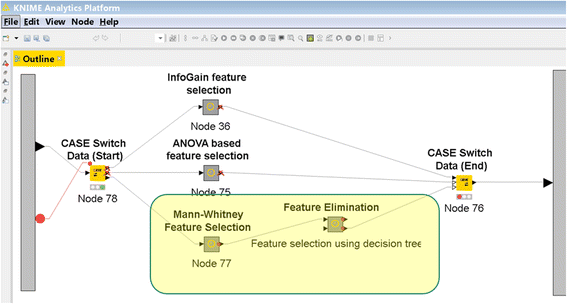
In this 2017 paper published in
BMC Bioinformatics, Eyal-Altman
et al. explain the use and benefits of their KNIME-based cancer outcome analysis software PCM-SABRE (Precision Cancer Medicine - Survival Analysis Benchmarking, Reporting and Evaluation). The group demonstrates its effectiveness by reconstructing the previous work of Chou
et al. and showing how the results necessitate the tool for better reproducibility. The researchers conclude that when used effectively, PCM-Sabre's "resulting pipeline can be shared with others in an intuitive yet executable way, which will improve, if adopted by other investigators, the comparability and interpretability of future works attempting to predict patient survival from gene expression data."





