Ten simple rules for cultivating open science and collaborative R&D
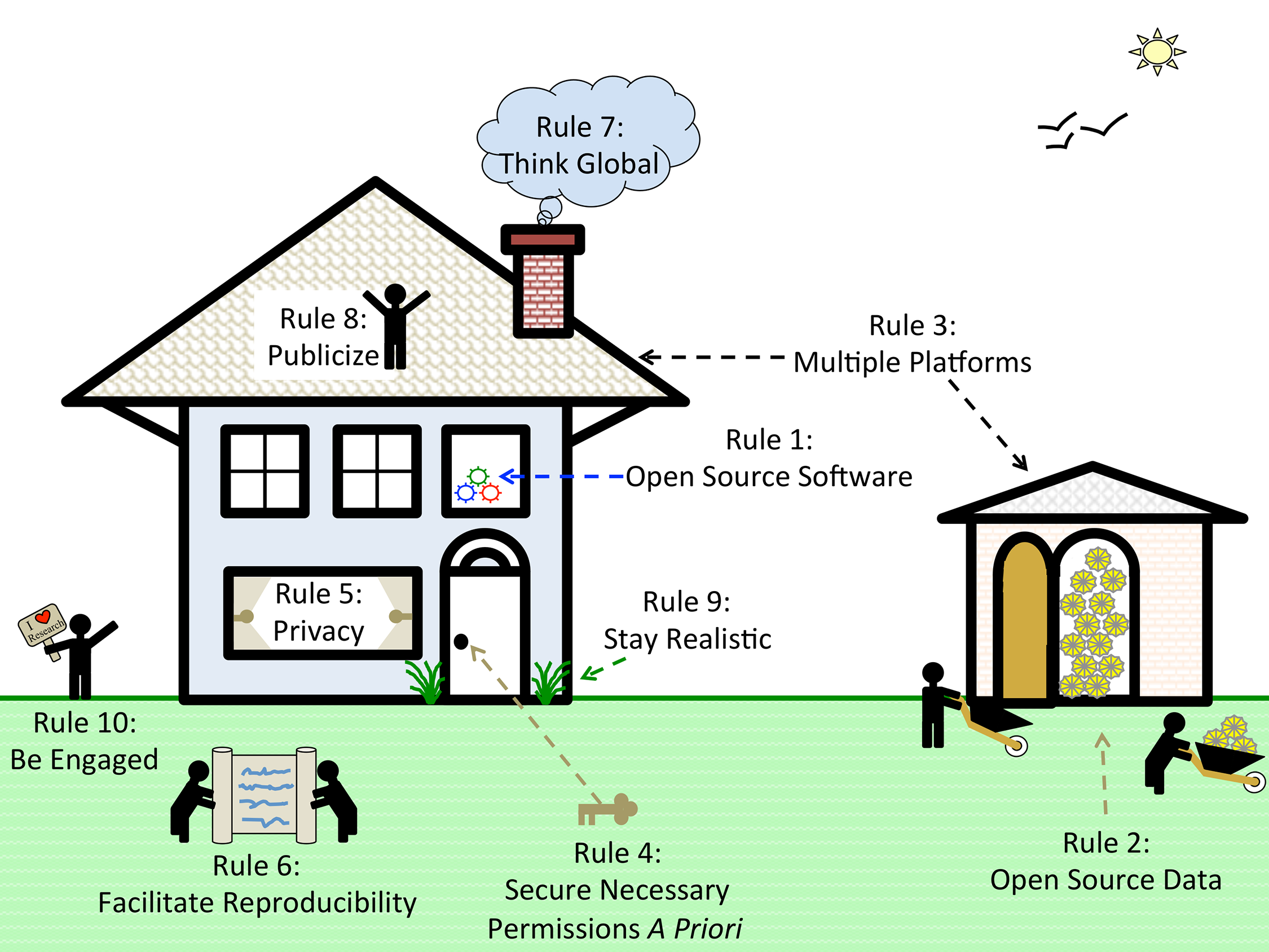
This journal article in PLOS Computational Biology's long-running Ten Simple Rules series goes back to 2013, when a collaborative group of eight authors from around the globe pooled their thoughts together on the topic of open science and collaborative R&D. The conversations (linked to in this article) provide context and insight into the various projects — from the Gene Wiki initiative to the Open Source Drug Discovery (OSDD) project — that have required significant deviation of thought from the traditional company view of conducting business. From "lead as a coach, not a CEO" to "grow the commons," the article's authors provide their thoughts on what best makes for collaborative and open science projects.Keeping a LIMS up to date with State and Federal EPA regulations
A LIMS is a great and almost necessary tool in any modern day environmental laboratory, whether commercial, state or municipal. In a highly regulated community, the LIMS, like everything else in the laboratory, must evolve. Some evolutions are complex, however, 99% of them are very simple and in many ways, mostly a matter of proper record keeping.Laboratory Informatics Weekly Update – Volume 15, Issue 12
March 22, 2017 Laboratory Informatics Weekly Update Volume 15, Issue 12 In This Issue Event Focus APRIL 4 - 5, 2017: Paperless Lab Academy 2017 2020 ROADMAP for DIGITAL CONVERGENCE: Transforming scientific information into actionable insight. The Paperless Lab Academy is the ideal learning platform, for those considering consolidating, integrating and simplifying laboratory data management systems. The PLA is recognized by Gartner as one of the best European Lab Automation events! Bid / RFP / RFI Opportunities DUE APRIL 20, 2017: Request for Proposal - Laboratory Information Management System Ocean Systems Laboratory, Inc. seeks proposals for LIMS system for laboratories…LIMS in academics, then and now
I recently read, or I should say reread, an article written by Douglas Perry for the American Chemical Society in Today’s Chemist at Work titled “LIMS in the academic world” (https://pubs.acs.org/subscribe/archive/tcaw/11/i01/html/01comp.html). The article was published in January of 2002. Almost exactly fifteen years later, most of the well discussed points are still valid. LIMS has not truly found a home in academic settings despite the fact it is rare to see an operating commercial laboratory in any business sector without some sort of LIMS in place today.Laboratory Informatics Weekly Update – Volume 15, Issue 11
March 15, 2017 Laboratory Informatics Weekly Update Volume 15, Issue 11 In This Issue Webcast Focus MARCH 22, 2017 2:00PM EST/7:00PM UTC: Laboratory Information Systems, the Cloud, and You With laboratory data becoming more and more digital, we need less physical space for paper strips and reports and more virtual space for ones and zeroes. However, more virtual space means more infrastructure which is costly. Event Focus MAY 22-24, 2017: 3rd Pharmaceutical Packaging and Labeling Forum Pharma Logistics Week presents the 3rd Pharmaceutical Packaging and Labeling Forum, taking place May 22-24, 2017 in San Diego, CA! This event will gather…Ten simple rules to enable multi-site collaborations through data sharing
 In yet another installment of PLOS Computational Biology's Ten Simple Rules series, Boland et al. of Columbia University and the Broad Institute of MIT and Harvard share their thoughts and experiences with multi-site collaborations and data sharing. The group provides practical tips for making data sharing easier and more successful, strengthening collaborations and the scientific process.
Laboratory Informatics Implementation Planning – Don't Forget!
Strong project management is very important to the success of a laboratory informatics system deployment, but even the most experienced IT project managers can overlook tasks that are specific to laboratory informatics systems.Laboratory Informatics Weekly Update – Volume 15, Issue 10
March 08, 2017 Laboratory Informatics Weekly Update Volume 15, Issue 10 In This Issue Webcast Focus MARCH 22, 2017 2:00PM EST/7:00PM UTC: Laboratory Information Systems, the Cloud, and You With laboratory data becoming more and more digital, we need less physical space for paper strips and reports and more virtual space for ones and zeroes. However, more virtual space means more infrastructure which is costly. Event Focus MAY 22-24, 2017: 3rd Pharmaceutical Packaging and Labeling Forum Pharma Logistics Week presents the 3rd Pharmaceutical Packaging and Labeling Forum, taking place May 22-24, 2017 in San Diego, CA! This event will gather…Ten simple rules for developing usable software in computational biology
This is another entry in PLOS Computational Biology's long-running Ten Simple Rules series, which attempts to break down computational biology / bioinformatics topics (that relate to the informatics side) down into a digestible and cited format. This 2017 entry by List et al. looks at the typical problems associated with computational biology software development and attempts to provide a clear approach for more usable, efficient software. The authors conclude that despite following these 10 rules, there's more to be done: "...effort is required from both users and developers to further improve a tool. Even engaging with only a few users ... is likely to have a large impact on usability."The effect of the General Data Protection Regulation on medical research
In this brief paper by Rumbold and Pierscionek, the implications and theoretical impact of the European Union's General Data Protection Regulation are discussed. Addressing in particular claims that the new "consent requirements ... would severely restrict medical data research," the researchers break down the law that goes into effect in 2018, including anonymization issues, consent issues, and data sharing issues that will potentially affect biomedical data research. They conclude the impact will by minimal: "The GDPR will facilitate medical research, except where it is research not considered in the public interest. In that case, more demanding requirements for anonymization will entail either true anonymization or consent."Economics and Sustainability in Biobanking – Dr. Jim Vaught
Biobanks come in many different sizes and serve various important purposes, including supporting basic, epidemiologic and clinical research. Biobanks are recognized as critical resources in the advancement of personalized or precision medicine.For complete article, please visit: https://cloudlims.com/blog/economics-and-sustainability-in-biobanking.html