Posted on October 26, 2023
By Corinne Jones
Newsletter
October 26, 2023 Laboratory Informatics Weekly Update Volume 21, Issue 43 In This Issue Featured Books The Complete Guide to LIMS and Laboratory Informatics Featured Content Dos and Don’ts of a SaaS LIMS ImplementationMaking the choice to implement a software-as-a-service (SaaS) LIMS in your organization can have many advantages and challenges. Knowing how best to evaluate these in the context of your particular situation will ensure you’re making an informed choice about the hosting model you select. [Read More] Optimizing Multi-Lab Environments with a LIMSIn the absence of a cohesive, centralized system, the process of monitoring changes and obtaining…
Posted on October 25, 2023
By CSols Inc.
Blog
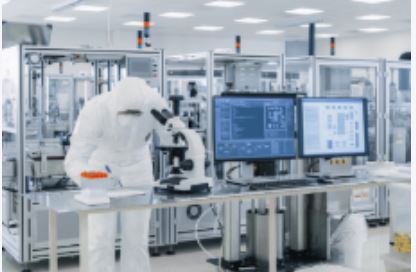
Making the choice to implement a software-as-a-service (SaaS) LIMS in your organization can have many advantages and challenges. Knowing how best to evaluate these in the context of your particular situation will ensure you’re making an informed choice about the hosting model you select.
[Read More]
Posted on October 25, 2023
By LabLynx
Blog
In the absence of a cohesive, centralized system, the process of monitoring changes and obtaining the latest information within multi-lab environments becomes an intricate and prone-to-error undertaking. Laboratory information management systems (LIMS) can significantly improve efficiency and quality in multi-lab organizations.
[Read More]
Posted on October 25, 2023
By onQ Software
Blog
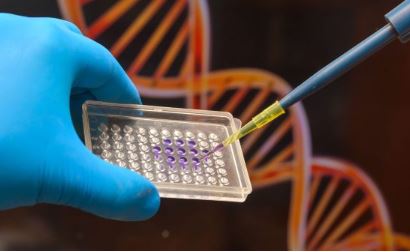
In today’s world,
genomics has revolutionized various fields, from healthcare to agriculture. The evolution of genomics stands as a testament to the remarkable progress of scientific discovery. However, with great power comes great complexity. Genomic research generates vast amounts of data, which, when not properly managed, can be overwhelming. This is where
LIMS steps in, offering a lifeline to researchers and scientists.
[Read More]
Posted on October 25, 2023
By Astrix Technology Group
Blog

The National Institutes of Health (NIH) is a government agency that provides financial support for advancing scientific research. If you’re a researcher or organization looking for funding opportunities, it’s important to understand the structure of NIH and how they approach grant funding. In this blog post, we’ll explore what the NIH looks for, who is eligible to apply, the types of grant programs available, and the various grant applications.
[Read More]
Posted on October 25, 2023
By Adurosys Inc.
Blog

In today's technologically advanced world, labs rely heavily on software solutions to streamline their operations and improve efficiency. However, with the adoption of digital systems comes the need for assessing and mitigating the associated risks. In this blog post, we will explore the concept of risk assessment in lab software and understand its significance in ensuring a safe and effective working environment. We discuss the intricacies of risk assessment, its key components, and the role it plays in the validation process.
[Read More]
Posted on October 25, 2023
By LabLynx
Blog
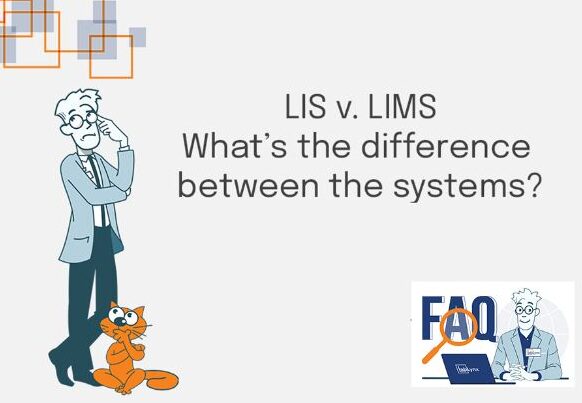
Most of us in the laboratory community have heard the term “LIMS,” though in the healthcare arena, it’s probably “LIS.” Both terms refer to software that is at the very heart of the modern laboratory. Essentially, both are the same: the main data management software for a laboratory. But the differences revolve around the fact that a LIMS is sample-centric and an LIS is patient-centric.
[Read More]
Posted on October 24, 2023
By LabLynx
Journal articles
In this 2023 article published in
Science and Technology of Advanced Materials: Methods, Ishii
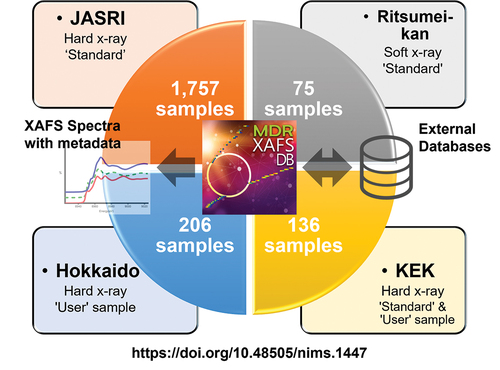
et al. describe their cross-institutional efforts towards integrating X-ray absorption fine structure (XAFS) spectra and associated metadata across multiple databases to improve materials informatics processes and research methods of materials discovery and analysis. Their new public database, MDR XAFS DB, was developed towards this goal, while addressing two main issues with unifying such data: the difficulties of "designing and collecting metadata describing spectra and sample details, and unifying the vocabulary used in the metadata, including not only metadata items (keys) but also descriptions (values)." After discussing the system's construction and contents, the authors conclude their system "has achieved seamless cross searchability with the use of sample nomenclature so that database users do not have to be aware of the differences in the local metadata of the facilities that provide the data." Though still with some challenges to address, the authors add that while the culture of open data hasn't truly taken hold in materials science, they hope "that this initiative will be a trigger to promote the utilization of materials data."
Posted on October 19, 2023
By Corinne Jones
Newsletter
October 19, 2023 Laboratory Informatics Weekly Update Volume 21, Issue 42 In This Issue Featured Books LIMS Selection Guide for ISO/IEC 17025 Laboratories Featured Content What are the most important features of a LIMS?The most important features of a LIMS are the features that are most important for your lab. These features may vary depending on your specific laboratory requirements and long-term goals. The LIMS features must be flexible enough to support your lab as it grows and changes, without the need for expensive development at every turn. [Read More] Why You Should Modernize Your Environmental LIMSDoes your environmental…
Posted on October 18, 2023
By LabLynx
Blog
The most important features of a LIMS are the features that are most important for your lab. These features may vary depending on your specific laboratory requirements and long-term goals. The LIMS features must be flexible enough to support your lab as it grows and changes, without the need for expensive development at every turn.
[Read More]
Posted on October 18, 2023
By CSols Inc.
Blog

Does your environmental lab use a 30-year-old laboratory information management system (LIMS) that is slow and not user friendly, but still works? Have you ever considered the real cost of maintaining that system or the limitations it has? How do you figure that out and make the case to upgrade? Modernizing your LIMS could be a big investment of time and resources and can add a layer of complexity when managing legacy data, but modernizing may also significantly improve the efficiency and accuracy of your environmental lab.
[Read More]
Posted on October 18, 2023
By Astrix Technology Group
Blog

Pharmaceutical and medical device companies benefit from using a structured approach to data items, connections between data items, and data containers. Working with data that is internally structured reduces the time needed to create submission reports, eliminates the manual verification of large data tables, and ensures the creation of submission deliverables with no technical errors.
[Read More]





