

Sr. LIMS Team Lead
Sr. LIMS Team Lead
===========================================================
Job Overview:
Lead or mentor technical team. Investigate, develop, test and recommend new software solutions for existing or proposed processes. Evaluate and implement new applications and support on-going effective utilization of applications. Support LIMS (Lab Information Management System) and other laboratory quality systems.…
Ensuring Data Integrity with the Allotrope Framework
 Data integrity is a hot topic in 2018 and for good reason. Pharmaceutical and biotech companies produce an enormous amount of experimental R&D data. The sheer volume and complexity of the data makes managing this critical asset challenging.
Los Alamos releases file index product to software community
Resolving the supercomputer challenge of searching and retrieving files could now be far simpler, with a tool developed by Los Alamos National Laboratory and released today to the GitHub open-source software site.Effectively Storing and Sharing Biological Data for Clinical Research
 Though biobanking—the practice of managing biological specimens and data for current or future medical research—has been around for many decades, the field has changed significantly since the completion of the Human Genome Project in the early 2000s. Advanced analytical techniques, high-tech tools, and mountains of data have made their way into modern biobanking, with the rapid changes both inspiring and perplexing clinical researchers looking for answers.
Our March 2018 newsletter is now out. It contains information about our latest releases and much more!
Our March 2018 newsletter is now out. It contains information about our latest releases and much more!
CloudLIMS @Terpenes and Testing World Conference 2018, San Jose, USA
CloudLIMS is excited to announce its participation at Terpenes and Testing World Conference 2018, to be held at the San Jose Convention Center, California, USA, from April 10-11, 2018.
FDA 510(k) Clears ORTHO CONNECT™ Middleware Solution from Ortho Clinical Diagnostics
Ortho Clinical Diagnostics, today announced that its ORTHO CONNECT V2.0 middleware solution received 510(k) clearance by the U.S. Food and Drug Administration (FDA).Proscia Brings Next Phase of Advanced Clinical Workflow Management to Digital Pathology
Proscia Inc., today announced the release of its first major expansion to its digital pathology workflow management platform optimized for anatomic pathology labs.April Fools: Eliminate “Gotcha” Situations in your LIMS Project
 APRIL FOOLS DAY…The day we, who don’t like surprises, all dread. there are those who like “gotchas” and LIMS projects provide no shortage of those. In this blog, learn a few things to keep in mind when working on your LIMS project so you don't get "fooled".
Laboratory Informatics Weekly Update – Volume 16, Issue 13
March 28, 2018 Laboratory Informatics Weekly Update Volume 16, Issue 13 In This Issue Upcoming Webinars 04/18/2018 - Webinar: 21 CFR Part 11: 20 Years Later04/26/2018 - Webinar: A Guide for Laboratory Systems Management, Part 5: Supporting Laboratory Systems Featured Books Cloud Computing Security HandbookWeb Application Security Guide - a brief introduction Journal Articles Developing a bioinformatics program and supporting infrastructure in a biomedical libraryThis brief case study by the National Institutes of Health's (NIH) Nathan Hosburgh takes an inside look at how the NIH took on the responsibility of bioinformatics training after the National Center for Biotechnology Information…Developing a bioinformatics program and supporting infrastructure in a biomedical library
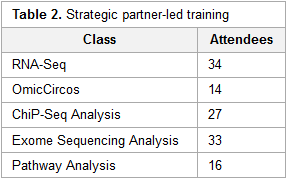 This brief case study by the National Institutes of Health's (NIH) Nathan Hosburgh takes an inside look at how the NIH took on the responsibility of bioinformatics training after the National Center for Biotechnology Information (NCBI) had to scale back its training efforts. Hosburgh provides a little background on bioinformatics and its inherent challenges. Then he delves into how the NIH—with significant help from Dr. Medha Bhagwat and Dr. Lynn Young—approached the daunting task of filling the education gap on bioinformatics, with the hope of providing "a dynamic and valuable suite of bioinformatics services to NIH and the larger medical research community well into the future."
Sr.Labware LIMS Analyst
- Responsible for rekeying stability studies from Labware LIMS v6 to Labware LIMS v7
- Experience with stability studies from LIMS v6 to Labware LIMS v7 is REQUIRED.
- Understanding of Stability concepts such as protocols, sample management, testing schedule is MUST.
LIMS Specialist Autoscribe Informatics to Exhibit at Analytica

LIMS Specialist Autoscribe Informatics to Exhibit at Analytica
Hall B1 Booth 534-4, Analytica 2018, Messe Munich, Germany, April 10–13, 2018

Autoscribe Informatics will be exhibiting for the first time at Analytica 2018, providing visitors with the chance to see the versatile and powerful Matrix Gemini Laboratory Information Management System (LIMS).…
Importance of Well-annotated Biospecimen for Clinical Research
 March 07, 2018
Biobanking plays a critical role in facilitating clinical research. It provides better opportunities for advancing community health by the collection and preservation of biospecimens such as blood, plasma, tissues, and DNA. These biospecimens are then made available for use in research to discover disease biomarkers that can be used to diagnose various phases of diseases, oversee severity of diseases and predicting drug responses.

