

Lab Informatics Insights 2020
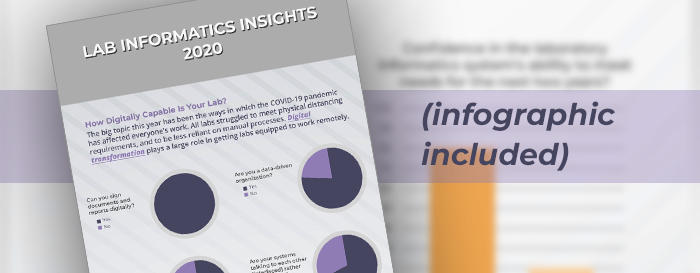 It’s typical for a service provider to stay up-to-date with industry happenings and to continually learn about their potential clients’ ever-changing needs. There are programs and measures in place to calculate and monitor these needs. At CSols, we developed a set of polls and quizzes to identify industry trends and collect feedback from those whom our lab informatics services can help. The respondents were contacts across various industries, and at different stages in their lab informatics project. [Read More]
Diversification: The Key to Surviving as a Cannabis Testing Lab

Organizations, Businesses, Schools and Colleges everywhere need testing programs. Data-driven decision making has put laboratories squarely in the center of the COVID-19 pandemic response. Unfortunately, even CLIA-certified clinical diagnostic labs can’t contribute unless they have the resources to conduct COVID-19 molecular diagnostics testing. But now there may...
[Read More]
Laboratory Informatics Webcast Series – The Digital Laboratory: What the Future Holds
Astrix Technology Group has been helping scientific organizations implement and integrate new informatics systems in the laboratory since 1995. Our experienced team of expert informatics consultants bring together technical, strategic, regulatory and content knowledge to provide the most effective solutions to problems faced by scientific organizations. Astrix partners with many of the industry leaders in this space and have brought them together for a one of kind webcast series that will delve into the future of lab informatics and technology. [Read More]Positioning the Health System to Weather the Storm of COVID-19
 Five areas of focus emerge when we look at how best-of-breed technology is helping labs manage through COVID-19. Get the new white paper. [READ MORE]
Cloud Hosting – Makes Sense
 In recent years, cloud technology has evolved into a universal essential technology platform, transforming the healthcare industry as we know it. Introducing the cloud-based laboratory information system, which is expected to become the leading trend in the laboratory information systems market. This advancement provides storage and servers over the internet at a reduced cost, as well as increasing speed, productivity, and security of the systems in the network.
SCC Soft Computer’s diverse product solutions are all available on the cloud, offering unique features and benefits per module. Click here to learn more about our products hosted on the cloud.
Managing Cannabis Information Workflows with LIMS
 Since March 2017 doctors in Germany can prescribe cannabis based drugs for several illnesses and conditions such as headaches or migraines. Legalizing medical cannabis is paving the way for many smaller biotech companies and startups in Germany in businesses related to cannabis research, cannabis cultivation, or manufacturing cannabis-based products. These new regulations have led to the emergence of a number of cannabis-testing laboratories and massive facilities for growing and manufacturing medical-grade cannabis.[Read More]
Laboratory Informatics Weekly Update – Volume 18, Issue 50
December 29, 2020 Laboratory Informatics Weekly Update Volume 18, Issue 50 In This Issue Featured Books COVID-19 Testing, Reporting, and Information Management in the Laboratory Featured Content 12/30/2020 - Lab Informatics Insights 2020It’s typical for a service provider to stay up-to-date with industry happenings and to continually learn about their potential clients’ ever-changing needs. There are programs and measures in place to calculate and monitor these needs. At CSols, we developed a set of polls and quizzes to identify industry trends and collect feedback from those whom our lab informatics services can help. The respondents were contacts across various…Explainability for artificial intelligence in healthcare: A multidisciplinary perspective
Artificial intelligence (AI) is increasingly making its way into many aspects of health informatics, backed by a vision of improving healthcare outcomes and lowering healthcare costs. However, like many other such technologies, it comes with legal, ethical, and societal questions that deserve further exploration. Amann et al. do just that in this 2020 paper published in BMC Medical Informatics and Decision Making, examining the concept of "explainability," or why the AI came to the conclusion that it did in its task. The authors provide a brief amount of background before then examining AI-based clinical decision support systems (CDDSs) to provide various perspectives on the value of explainability in AI. They examine what explainability is from the perspective of technological perspective, then examine the legal, medical, and patient perspectives of explainability's importance. Finally, they examine the ethical implications of explainability using Beauchamp and Childress' Principles of Biomedical Ethics. The authors conclude "that omitting explainability in CDDSs poses a threat to core ethical values in medicine and may have detrimental consequences for individual and public health."Secure record linkage of large health data sets: Evaluation of a hybrid cloud model
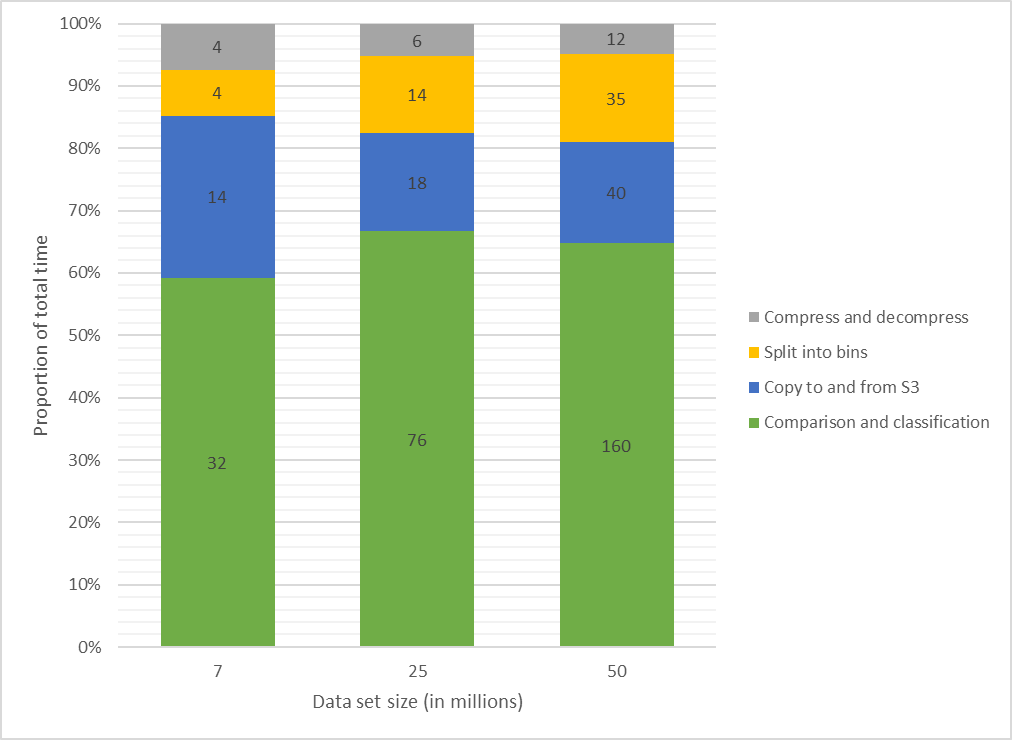 This 2020 paper published in JMIR Medical Informatics examines both the usefulness of linked data (connecting data points across multiple data sets) for investigating health and social issues, and a cloud-based means for enabling linked data. Brown and Randall briefly review the state of cloud computing in general, and in particular with relation to data linking, noting a dearth of research on the practical use of secure, privacy-respecting cloud computing technologies for record linkage. Then the authors describe their own attempt to demonstrate a cloud-based model for record linkage that respects data privacy and integrity requirements, using three synthetically generated data sets of varying sizes and complexities as test data. They discuss their findings and then conclude that through the use of "privacy-preserving record linkage" methods over the cloud, data "privacy is maintained while taking advantage of the considerable scalability offered by cloud solutions," all while having "the ability to process increasingly larger data sets without impacting data release protocols and individual patient privacy" policies.
LIMS Validation – Get Yourself Armed with Knowledge This Festive Season
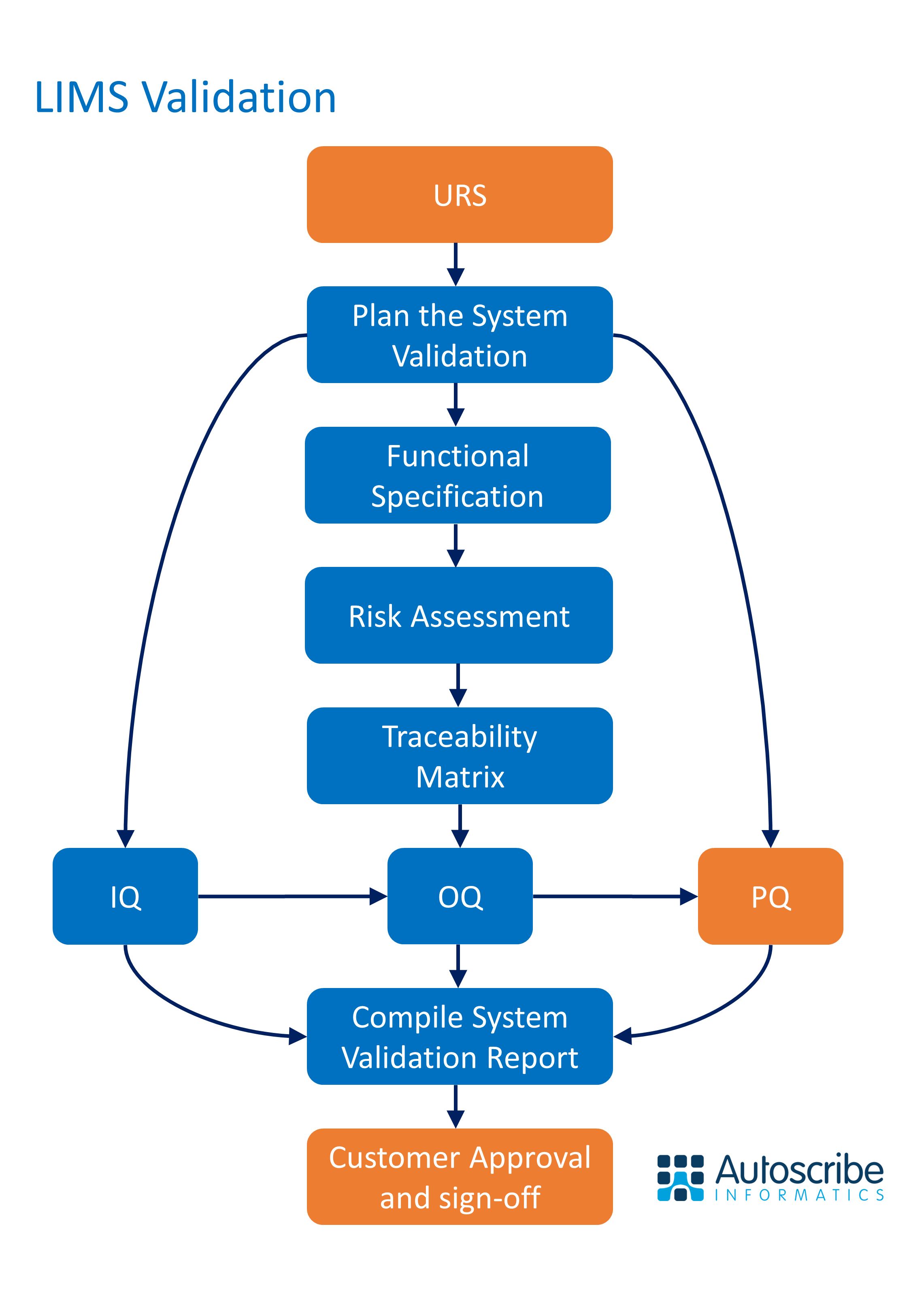 LIMS Validation can be a tricky subject to get your head round. This white paper provides a good background on what LIMS validation is, and the steps you need to go through to achieve it. Whatever LIMS software you are using the steps and the jargon are the same.
Grab a copy today and read it at your leisure:
[Download White Paper from Here]
Wishing you a happy festive season,
From Autoscribe Informatics and all in the LIMS world!
APHL/CDC COVID-19 Laboratory Associate
Overview
PLEASE DO NOT APPLY HERE.
For online application and more information see: www.aphl.org/C19-Associate
APHL/CDC COVID-19 Laboratory Associate
Association of Public Health Laboratories, Silver Spring, MD
$40,000 – $67,000/year, depending on education level and experience
Job Description:
Hiring multiple, temporary positions.…
Risk assessment for scientific data
In this 2020 paper published in Data Science Journal, Mayernik et al. present their take on assessing risks to digital and physical data collections and archives, such that the appropriate resource allocation and priorities may be set to ensure those collections' and archives' future use. In particular, they present their data risk assessment matrix and its use in three different use cases. Noting that the trust placed in a data repository and how it's run is "separate and distinct" from trust placed in the data itself, the authors lay out the steps for assessing those repositories' risks, and then making that task easier through their risk assessment matrix. After presenting their use cases, they conclude that their matrix proves "a lightweight method for data collections to be reviewed, documented, and evaluated against a set of known data risk factors."How to Conduct Effective User Acceptance Testing

 According to a report from Forbes, 25 percent of technology projects fail outright; 20 to 25 percent don’t show any return on investment; and as much as 50 percent need massive reworking by the time they’re finished.
Why is this the case? It is a complex question that likely comes with complex answers. Technical failures, scope creep, platform and performance issues, and the like all happen rampantly in enterprise IT organizations. [Read More]
How Labs Can Get Involved in COVID Screening Programs
Organizations, Businesses, Schools and Colleges everywhere need testing programs. Data-driven decision making has put laboratories squarely in the center of the COVID-19 pandemic response. Unfortunately, even CLIA-certified clinical diagnostic labs can’t contribute unless they have the resources to conduct COVID-19 molecular diagnostics testing. But now there may...
[Read More]
Sunquest provides NGS Support from the Wet Bench to the Dry Lab

 Molecular labs conducting next-generation sequencing (NGS) must analyze troves of data to interpret results. In addition to Sunquest Mitogen LIMS, Sunquest also offers Sunquest Mitogen Genetics. This powerful genomic analysis support software to helps labs more easily classify genetic variants and quickly produce clinically-actionable patient reports.
[Read More]
Lonza’s MODA-EM™ Paperless Solution to be Implemented at the UK’s New Vaccines Manufacturing and Innovation Centre
Lonza and the Vaccines Manufacturing and Innovation Centre (VMIC), a not-for-profit organization established to provide the UK’s first strategic vaccine development and advanced manufacturing capability, announced a project to implement the MODA-EM™ Solution to automate quality control (QC) in the new facility.Life Science Labs Produce Accurate and Reliable Data with Biosero and Elemental Machines Integrated Technologies
Biosero, Inc. and Elemental Machines will integrate Biosero’s Green Button Go™ Automation Scheduling Software with Elemental Machines’ AI-powered platform so scientists and researchers can produce consistent, reliable results from every life science laboratory experiment.ENPICOM and MiLaboratories join forces to power better Repertoire Sequencing data management and analysis workflows
ENPICOM BV, an innovative bioinformatics software engineering company, and MiLaboratories LLC, a technology leader in profiling the mammalian adaptive immune system, announced a strategic partnership to enable efficient MiXCR integration into ENPICOM’s cloud-based IGX Platform.CSols University – SampleManager eLearning Courses
 Promo code for December: GIFT40 to get 40% any or all three courses!
CSols University has a series of three online courses that can help. In just a few short hours you can go from beginner to report and workflow guru, for 40% off in the month of December with coupon code: GIFT40.
Gift yourself this month with in-depth SampleManager LIMS knowledge.

