

Introducing “Field Notes”
 In today’s fast-changing world, organisations in various industries face the need to stay ahead of the curve by embracing innovation. At OnQ, we are excited to give a start to “Field Notes”! It is a series that showcases the achievements of our clients through QLIMS. We will be providing insights into how QLIMS empowers our clients to overcome challenges. [Read More]
Continued Lab Staffing Shortages
 Staffing shortages can be felt in a multitude of industries, and laboratories are not immune. In fact, the number of active laboratory professionals overall has decreased. Laboratory staff are the backbone of scientific research, but shortages in laboratory staff can significantly impact the efficiency, effectiveness, and quality of laboratory operations, leading to delays in research, compromised data, and increased risks to public health and safety. Is there anything laboratories can do to prepare and improve efficiency to combat the staffing shortage? [Read More]
2023 Workplace Drug Testing Laws Employers Should Know About
 In this post, we provide an overview of the current laws and information surrounding workplace drug testing and resources to help employers keep their workplace safe and compliant. [Read More]
Webinar: Top 5 Underused STARLIMS Modules
“Since your organization installed STARLIMS, your lab informatics situation has been good…but it can be better! STARLIMS has a number of add-on modules that can make significant improvements to your workflows. In this webinar we will show you some of the most underused modules that will boost productivity, enhance automation, and centralize your data.…
ApE, A Plasmid Editor: A freely available DNA manipulation and visualization program
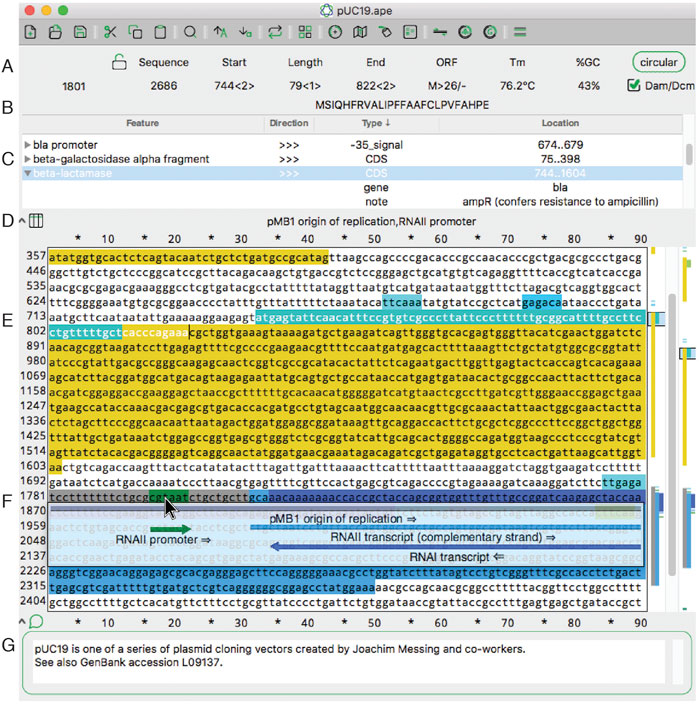 In this 2022 journal article published in Frontiers in Bioinformatics, Davis and Jorgensen of the Howard Hughes Medical Institute and School of Biological Sciences at University of Utah discuss their free, multi-platform software for visualizing, designing, and presenting DNA materials and sequences. Noting that many such applications are out of reach of the small academic or teaching laboratory, the authors have developed and maintained A Plasmid Editor (ApE) for over 17 years, becoming a robust and versatile tool for molecular biologists. After introducing the software in the context of other such software, both free and commercial, they discuss their approach to developing the software over the years, followed by an extensive review of its features and functions. The authors conclude that ApE continues to be a solid " platform for creating visually appealing linear and circular plasmid maps," as well as simulate molecular techniques, adding "that many of its features and user interfaces have been inspired by input from users requesting new or modified functionality" over the years.
Webinar: The Risks of Bloodborne Pathogen Exposure: What Role the Clinical Laboratory Can Play in Reducing Occupational Needlesticks and Blood Exposures
“Healthcare providers and clinical laboratorians are routinely exposed to the dangers of bloodborne pathogens such as hepatitis, HIV, and MRSA by sample collection and needlestick. This occupational exposure by needlestick injury continues to be a significant problem despite the OSHA Bloodborne Pathogens Standard and Needlestick Safety & Prevention Act (NSPA).…
Webinar: Verification of Automated Urinalysis Instrumentation: Analytical and Clinical Considerations
“Automated methods for urinalysis promise greater efficiency, increased throughput, and improved accuracy and precision over conventional methods. This presentation provides a brief overview of urinalysis methods and describes an approach to method validation of automated urinalysis instrumentation.”
“After this presentation, participants will be able to:
* Describe the chemical and physical principles behind conventional (manual) and automated methods for urinalysis testing
* List the studies required to document method performance required by Clinical Laboratory Improvement Amendments (CLIA)
* Apply CLIA requirements for method validation/verification to document performance characteristics of automated urinalysis methods”…
Invitation for Bids: Furnishing of Medical Laboratory Testing Services
Solicitation #: B-23-596
The County of Middlesex, New Jersey is seeking bids for medical lab testing services to be conducted at its Tuberculosis Clinic. “Applicants shall include current licenses and accreditations in their bid submittal for operation including, but not limited to Clinical Laboratory Improvement Amendments, Food and Drug Administration License and Department of Environmental Protection, American College of Radiology Accreditation.”…
Request for Proposal: Electronic Health Record System
Solicitation #: NBD14205757287590483
“The Davis County Health Department (DCHD) is soliciting proposals for an Electronic Health Record (EHR) management system. The proposed system should be capable of satisfying the needs for providing software solutions and professional services to implement a new EHR management system that can replace the current software utilized.…
Request for Proposals: Development of Web Application for the MSU Veterinary Diagnostic Laboratory
Solicitation #: 737797
“Michigan State University (the ‘University’ or ‘MSU’) is soliciting proposals through this Request for Proposal (‘RFP’) for a Supplier to develop a Web Application for the MSU Veterinary Laboratory. The application will provide functionality for ordering diagnostic tests that needs to be processed in the laboratory.…
Astrix Webinar – Navigating the Impact of New EU Regulations (EU-CTR)
The EU Clinical Trial Regulation (EU-CTR) and Clinical Trials Information System (CTIS) have revolutionized the regulatory landscape and significantly impacted how sponsors manage electronic trial master files (eTMF) and regulatory information management (RIM) systems. With these changes come difficulties and complexities that require organizations to be prepared to navigate them effectively. In this informative webinar, we will delve into the key changes and challenges in the EU regulatory landscape concerning eTMF and RIM systems to help ensure regulatory compliance and successful clinical trials.Project Manager
Key Responsibilities:
- Initiate and maintain collaborative relationships with customers;
- Establish and maintain close communication with the R&D department;
- Responsible for designing and implementing projects, milestone follow-up, completion of data collection, storage, presentation, and project closure;
- Prepare and write scientific papers and case studies;
- Demonstrate projects' purpose, process, and results as requested;
- Offer advice and consultation on research-related topics and help meet customers' requirements.
Laboratory Informatics Weekly Update – Volume 21, Issue 24
June 15, 2023 Laboratory Informatics Weekly Update Volume 21, Issue 24 In This Issue Featured Books LIMS Selection Guide for ISO/IEC 17025 Laboratories Featured Content Using LIMS Biobank Management Software to Drive ISO 20387 Biobanking StandardsBiobanks and the specimens they hold are key to modern drug discovery and development. The ISO standard 20387 ‘General requirements for biobanking’ has been developed to define the requirements for competence, impartiality, and consistent operation of biobanks to ensure the quality of the specimens and data they hold. This article will describe how Autoscribe’s Matrix Biobank Management LIMS (Laboratory Information Management System) can help…Request for Proposals: Newborn Screening Laboratory Information Management System
Solicitation #: 168646
The Provincial Health Services Authority of British Columbia, Canada (PHSA) “invites Proposals from qualified parties for the supply of the Products to the Health Authorities in accordance with the specifications and requirements set out in this RFP.
The Scope of this RFP comprises the software, required customization/configuration and ongoing software support to maintain a Newborn Screening-Specific Lab Information Management System for the daily functioning of the BC Newborn Screening Laboratory located at BC Children’s Hospital.…
Using LIMS Biobank Management Software to Drive ISO 20387 Biobanking Standards
 Biobanks and the specimens they hold are key to modern drug discovery and development. The ISO standard 20387 ‘General requirements for biobanking’ has been developed to define the requirements for competence, impartiality, and consistent operation of biobanks to ensure the quality of the specimens and data they hold. This article will describe how Autoscribe’s Matrix Biobank Management LIMS (Laboratory Information Management System) can help biobanks meet the requirements of ISO 20387. [Read More]
Webinar: The Role of Technology in Healthcare Today – a Forecast of What’s to Come
“Healthcare organizations continue to face rising costs from inflation, a worsening labor outlook, a challenging cybersecurity landscape and stresses from a global pandemic. With AI-powered healthcare technology, organizations can tackle their current challenges and accelerate commitments to enhance patient experiences, manage population health more effectively, improve clinician wellbeing, and advance health equity.…
Harnessing Informatics for Effective Lab Inspections and Audits
 Laboratory inspections and audits, planned and surprised, are an ongoing fact of life. The issue is not to prepare for them but to always be prepared for them. A well-designed LIMS, like LabLynx ELab LIMS, can give you control over lab operations, documentation, testing, test results, equipment calibration schedules, and more. [Read More]
A Modern Framework for Integrated Laboratory Instrument Management (LIM)
 Modern, automated labs are under immense pressure to improve operational efficiency, maximize ROI, monitor assets in real time, all while reducing waste and managing regulatory risk. Teams are expected to discover and produce at a pace once considered unthinkable. Service organizations are increasingly pursuing the realization of “Knight’s Law” in laboratory operations. This means not just growth, but that each scientist should be able to do almost double the work in the same amount of time, year over year. This can’t be achieved by just purchasing bigger and faster instruments, but requires automation and good asset management practices. [Read More]
Future-proof your laboratory IT strategy with Cloud computing
 Laboratories should have a Cloud computing strategy. While security risks kept some laboratories from moving their IT infrastructure to the Cloud, it is clearer now that enterprise security protections in Cloud environments can greatly exceed a laboratory’s own on-premise security capabilities. Security experts would agree that the biggest security risk to your organisation’s information technology is in fact your employees and that computing in the Cloud can pose less risk than keeping IT on-premises. [Read More]
How to Make a LIMS Support Your Lab’s Unique Workflows
 Commercial off-the-shelf laboratory information management systems (LIMS) often come with pre-built protocols to help labs get up and running quickly. But if your lab solely relies on these pre-built protocols, you’re missing out on efficiencies that could give your business a competitive advantage. [Read More]

