

Webinar: Medico-Legal Challenges with STI Testing
“Testing for Sexually Transmitted Infections (STIs) in adolescents, children and in cases of abuse is challenging due to limitations associated with common STI tests. Identification of an STI in these populations can carry both medical and legal implications, placing additional scrutiny on testing procedures.…
NIMS-OS: An automation software to implement a closed loop between artificial intelligence and robotic experiments in materials science
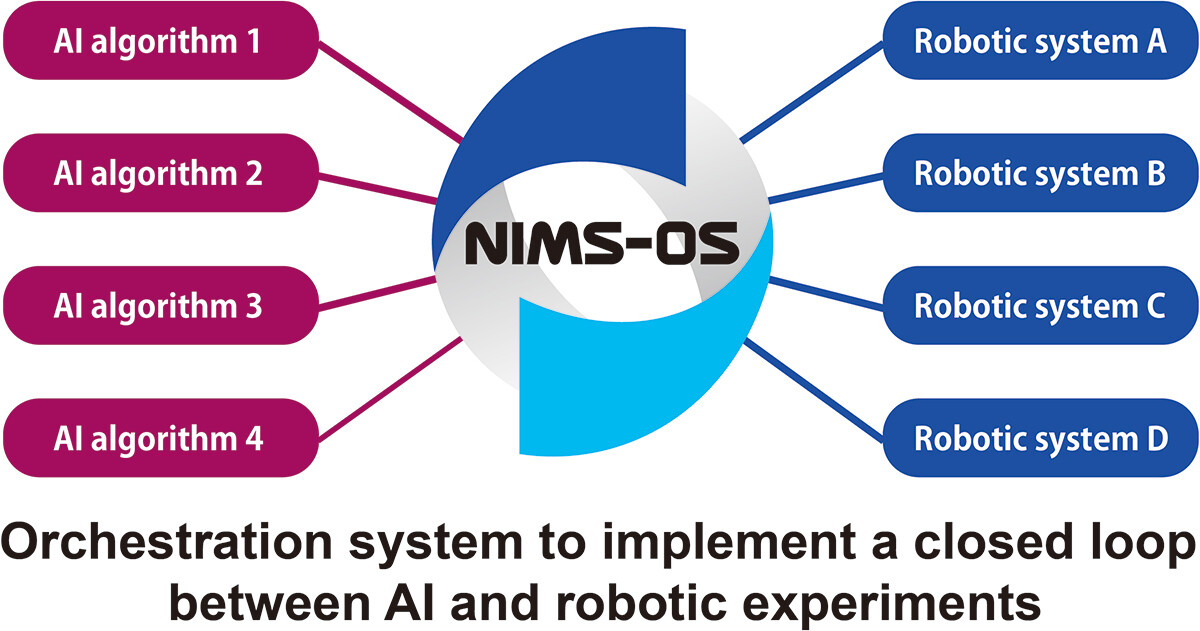 As technological, cultural, and environmental shifts continue to put pressure on the ways academic and private research is conducted, researchers must further strive to get the most out of their work. This holds true across a broad swath of scientific fields, including materials science. Noting the continuing expansion of laboratory automation and software-based tools like artificial intelligence (AI) and machine learning (ML), Tamura et al. emphasize that materials science and novel materials research can benefit greatly from adopting these tools. In this 2023 paper, the authors present their take on this trend, in the form of NIMS-OS, a Python-based system developed to take advantage of completely automated material discovery experiments. After presenting an introduction on the topic, the authors discuss the development philosophy and approach to making NIMS-OS, while also describing use of both the Python command-line tool and the graphical user interface (GUI)-driven version of the software. The authors conclude that their system demonstrates how "various problems for automated materials exploration to be commonly performed," while at the same time being "designed to be easily adaptable to a variety of original robotic systems in materials science."
Sources Sought: Functional Omics Core Laboratory Services
Solicitation #: SBSS75N93023R00013
“The mission of the Division of AIDS (DAIDS), National Institute of Allergy and Infectious Diseases (NIAID), National Institute of Health (NIH) is to ensure an end to the human immunodeficiency virus/acquired immunodeficiency syndrome (HIV/AIDS) epidemic by supporting research that can lead to the development of therapies, vaccines, and prevention strategies … The purpose of the Functional Omics Core Laboratory (FOCL) is to provide high quality assessment of the immunogenicity and efficacy of vaccines or other prevention strategies, and generate omics signatures of genes, epigenome, transcriptomes, and proteins to identify biomolecules expression and pathway profiles that could define correlates of protection and predict vaccine efficacy for HIV and other infectious diseases.…
Webinar: Introduction to wastewater surveillance system for domestic and imported pathogens – Korea real cases
“Wastewater-based surveillance is valuable as it allows for the detection of pathogens before symptomatic cases are identified.
In Korea, wastewater surveillance has been implemented, and the detection of various pathogens, including SARS-CoV-2, has been confirmed. To simultaneously detect multiple pathogens, TaqMan Array Cards (TAC) have been introduced and proven to be highly useful in wastewater surveillance.…
Invitation to Bid: Deoxyribonucleic Acid (DNA) Analysis for Post-Conviction DNA Testing
Solicitation #: 2023-040-6977
Dallas County Texas is seeking bids for Deoxyribonucleic Acid (DNA) Analysis for Post-Conviction DNA Testing. A BidSync account is required to view any additional details.
Due date: 14 September 2023, 2:00 p.m. CDT…
Webinar: Fighting for Food Safety: A Guide to Maximizing Agricultural and Food Safety Testing
“Millions of people around the world are sickened or killed due to food or waterborne pathogens. The efficiency of sample processing, testing, analyst skill and reference materials all play a role in producing accurate results to ensure the safety and fitness of the world’s food and water supplies.…
Laboratory Informatics Weekly Update – Volume 21, Issue 37
September 14, 2023 Laboratory Informatics Weekly Update Volume 21, Issue 37 In This Issue Featured Books LIMS Selection Guide for Food Safety and Quality Featured Content Introduction to Pharmaceutical Data Items and Their StructureStructuring the data used in pharmaceutical reporting will reduce the time needed to create reports, eliminate the manual (human) verification of data tables, and ensure error-free submissions. The use of structured data is particularly powerful in Module 3, which includes large, complex sets of data related to product quality. Using a structured approach to data from source to submission improves data integrity, follows ALCOA+, and is…Introduction to Pharmaceutical Data Items and Their Structure
 Structuring the data used in pharmaceutical reporting will reduce the time needed to create reports, eliminate the manual (human) verification of data tables, and ensure error-free submissions. The use of structured data is particularly powerful in Module 3, which includes large, complex sets of data related to product quality. Using a structured approach to data from source to submission improves data integrity, follows ALCOA+, and is a foundation for working towards the ISPE Pharma 4.0™️ initiative. [Read More]
Determining the Best LIMS Vendor for Your Lab
 Choosing the best LIMS for your lab typically starts with an introductory meeting with a LIMS vendor to have a detailed discussion about your laboratory's specific requirements, workflows, and challenges. Asking questions can help you clarify requirements, understand capabilities, evaluate compatibility, assess future levels of support and training, and address any concerns. Here are some key questions laboratories may want to ask when seeking the right LIMS and the best LIMS vendor. [Read More]
QLIMS Case Study: Comvita
 In this LIMS case study, we delve into how Comvita faced the challenges of rapid growth and evolving regulations head-on. Let’s discover how QLIMS revolutionized their processes, making data-driven decisions a breeze and boosting productivity by 20%.[Read More]
Semaphore Solutions Presents: Clarity LIMS Office Hours
Semaphore Solutions will be offering another “office hours” session for all Clarity LIMS users on Wednesday, September 13th, at 1pm PST/4pm EST.
The agenda will consist of:
- Open floor ‘question and answer’ discussion for participants
- A discussion of Clarity Utility Steps and when they are useful
- How to mitigate workflow reconfiguration by accessioning control samples
- Browser tricks to get more usable Clarity real estate
- Call for topics for future Office Hours sessions
Please register for Clarity LIMS Office Hours using this link. …
3D Printing: From Plastic to Prime Rib
 Today, the process of 3D printing has moved beyond just polymers and plastics. Scientists are using 3D printers to print human tissue, prosthetics, aircraft, automobiles, and even emergency shelters in disaster areas. The next big leap in this technology could be 3D-printed food. But is the technology really expected to reach mainstream suburban kitchens? [Read More]
Webinar: What’s New in Quality and Regulatory?
“This ‘Continual Improvement’ webinar will provide an overview of the most common CLIA deficiencies in 2022 and ideas for avoiding noncompliance. The presenters will also review new CMS rules for remote review that were published at the end of the COVID-19 public health emergency and provide an update on efforts to reform the Protecting Access to Medicare Act (PAMA) provisions that are used to calculate laboratory reimbursement.…
Webinar: Promoting the Profession by Aligning Educational Program Titles to the Medical Laboratory Science Career
“This presentation will provide an overview of the political landscape in Washington, DC, in the 118th Congress, along with updates on federal legislation to support the laboratory workforce, reimbursement for laboratory services, and a risk-based framework for regulating clinical laboratory testing.…
Online Symposium: The Science of Cannabis Testing 2023
“Welcome to the 7th annual cannabis testing symposium, an exclusive gathering designed specifically for cannabis scientists and researchers. This industry-leading event brings together experts and innovators in the field to shed light on the hottest topics and emerging trends in cannabis testing lab practices.…
Establishing reliable research data management by integrating measurement devices utilizing intelligent digital twins
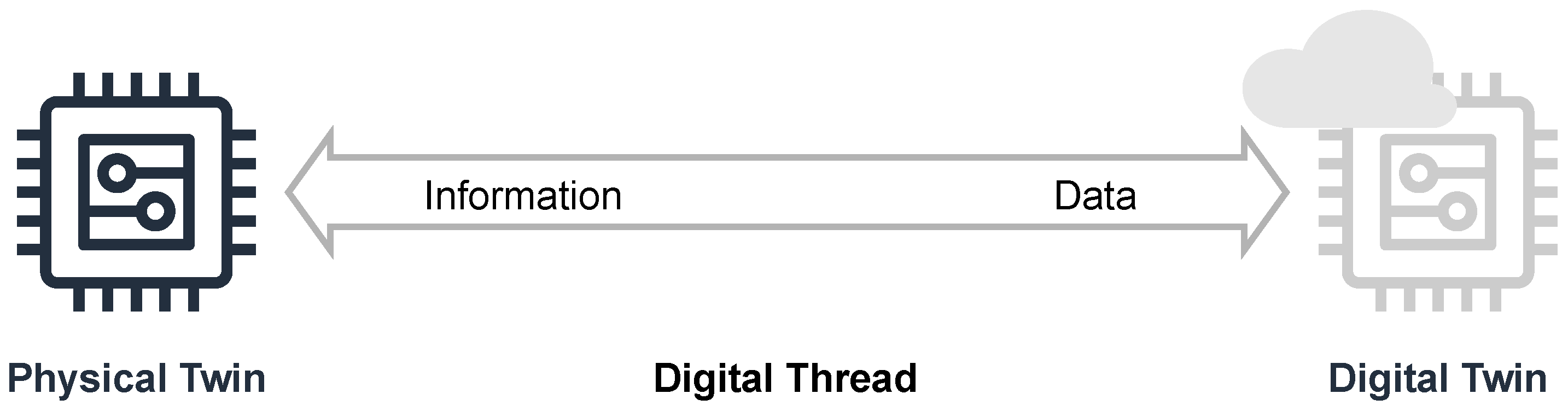 In this 2023 article published in the journal Sensors, Lehmann et al. of the Mannheim University of Applied Sciences present their efforts towards a research data management (RDM) system for their Center for Mass Spectrometry and Optical Spectroscopy (CeMOS). The proof-of-concept RDM leans on digital twin (DT) technology to answer the challenges posed by RDM of multiple research instruments in their institute, while at the same time addressing the principles of making data more findable, accessible, interoperable, and reusable (FAIR). After introducing the topic and presenting related work as it relates to their efforts, the authors lay out their conceptual architecture and discuss use cases within the context of their spectrometry and spectroscopy work. Then they propose an implementation, proof of concept, and evaluation of the proof of concept within the implementation's framework. After discussing their results, the authors conclude that their efforts contribute to the literature in five different ways, addressing RDM within FAIR, highlighting the value of DTs, developing a top-level knowledge graph, elaborating on reactive vs. proactive DTs, and providing a practical approach to DTs in the RDM at larger research institutes. They also provide caveats and future work that still needs to be done.
Sources Sought: Laboratory Animal Diagnostic Testing Services
Solicitation #: 75N96023Q00132
“The National Institute of Environmental Health Sciences (NIEHS), located in Research Triangle Park, North Carolina, is one (1) of 27 research institutes and centers that comprise the National Institutes of Health (NIH), U.S. Department of Health and Human Services (DHHS).…
Laboratory Informatics Weekly Update – Volume 21, Issue 36
September 7, 2023 Laboratory Informatics Weekly Update Volume 22, Issue 36 In This Issue Featured Books LIMS Selection Guide for ISO/IEC 17025 Laboratories Featured Content 28 Signs Your Lab Might Need a LIMSThere comes a point in every lab where data gets scattered across paper files, spreadsheets, and a patchwork of laboratory systems. Manual processes can’t keep up with rising demand. Ultimately, customer satisfaction plummets with profound implications for the lab. All these challenges stem from the way labs manage information. If these 28 signs of laboratory information management challenges look familiar, your lab is ready for a LIMS.…28 Signs Your Lab Might Need a LIMS
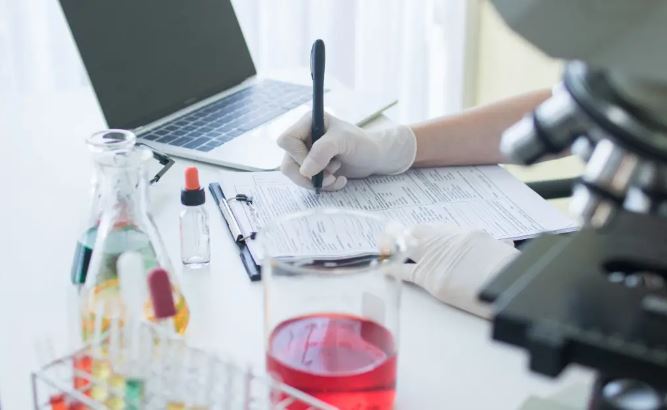 There comes a point in every lab where data gets scattered across paper files, spreadsheets, and a patchwork of laboratory systems. Manual processes can’t keep up with rising demand. Ultimately, customer satisfaction plummets with profound implications for the lab. All these challenges stem from the way labs manage information. If these 28 signs of laboratory information management challenges look familiar, your lab is ready for a LIMS. [Read More]
True Lab Automation: Utopia for the Life Sciences
 Lab automation is transforming the life sciences industry in fields such as synthetic biology and genetic engineering by streamlining processes and supercharging research and development. These advances will transform the practices of medicine, manufacturing, and agriculture, among others. Achieving lab automation may seem like a utopian dream, but it’s not as far off as you think. [Read More]

