
Clinical diagnostics is transforming healthcare by enabling earlier disease detection, personalized treatments, and faster decision-making. With consistent, accurate, and efficient testing supported by advanced lab management systems, laboratories are driving better outcomes, reducing errors, and shaping the future of medicine.
[Read More]

Becoming certified to ISO/IEC 17025 is a complete process that requires commitment, planning, and meticulous execution by the laboratory. This blog explores the 10 fundamental steps a laboratory needs to follow to obtain accreditation in ISO/IEC 17025.
[Read More]
Justifying a LIMS purchase requires documenting both measurable cost savings from reduced labor and greater efficiency, as well as qualitative benefits like improved data quality, better decision making, and enhanced regulatory compliance. The quantitative case uses a nine-step ROI process that assesses current inefficiencies, estimates time savings from automation, and compares those savings to total LIMS costs.
[Read More]
This presentation explores how business process modeling notation (BPMN) can be transformed into a semantic representation using knowledge graphs. This approach enables richer data integration, queryability, and reasoning across enterprise processes.
[Read More]
Scientific notebooks have always been at the center of discovery. But today, an ELN that simply records and stores data is no longer enough. Scientists require more. They require a solution that truly thinks the way they do—working as an active collaborator to help them design, plan, execute, and analyze experiments seamlessly.
[Read More]

Many labs don’t realize they’re falling behind until competitors surge ahead with advanced tools and smarter management. Warning signs include paper logbooks, missed deadlines, instrument downtime, and audit stress. Modern laboratory software and LIMS boost efficiency, cut costs, improve accuracy, and drive profitable growth.
[Read More]
Whether in pharma, diagnostics, or biobanking, lab success depends on meeting goals for speed, quality, and accountability. Yet manual workflows and fragmented data slow progress, while growing sample complexity, cross-site collaboration, and evolving regulations expose the limits of outdated sample management.
[Read More]

Effective end of year lab management isn’t just about December—it begins in October. By using Q4 to review compliance, refresh inventory, recognize teams, update systems, align budgets, and plan strategically, labs reduce risk, improve efficiency, and enter the new year ready to thrive.
[Read More]
Traceability in a laboratory is essential to ensure the quality and reliability of results. By accurately identifying samples and adopting advanced tracking systems, labs can strengthen traceability and boost operational excellence. Here are four proven strategies to build a more accurate, efficient lab.
[Read More]

A Scientific Data Platform addresses the challenges of disorganized and siloed lab data. By centralizing information, it streamlines collaboration, enhances analysis, and automates workflows. The result is greater efficiency, fewer errors, and accelerated research across today’s fast-paced labs.
[Read More]
In April 2025, clinical research entered a new phase as the FDA released its Roadmap to Reducing Animal Testing and the NIH launched ORIVA to scale human-relevant models. These efforts reflect a growing consensus that animal studies often fail to predict human outcomes and that safer, faster alternatives are needed.
[Read More]
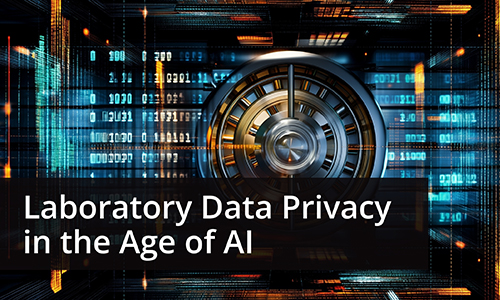
Laboratories today face growing risks to data privacy as AI, cloud platforms, and global collaboration expand. Protecting sensitive information requires secure systems, role-based access, encryption, automated compliance, and strong training programs to safeguard science, patients, and trust.
[Read More]

Lab informatics may share core terms like samples and workflows, but each lab speaks its own “dialect.” QC labs focus on compliance, research labs value flexibility, clinical labs need speed, and forensic labs demand traceability. Recognizing these differences helps build systems that enable collaboration and innovation across domains.
[Read More]

Environmental labs are transforming science and sustainability through innovations like real-time monitoring, eDNA analysis, advanced spectrometry, robotics, AI, and cloud platforms. These advancements improve compliance, accelerate testing, and help protect ecosystems, communities, and natural resources.
[Read More]
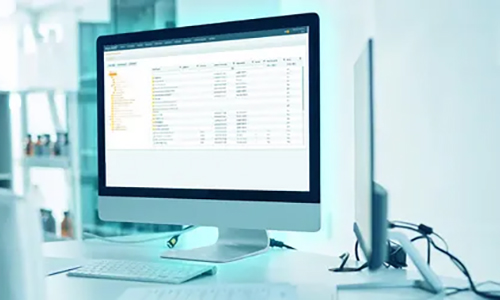
ISO 17025 demands rigorous traceability, data integrity, quality control, calibration oversight, corrective action logging, and reporting. A LIMS helps by automating and centralizing these processes: tracking samples, controlling access, managing calibrations and deviations, and generating compliant reports.
[Read More]
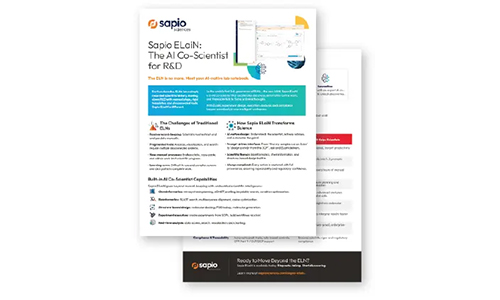
Sapio ELaiN, the first AI native lab notebook, transforms research by acting as your co-scientist. Discover natural language experiment design, automated analysis and visualization, built-in scientific intelligence, compliance-ready audit trails, and more to accelerate discovery beyond traditional ELNs.
[Read More]

Transitioning from one LIMS to another is complex, impacting data integrity, compliance, and operations. More than a software swap, it reshapes lab informatics, workflows, and quality frameworks. With careful planning, migration to a next-gen LIMS enables modernization, compliance, and optimized data management. Poor preparation, however, risks data loss, disruption, and non-compliance. This article presents a strategy for systematic decommissioning and validated implementation of a new LIMS.
[Read More]

Laboratories face rising risks as cyber threats and compliance demands grow. From zero-trust security and AI-driven threat detection to immutable audit trails and secure cloud systems, discover how modern labs can protect data, ensure compliance, and build lasting confidence.
[Read More]

To transition from paper to a digital system, a laboratory must first identify the inefficiencies and errors caused by paper-based workflows. The transformation can be accomplished by creating a step-by-step plan that includes a phased implementation, staff training, and the selection of the right digital tools to streamline operations and improve data accuracy.
[Read More]

Modern research generates vast amounts of complex data, making metadata—information that describes and organizes data to make it easier to find, understand, and use—as crucial as the data itself. Yet this “data about data” often falls short of today’s scientific standards. The new goal is to capture actionable metadata: dynamic, comprehensive details such as experimental parameters, equipment calibration, and sample lineage.
[Read More]


