

May 1, 2025 - Global Manufacturing Simplified: Taking Control of Laboratory Data Management with a LIMS
 A rapidly expanding manufacturing entity with 20+ global sites struggled to manage lab data across tools like Excel, Google Sheets, and custom databases. Lacking standardization, labs operated differently, and outdated result-sharing methods led to inefficiencies and errors. They chose Confience’s eLIMS, a robust web-based LIMS, to efficiently streamline and standardize data management across all their laboratories. [Read More]
May 1, 2025 - No Downtime, No Guesswork: How Self-Maintaining Labs Are Reshaping Science
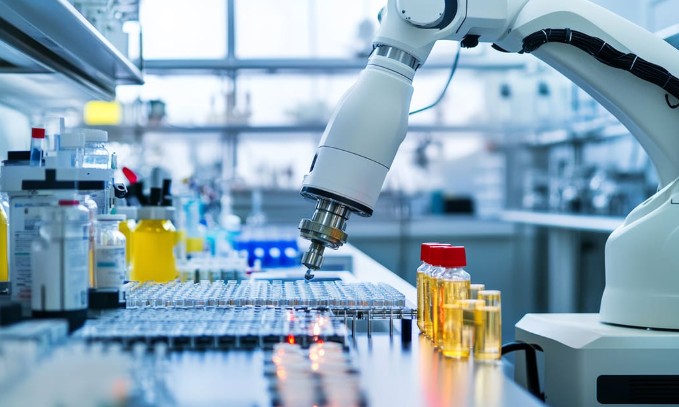 Self-maintaining labs are revolutionizing science by combining automation, AI, and predictive analytics to eliminate downtime, boost accuracy, and reduce costs. These next-gen labs monitor themselves, optimize workflows in real time, and ensure peak efficiency—positioning forward-thinking labs ahead of the competition. [Read More]
May 1, 2025 - SoftMax Pro Validation for Life Sciences Organizations
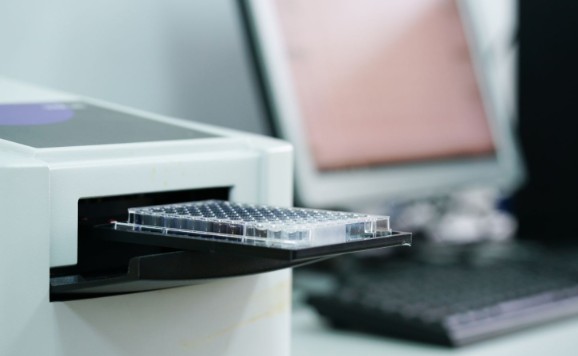 CSols Inc. has partnered with Molecular Devices to validate their SoftMax Pro microplate reader software. SoftMax Pro is the primary software for microplate reader control and data analysis. Microplate readers measure multiple biological and chemical reactions simultaneously. [Read More]
May 1, 2025 - Mapping Lab Systems the Right Way: Workflow vs. State Diagrams
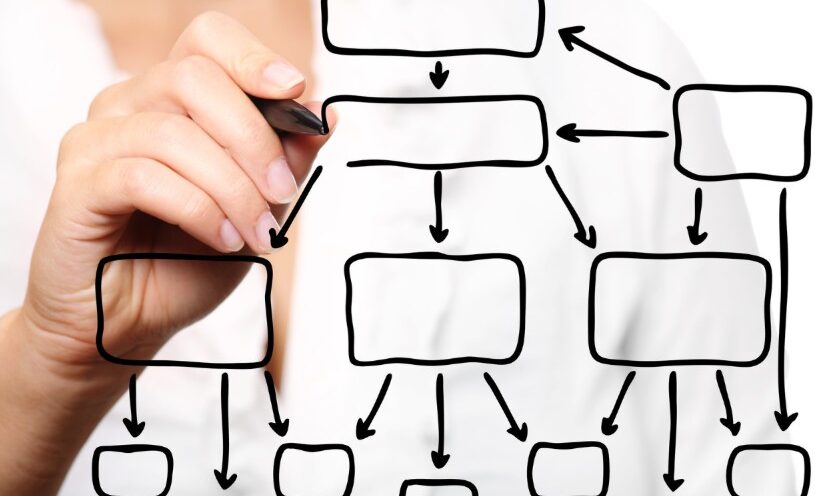 Workflow and state diagrams play a crucial role in documenting and visualizing laboratory systems. Both are invaluable for labs implementing a laboratory information management system (LIMS) or adding automations to streamline laboratory operations, reduce errors and redundancies, and ensure regulatory compliance. However, each type of diagram serves a distinct purpose. [Read More]
May 1, 2025 - Transforming Process Development with Sapio LIMS Software
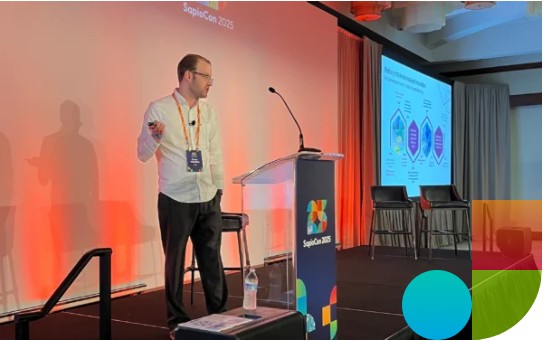 SapioCon 2025 was filled with excitement and innovative ideas. While many presentations offered glimpses into the future of scientific advancement, Kevin Malabre’s keynote on Oxford Biomedica’s (OXB) digital transformation journey was a prime example of digitalization in action. [Read More]
May 1, 2025 - Using Labvantage LIMS to Prepare your Lab Informatics Data for AI
 Life science labs are rapidly evolving with advances in research, technology, and data management. Adopting cutting-edge digital tools, such as robotics, AI, and IoT, is becoming essential for accelerating discovery and innovation. At the core of this digital transformation is integrating a unified lab platform, enabling seamless access to data across systems. [Read More]
May 1, 2025 - What Are the Key Elements of an ELN for Academic Research?
 Academic research demands efficient, secure, and collaborative tools to manage growing volumes of complex data. Modern ELNs empower labs with customizable templates, audit trails, seamless data integration, and publication-ready outputs—ensuring compliance, boosting productivity, and preserving institutional knowledge for the future. [Read More]
April 25, 2025 - Navigating the FDA’s Synthetic Dye Phase-Out: How LabLynx ELN Empowers Laboratories to Ensure Compliance and Safety
 The FDA’s phase-out of synthetic food dyes is shaking up the food industry, and labs must move fast to adapt. Leading labs are turning to electronic lab notebooks (ELNs) to streamline regulatory compliance, speed up reformulation efforts, and ensure they stay ahead of evolving deadlines. Discover how the right ELN can help your lab maintain complete data integrity, enhance operational efficiency, and navigate this critical transition with confidence. [Read More]
April 25, 2025 - Scaling Precision Diagnostics | Use Case Spotlight
 This diagnostics innovator needed more than just a LIMS, they needed a platform that could evolve with their science and scale with their team. Labbit enabled the laboratory to meet regulatory deadlines and build a future-proof lab ecosystem. [Read More]
April 25, 2025 - Confience eLIMS Advances Innovation at Pace Analytical Labs– Building Sciences Division, Pittsburgh Location
 The Pace Analytical Laboratory, Building Sciences Division specializes in detecting waterborne pathogens, particularly Legionella, with samples received from across the U.S. and Canada. For years, the lab used an inefficient, error prone paper-based data management system. In 2012, the lab implemented Confience eLIMS, which has evolved alongside the laboratory and has empowered the the lab to operate more efficiently, ensuring both precision and compliance in their workflows. [Read More]
April 25, 2025 - Fueling Efficiency: Invest in LIMS Now in the Canadian Oil and Gas Industry
 Uncertainty defines the outlook for Canadian oil and gas in 2025. While expanded capacity from the Trans Mountain Pipeline and the upcoming LNG Canada facility boosts export potential, U.S. tariffs threaten demand, pushing producers to diversify into markets like Asia and Europe. This shift brings new product specs and quality requirements. In this post, we explore why now is a strategic time to invest in or upgrade a LIMS. [Read More]
April 25, 2025 - Enabling Janssen’s Next Leap in Drug Discovery With Sapio LIMS
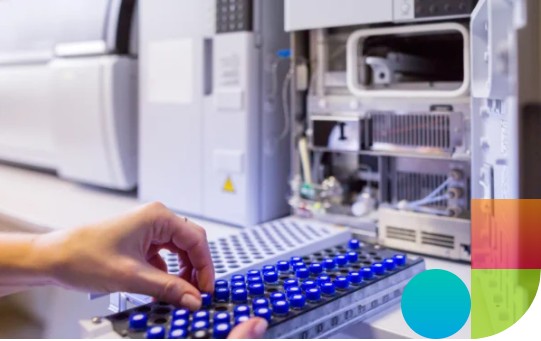 At Sapio Sciences, we believe real scientific progress happens when brilliant minds are empowered by the right technology. A recent peer-reviewed study in Journal of Chromatography A affirmed this, highlighting Janssen R&D’s breakthrough in high-throughput sample processing—an achievement Sapio was proud to support. [Read More]
April 25, 2025 - Elevating Laboratory Data Management: Insights from the Sapio Platform Training & Accreditation Program
 I recently participated in Sapio Sciences’ Training & Accreditation Program in March 2025, gaining valuable insights into lab data management and digital transformation. This three-day, in-person event offered live demos, hands-on exercises, and simulations, equipping newcomers with the skills to confidently configure and manage solutions on the Sapio Platform. [Read More]
April 25, 2025 - Clinical Research White Paper – Enhancing Transparency & Efficiency Throughout the Trial Lifecycle for AI Readiness
 Many companies are using AI to streamline clinical trials, but gaining a complete view of the study lifecycle remains difficult. Key metrics are often manually tracked across people, processes, and systems, causing delays and inefficiencies. To improve, teams regularly debrief to analyze lessons learned and refine future strategies. [Read More]
April 25, 2025 - LIMS and ELN: Understanding Their Roles and How They Work Together to Streamline Lab Operations
 Looking to boost efficiency and data integrity in your lab? Learn how LIMS and ELNs work together to streamline sample tracking, automate workflows, enhance collaboration, and ensure regulatory compliance. Whether you're research-focused or results-driven, the right digital tools can transform your lab operations from the ground up. [Read More]
April 18, 2025 - Utilizing SOPs to Fill Computer System Validation (CSV) Gaps
 Labs still face persistent Computer System Validation (CSV) challenges. In 2015, key issues included systems that didn’t function as intended, lacked 21 CFR Part 11 compliance, or missed basic CSV requirements. These concerns remain, but the landscape is more complex with growing data integrity demands, cloud solutions, automation, AI, and cybersecurity threats. Today, software configuration alone often falls short, making strong standard operating procedures (SOPs) essential for bridging validation gaps. [Read More]
April 18, 2025 - You’re Losing Data and Don’t Even Know It — How ELNs Quietly Save the Day
 Labs often lose critical data without realizing it—through inconsistent documentation, manual errors, or fragmented systems. Electronic Laboratory Notebooks (ELNs) act as silent guardians, capturing every detail in real time, ensuring data integrity, and providing a comprehensive audit trail. By integrating ELNs, labs can prevent data loss, enhance compliance, and streamline operations, turning potential chaos into clarity. [Read More]
April 18, 2025 - Power Your Environmental Lab with a LIMS Built for TNI Success
 Many laboratories are certified to the NELAC Institute’s (TNI) NELAP standards, which are based on ISO 17025 but tailored for environmental labs. Meeting these standards shows a commitment to quality through an accredited Quality Management System (QMS), offering a competitive edge and assuring reliable, reproducible testing data. LIMS play a key role in achieving and supporting these accreditations as the foundation of a lab’s QMS. [Read More]
April 18, 2025 - Ensuring Accurate Monitoring: Environment and Water LIMS Solutions for Lab Compliance
 Accurate environmental and water testing is critical for safeguarding public health, protecting ecosystems, and ensuring regulatory compliance. Laboratories face significant challenges in maintaining compliance with stringent standards set by agencies like the EPA, ISO 17025, and FDA. Manual processes and outdated systems often lead to inefficiencies, errors, and non-compliance risks. [Read More]
April 18, 2025 - 5 markers of a science-aware™ lab informatics platform
 The selection of a lab informatics solution is among the most important decisions a lab can make, with significant implications for efficiency, productivity, and collaboration. In many ways, the lab informatics platform a laboratory selects will either enable or limit the type of lab it will become. [Read More]

